The sumo tournament in Paris is not seeking audience records, but rather building bridges between Japan and France. Unlike the media frenzy in London, this edition bets on a slow-paced cultural exchange. For Parisians, it is an opportunity to see ancient rituals up close and, in passing, understand why two heavy men push each other without causing harm. An initiative that brings millennia-old traditions closer to a curious public.
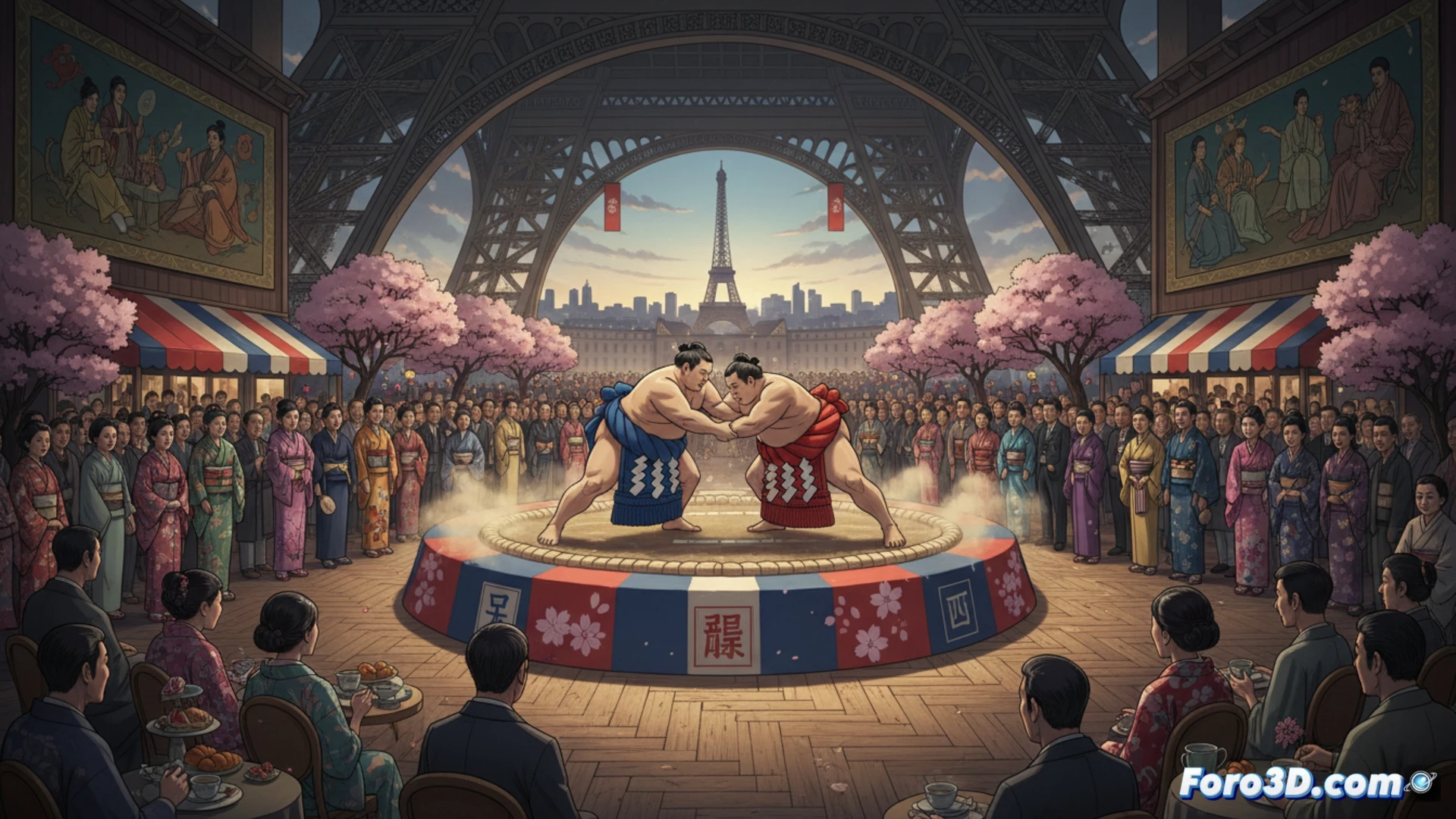
The technology of the dohyō: sensors and tradition in the clay ring 🏟️
Beneath the clay surface of the dohyō, pressure sensors and accelerometers have been installed to measure the force of impacts. This data is processed in real time, allowing coaches to analyze each rikishi's technique. France has contributed its expertise in sports biomechanics, while Japan maintains the Shinto rituals. The result is a mix of big data and tradition that makes it possible to predict, with some margin, who will be thrown out of the ring first.
Sumo and the baguette: when chanko nabe meets the croissant 🥐
The wrestlers have had to adapt their diet to local gastronomy. Chanko nabe, that stew of proteins and vegetables, now competes with butter croissants. Some rikishi confess that camembert cheese gives them more strength than tofu. And so, when sumo arrives in Paris, even the salt-throwing ritual is done with Guérande salt. Of course, no one has yet managed to get a yokozuna to wear a beret.