Steve Smith doesn't play cricket like everyone else. His technique, often compared to a controlled spasm, is a case study in biomechanics. At Foro3D, we analyze the special characteristics of his stance, from the angle of his wrist to his lateral movement, to understand how this player turns apparent chaos into consistent runs.
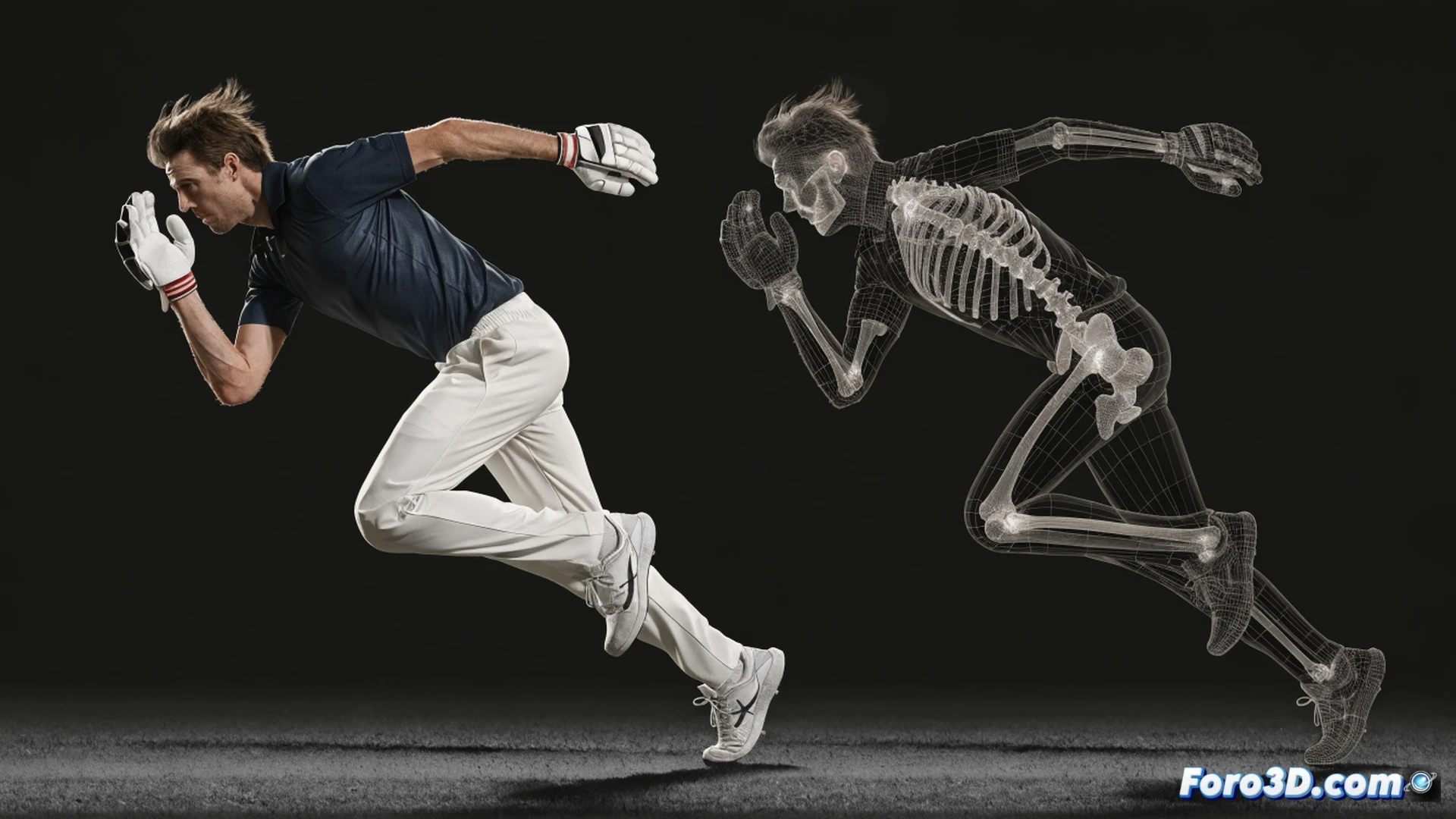
Kinetic Scan: The Mechanics of His Weight and Wrist 🏏
Smith's 3D model reveals an atypical weight transfer. His back foot pivots on the heel while his front shoulder closes, generating a batting arc that covers impossible angles for conventional defenses. The wrist, in a 90-degree rotation, allows redirecting the ball to the leg side with millimeter precision. This movement, simulated in motion capture software, shows that his center of gravity shifts 15 cm further back than that of a standard batter.
The Octopus Dance: When Moving Wrong is the Key 🐙
Watching Smith bat is like watching an octopus trying to play the guitar: it looks like a mistake, but it sounds good. His technique, which any traditional coach would call heresy, works because the Australian's nervous system decided logic was boring. While other batters stay still, he moves as if he has ants in his shoes. The result: a Test average of 60. The moral: if you can't dance well, at least make it unpredictable.