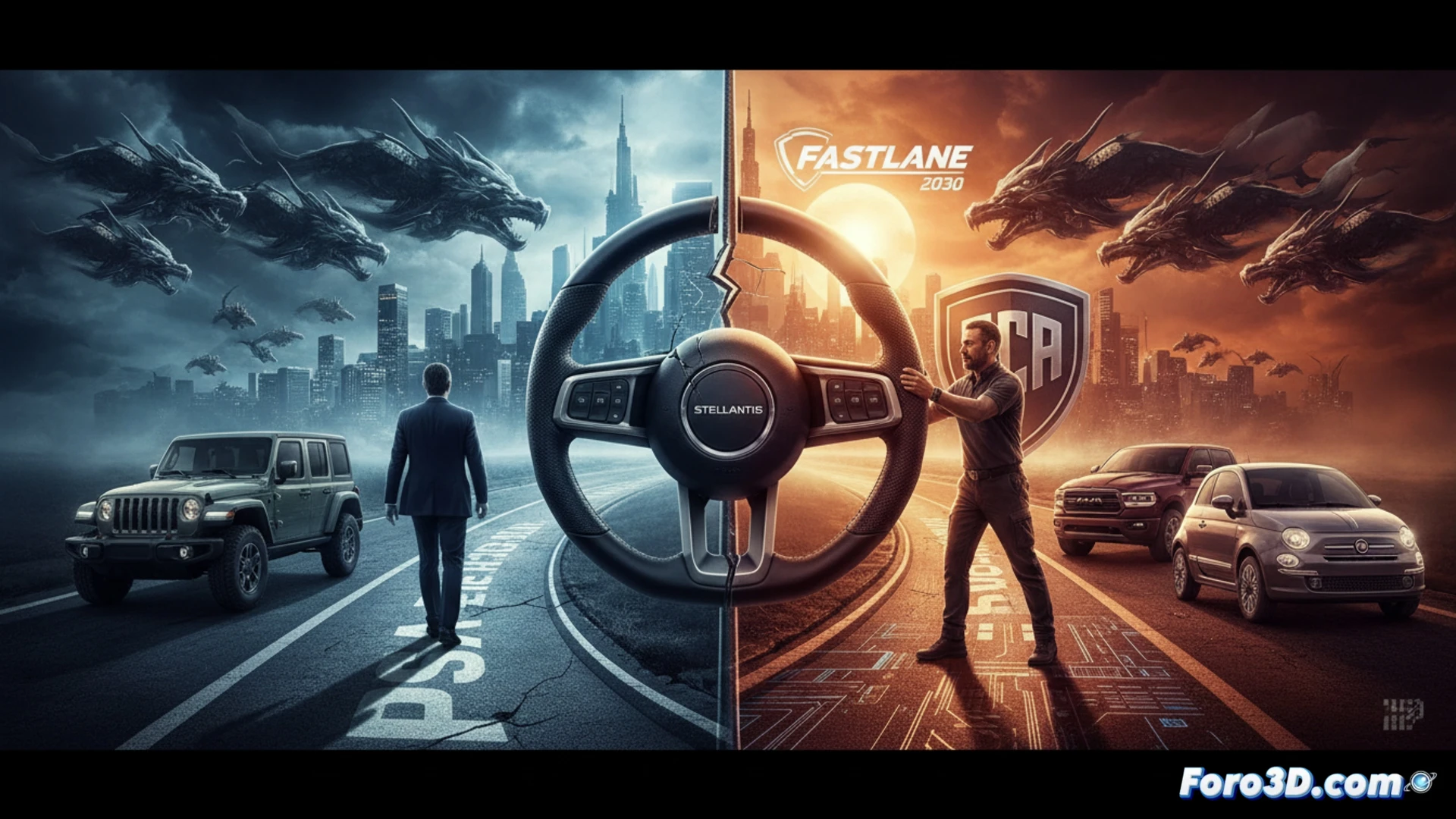
Stellantis has presented its new FaSTLAne 2030 plan, a strategic shift where the former FCA takes control over PSA. The new CEO, Antonio Filosa, has displaced French executives and prioritizes brands like Jeep, RAM, and FIAT. For the public, this means the company is abandoning its exclusive bet on electric cars and seeking to strengthen itself against Chinese competition. The internal change aims to recover profits and stability.
The technology behind the shift: flexible engines and multi-energy platforms 🔧
The FaSTLAne 2030 plan bets on multi-energy platforms that allow combustion, hybrid, and electric engines to be mounted on the same base. This reduces development costs and accelerates adaptation to markets. Jeep and RAM will lead in off-road and pickup truck technology, while FIAT will focus on affordable urban models. Production is expected to be optimized with flexible plants capable of changing powertrains according to demand, something Carlos Tavares ruled out in his time due to his obsession with pure electric.
The plan that left the French with the charger plugged in 🔌
It seems Stellantis has discovered that selling cars people don't want is not a business. Now, with Filosa at the wheel, French engineers have been sent back to the TGV while the Italian-Americans pull out the usual recipes: big engines and robust chassis. The irony is that the plan is called FaSTLAne, but it sounds more like reversing to dodge the Chinese. At least shareholders will no longer have to sell their car to pay the electricity bill.