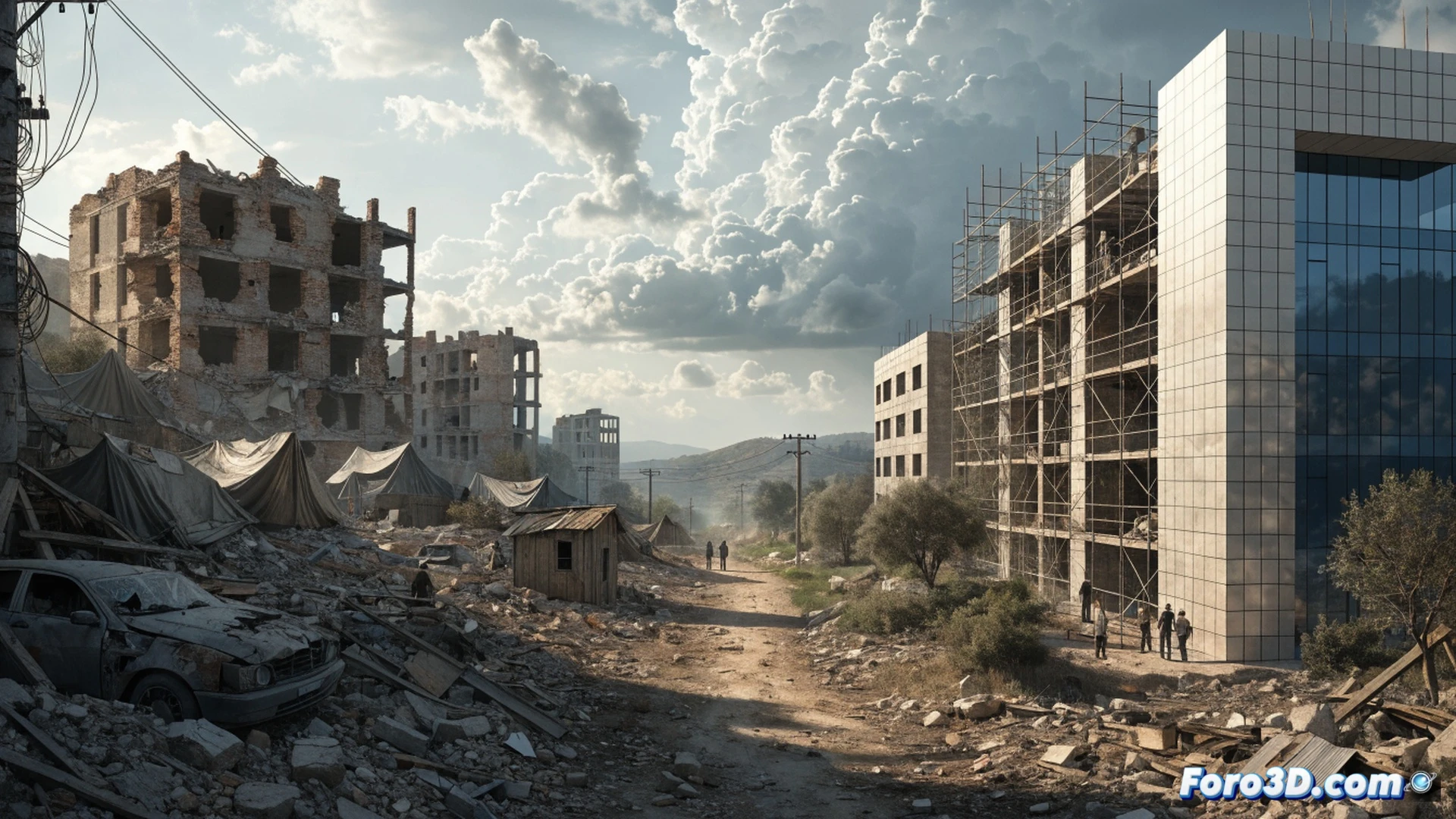
The village of Srifa, a Hezbollah stronghold in southern Lebanon, was reduced to rubble following Israeli bombings. Its once-busy streets are now a landscape of ruins. The dilemma is clear: neither the bankrupt Lebanese state nor the Shiite party has sufficient funds to rebuild what was destroyed. The population faces an uncertain future, without homes or basic services, as the local economy crumbles day by day.
Drones and Sensors: The Technology That Doesn't Reach the Ruins 🛰️
In any other context, the reconstruction of Srifa could rely on technologies such as LiDAR scanning to assess structural damage, or the use of drones to map hard-to-reach areas. Modular construction systems could also be applied to speed up the building of temporary housing. However, in a country without stable electricity and with a devalued currency, these solutions are a luxury. The reality is that the village depends on donations and local efforts, without access to modern urban development tools.
Hezbollah and the State: Two Partners Who Don't Pay the Bill 💸
The situation is reminiscent of a move where the truck owners argue over who pays for the gas while the furniture gets soaked in the rain. Hezbollah promises support, but its coffers are drier than a well in summer. The Lebanese state, for its part, offers paperwork and bureaucracy. Meanwhile, Srifa's residents improvise roofs with tarps and pray that the next winter won't be so cold. At least, neighborly solidarity remains standing, even if the bricks don't.