The Prime Video series Spider-Noir redefines the origin of superpowers by linking them to German World War I experiments using animal blood. This historical context sets the stage for the appearance of Human Fly, a villain transformed with fly genes who struggles to control his primal instincts, offering a more grounded and grim take on the superhero genre.
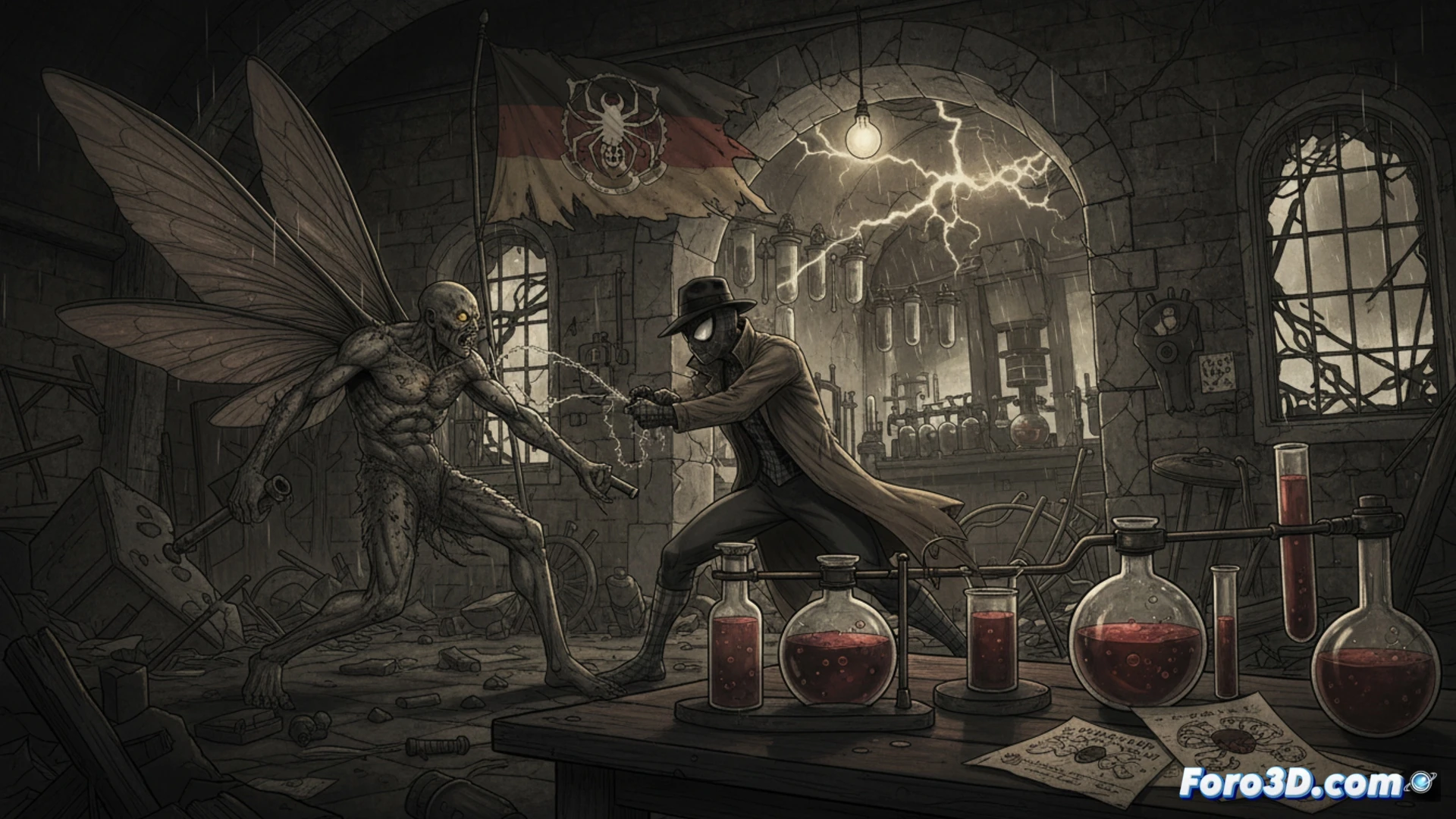
The Great War genetic engineering as the plot's foundation 🧬
The writers have opted for a pseudoscientific approach that connects genetics with industrialized warfare. The premise suggests that the Nazis achieved advances in animal DNA manipulation decades before actual science documents. This narrative macguffin allows justifying the transformation of common criminals into biological threats, like Human Fly, whose reflexes and resistance are enhanced, but whose humanity dissolves in an internal struggle against insectoid impulses.
Human Fly: the villain who can't stop buzzing 🪰
Poor Human Fly is having a rough day: he wakes up wanting to fly toward the light, feels an irresistible attraction to garbage, and to top it off, his spider-sense tells him Spider-Noir is nearby. While other villains plan heists, he just tries not to crash into a window. At least his new nectar-based diet has helped him lower his cholesterol.