The fourth installment starring Tom Holland, Brand New Day, lands on July 29 with a darker tone. Peter Parker neglects his personal life to dedicate himself entirely to the city, but soon learns that both facets are inseparable. The film posits that the human is as valuable as the extraordinary, and that a person's essence, not their powers, defines their true worth.
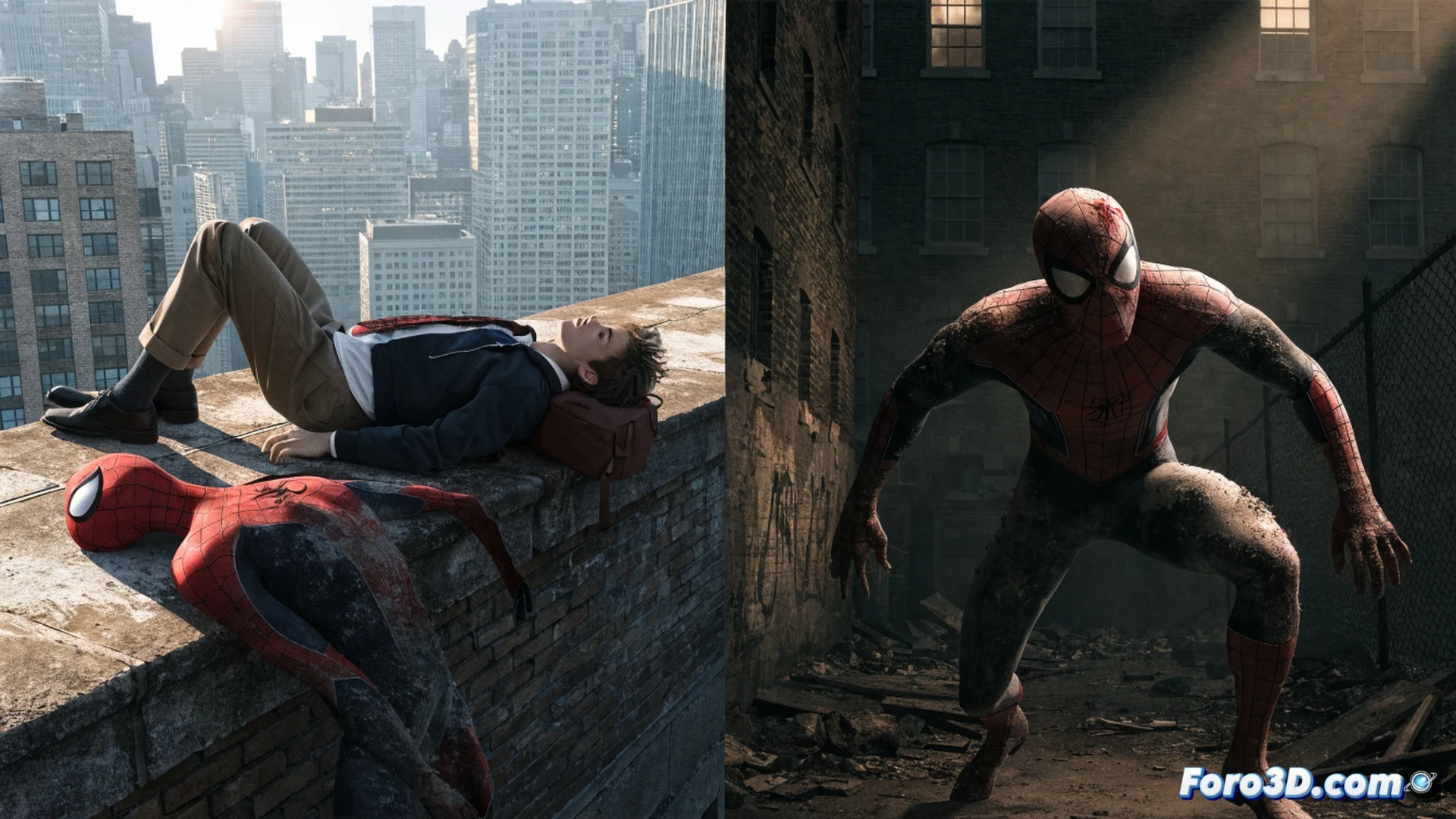
The balance dilemma: when the suit has no software patch 🕸️
From a narrative standpoint, the film explores a classic conflict: the duality between civilian identity and heroic responsibility. Stark's technology is no longer a backup, and Peter must manage his resources without relying on artificial intelligence or automated suits. The technical development here is human: prioritizing tasks, delegating, and accepting that not everything is solved with a web. The absence of gadgets forces him to use his ingenuity, not his superhuman abilities, to navigate everyday crises.
Peter Parker, the hero who forgot to pay the rent 🍕
Because yes, saving the city is all well and good, but who pays for Peter's pizza? While he's hanging from skyscrapers, his fridge must be emptier than his promises to get home early. The lesson is clear: if you neglect your personal life, even the spider suit ends up in the laundry with mismatched socks. In the end, being a hero is useless if you have no one to tell about the battle.