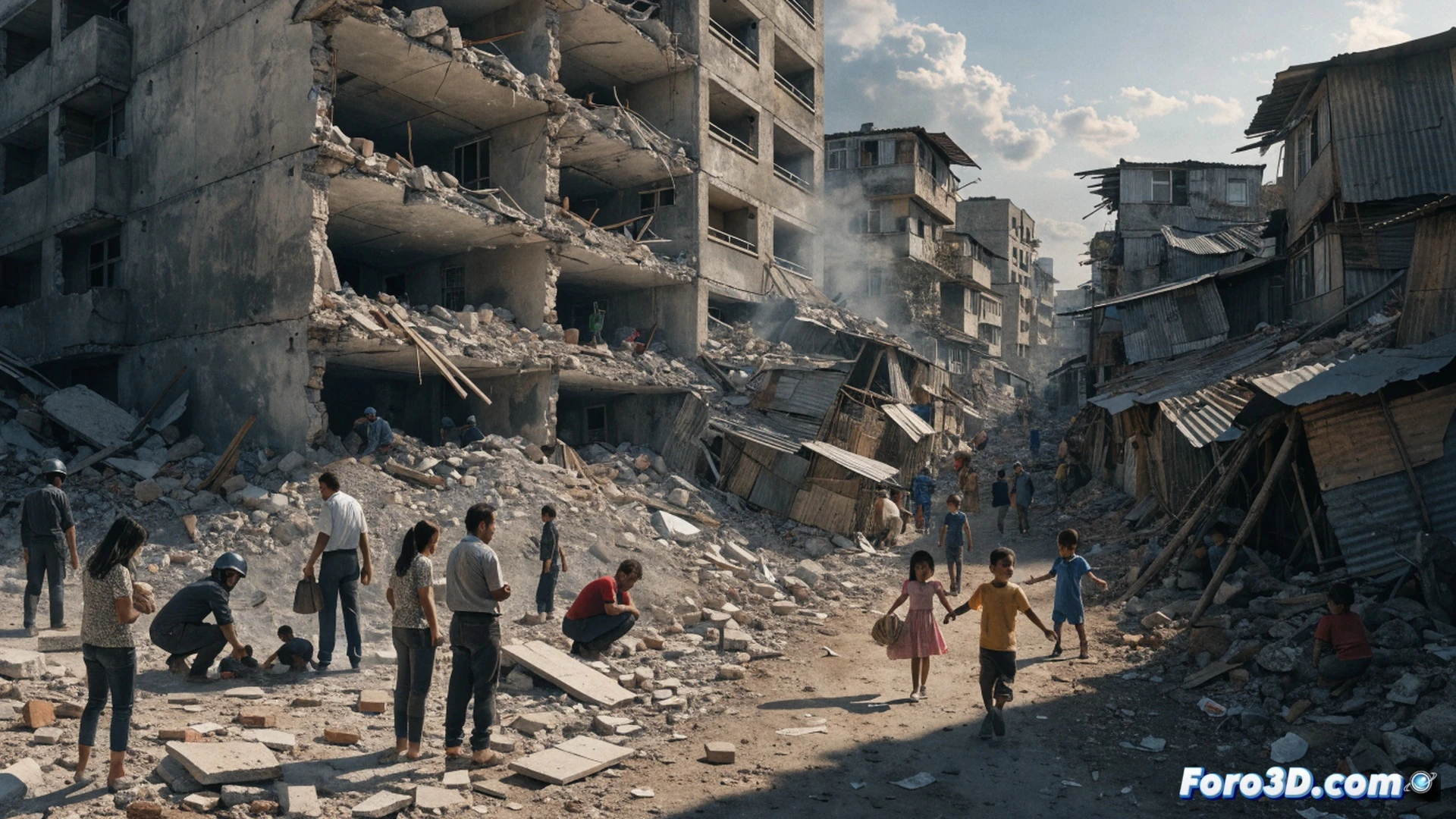
Recent media attention on the safety of a public figure after an earthquake in Venezuela has diverted focus from a real problem: the lack of resilient infrastructure in vulnerable areas. While the luck of a privileged individual is celebrated, thousands of poor families, without access to safe housing or sanitary services, remain exposed to aftershocks and collapses. The pre-existing humanitarian crisis worsens their defenselessness.
Early warning systems: available technology, absent will 🌍
Technical tools exist, such as low-cost seismic networks, IoT sensors for building monitoring, and evacuation protocols based on satellite data. However, their implementation in Venezuela is marginal. Governments and international organizations should prioritize the construction of earthquake-resistant housing and the installation of warning systems in risk zones. Relying on sporadic solidarity is as effective as using a broken umbrella in the middle of a storm.
VIP solidarity: when praying for a celebrity is easier than building a wall 🧱
It is heartwarming to see how social media fills with messages of support for a public figure who, in all likelihood, lives in a penthouse with earthquake-resistant structure. Meanwhile, in the hills of Caracas, people pray that their next tin roof does not fall on their heads. Perhaps the next earthquake will teach us that solidarity is not tweeted, it is built. Or we will continue to rely on the luck of the rich and the resilience of the poor.