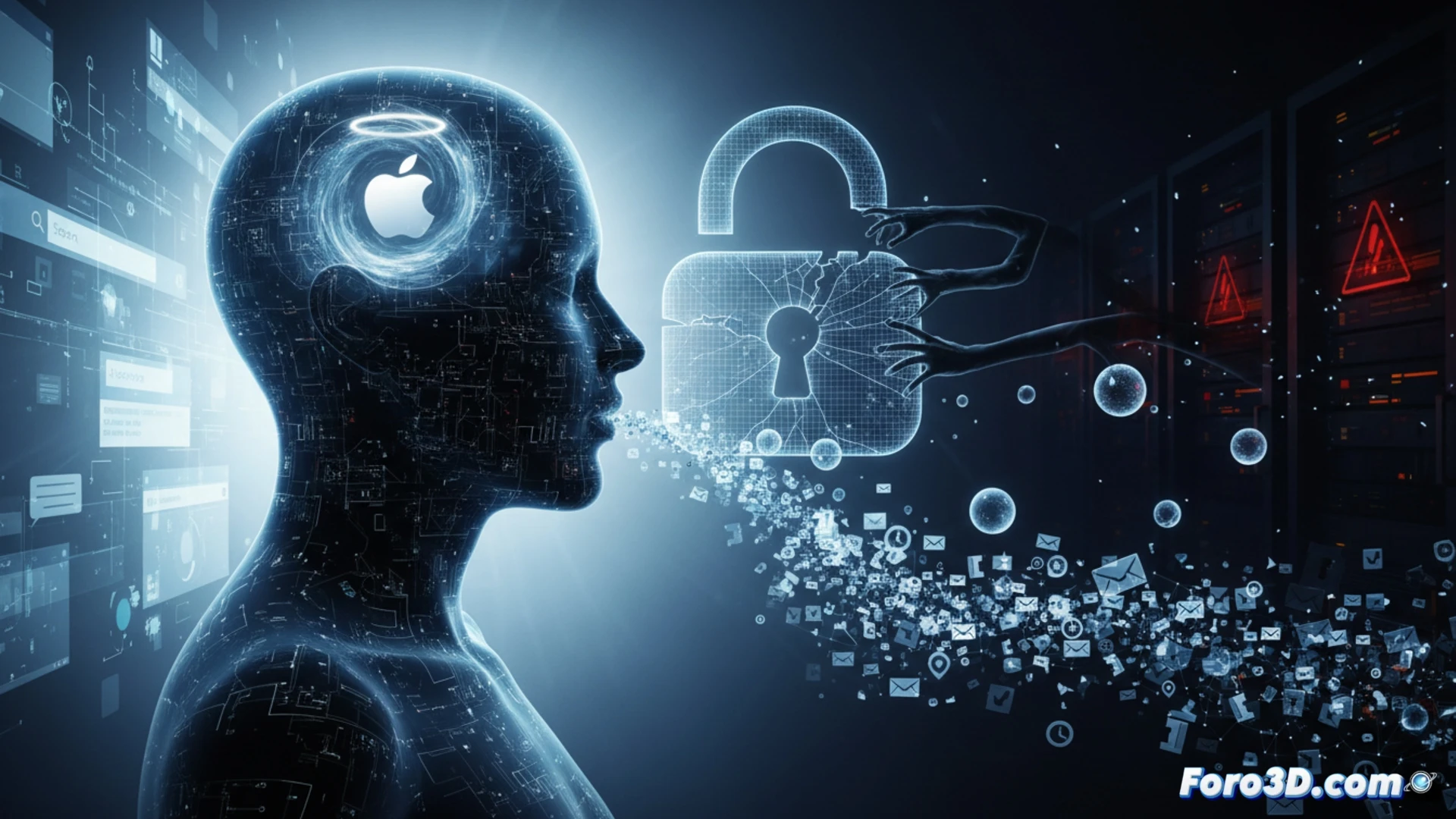
Apple introduced Siri AI as a smarter assistant, but the price of personalization is giving up control of your digital life. To offer detailed responses, it needs access to emails, messages, location, history, and health data, all sent to Apple's servers under privacy promises that have failed before. The user gains text, but loses their privacy.
The AI model that hallucinates without legal responsibility 🤖
Siri AI is trained on user conversations without any compensation, and its detailed responses come from a language model that can invent information without Apple assuming responsibility. Hallucinations are a real risk: the assistant can give false data about health, finances, or news, and the user will have no one to complain to. The technical improvement is for Apple's closed ecosystem, not for the accuracy of the service.
Siri AI: now it responds to you more, but spies on you better 👁️
Apple says Siri AI is more personal, but what it really personalizes is the amount of data it collects. It's like that friend who listens to you attentively only to sell your secrets to the highest bidder. The privacy promise is as solid as a glass door in a china shop. The assistant is now more talkative, but its true skill is making leaving the Apple ecosystem hurt more than a traffic fine.