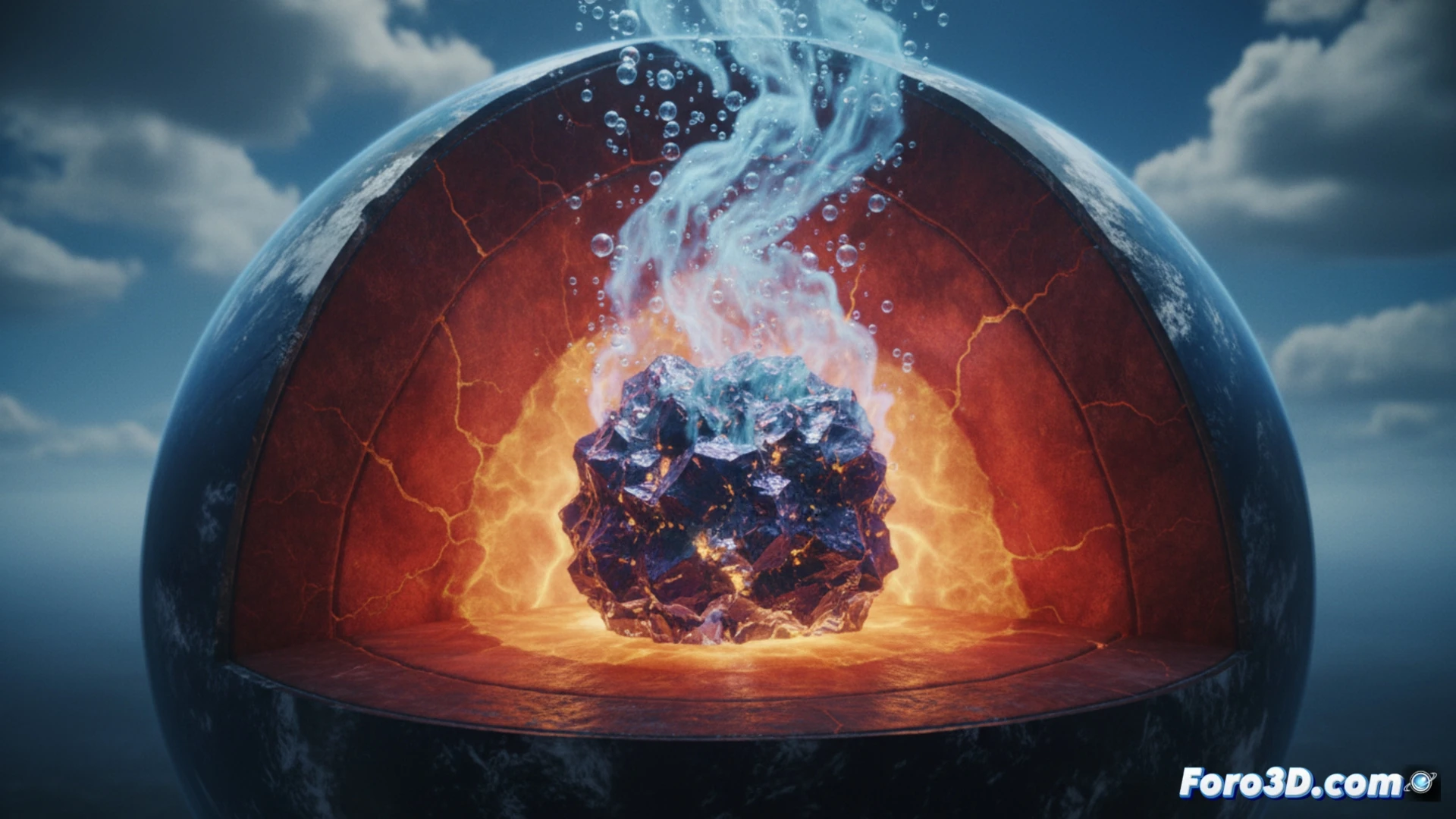
A new manganese compound, identified through computer simulations, could be hidden in the Earth's mantle and may have played an essential role in the emergence of atmospheric oxygen. The finding allows us to better understand how our planet became habitable, a process that still affects the quality of the air we breathe today.
Computational modeling unveils hidden chemistry in the depths 🧪
Researchers used molecular dynamics simulations and thermodynamic models to predict the existence of a manganese oxide stable at the pressures and temperatures of the upper mantle. This compound, not yet observed in real samples, could have acted as a catalyst in reactions that released molecular oxygen before the Great Oxidation Event. The accuracy of the models suggests these methods are useful for exploring inaccessible mineralogical phases.
Manganese: that silent neighbor who gave us the air 🌍
It turns out that while humans argue about who put more oxygen into the atmosphere, manganese had been quietly doing the job in the mantle for millions of years. Now it appears that this metal, famous for giving color to batteries and certain steels, could be responsible for us not all gasping like fish out of water. Good thing someone simulated it.