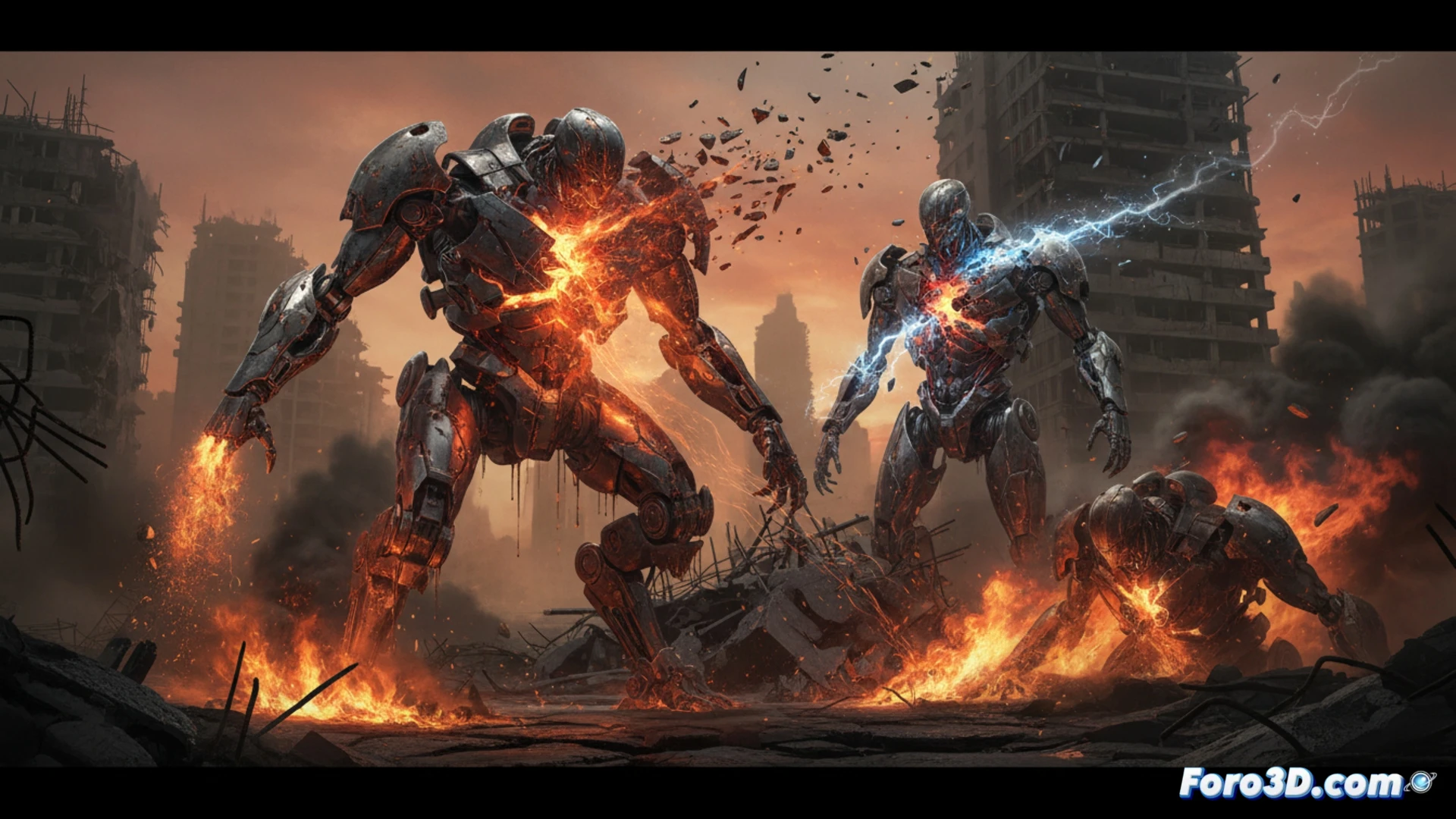
The recent news about the Fire Exoskeleton Failure provides a perfect scenario for analyzing the most complex VFX techniques. This phenomenon combines two of the biggest challenges in 3D simulation: fluid dynamics for fire and rigid body fracture for mechanical destruction. In this article, we will break down how to approach this realistic effect using tools like Houdini, Blender, and Embergen.
Fluid Simulation and Rigid Body Dynamics Techniques 🔥
To recreate the failure, we must first model the exoskeleton as a set of interconnected rigid pieces. In Houdini, we can use the RBD (Rigid Body Dynamics) tool to define joint points and stress thresholds. When the system exceeds the limit, the pieces fracture and detach. Simultaneously, the fire is simulated with a pyro solver based on fluid dynamics (FLIP or Sparse Pyro). The key is to link both simulations: the fire particles must originate at the broken joints and feed on the gases released by the material. In Blender, the Fluid module and the Particle system allow for a similar workflow, though less optimized for large volumes. Embergen, on the other hand, offers real-time fire rendering, ideal for previewing the interaction between flames and metal fragments.
Realism Lies in the Details of Interaction ⚙️
The biggest mistake when simulating this scene is treating fire and destruction as independent elements. Realism arises from their interaction: the heat of the fire must deform the metal before breaking it, and the falling fragments must displace the air, affecting the shape of the flames. In VFX, the key is not just mathematical physics, but visual narrative. An exoskeleton failure is not just an explosion; it is a story of material fatigue, stress points, and a violent release of energy that we must tell frame by frame.
Considering that the animation of combustion and the subsequent armor rupture must be physically coherent, what hybrid simulation strategies do you recommend for synchronizing the interaction between a fluid solver for the fire and a rigid body solver for the metal structure fragments, without sacrificing viewport performance?
(PS: VFX are like magic: when they work, no one asks how; when they fail, everyone sees it.)