The proliferation of unmanned aircraft in shared airspaces has increased the risk of collisions. This technical article proposes a workflow to simulate in 3D the impact between two drones, modeling critical variables such as relative speed, angle of incidence, and structural mass. The objective is to generate a digital replica of the incident to perform an accurate forensic reconstruction and evaluate the effectiveness of prevention systems.
Dynamic modeling and structural damage analysis 🛠️
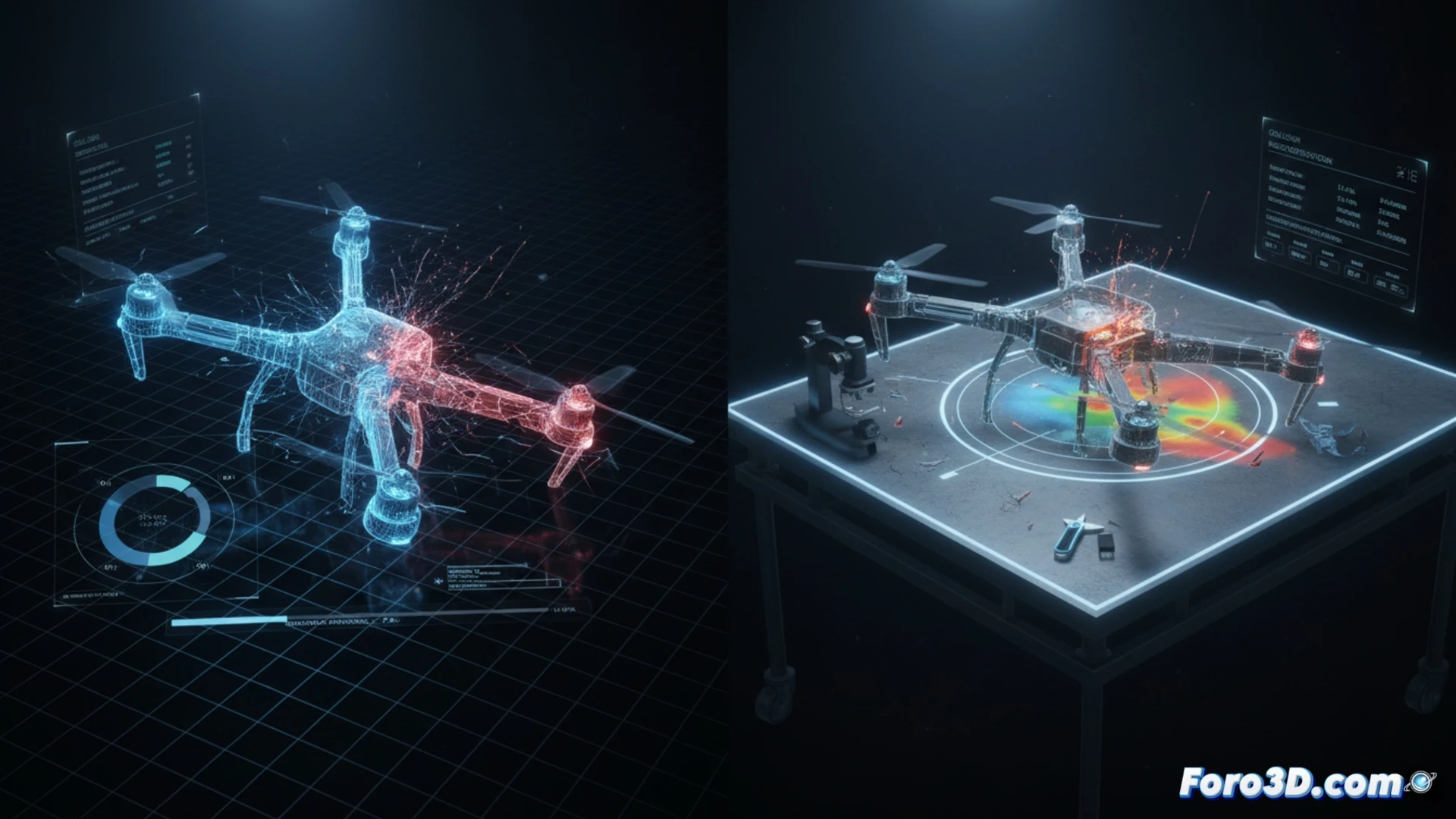
For the simulation, a physics engine for rigid and deformable solids is used, assigning mechanical properties to the materials of the fuselage, propellers, and batteries. Flight trajectories are defined with velocity vectors, and the impact point is calculated through frame-by-frame collision detection. The results visualize component fragmentation, kinetic energy dissipation, and debris projection. This analysis allows identifying critical structural failures and validating the effectiveness of geofences and anti-collision sensors, proposing safety thresholds for current regulations.
Forensic lessons for safer regulations 🔍
The 3D reconstruction of the accident reveals recurring patterns in collisions, such as the vulnerability of rotor arms and the inertia of batteries. This forensic data is essential for drafting disaster response protocols and improving design standards. The simulation not only helps mitigate future incidents but also offers a pedagogical tool for operators and regulators, demonstrating that technical prevention is the best investment against catastrophe.
How can the accuracy of a 3D simulation of an impact between drones be validated so that it is admissible as expert evidence in a forensic collision process?
(PS: Simulating catastrophes is fun until the computer crashes and you are the catastrophe.)