Coastal hotel logistics face unique challenges during peak season, where the simultaneous flow of supplies, guests, and services can collapse internal systems. 3D modeling of these processes allows for visualizing transport routes, identifying bottlenecks at loading docks and reception areas, and optimizing resource distribution. This technical article explores how interactive simulation reveals hidden inefficiencies in the movement of staff, luggage, and perishable goods, proposing improvements based on spatial data.
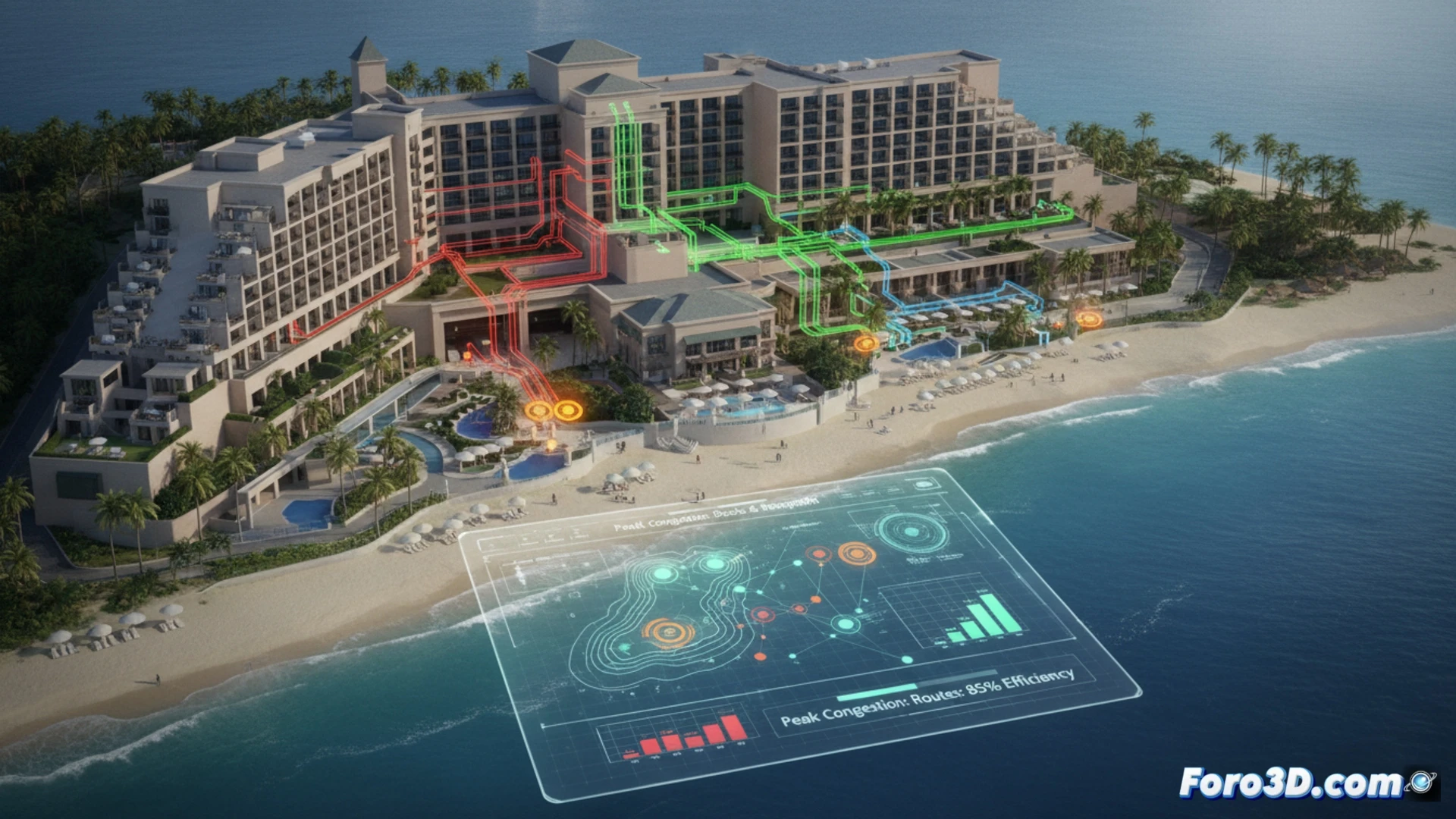
Modeling supply routes and stock management in coastal environments 🚚
To build an accurate simulation, the hotel's critical points are digitized: the unloading dock, food storage areas, laundry zones, and consumption points such as restaurants and bars. Using industrial animation software, the routes of service carts and freight elevators are traced, assigning travel times and load capacities. The simulation reveals that 40% of delays in room service are due to congestion in service corridors during mass check-in. By redirecting linen and minibar flows to a nighttime schedule, route collisions are reduced by 25%. The management of beverage and perishable food stocks is visualized with temperature and turnover indicators, allowing orders to be adjusted in real-time based on forecasted occupancy.
Lessons learned: how 3D visualization transforms hotel operations 💡
Interactive animation not only exposes bottlenecks but also allows testing solutions without risking the guest experience. For example, by simulating the relocation of a waste collection point, three unnecessary stops for cleaning staff were eliminated, saving 45 minutes per shift daily. The key is to treat the hotel as a seasonal production plant, where every square meter of corridor and every minute of service has a measurable logistical cost. Ultimately, 3D simulation becomes a negotiation tool with suppliers and management, demonstrating with visual data that efficiency begins in the invisible flow of supplies.
How can 3D simulation of logistical flow in a coastal hotel optimize supply management during peak season to avoid bottlenecks at access points and warehouses?
(PS: 3D logistics is nice until you try to fit a container where it doesn't fit)