The recent news about an anchor failure in a portable cable highlights the need to understand fatigue mechanisms in fastening components. In this article, we will analyze typical failure modes using 3D simulation, including cyclic fatigue, stress corrosion cracking, and eccentric loading. We will use finite element models to visualize the von Mises stress distribution and animate crack propagation.
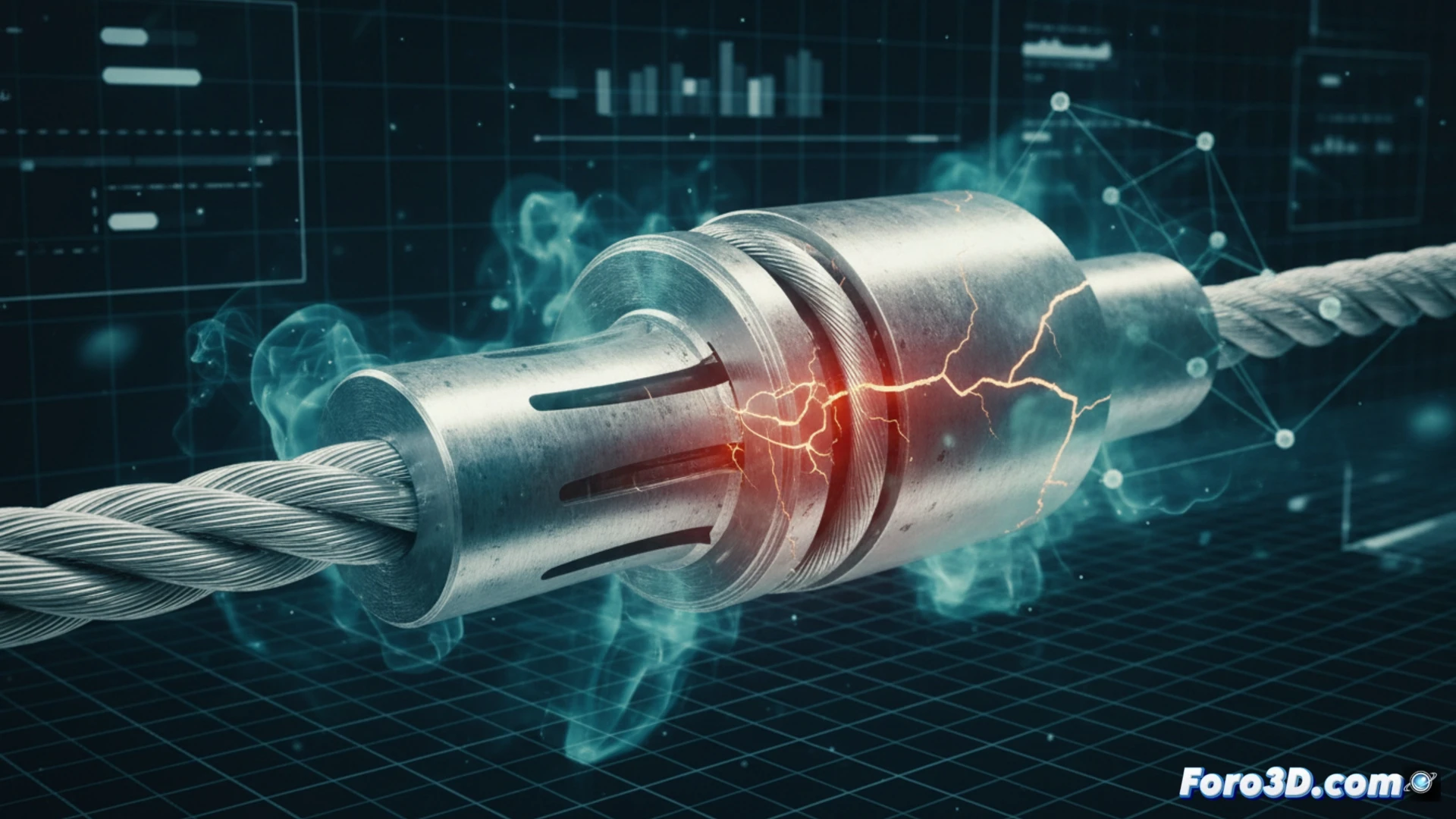
Stress modeling and crack propagation 🔬
For the analysis, we generated a 3D model of the anchor with a refined mesh in the stress concentration zones. We applied cyclic loads simulating the repetitive use of the cable. The results show that von Mises stresses concentrate at the hook fillet radius and on the threads of the clamping screw. The crack propagation animation reveals an initial slow growth (initiation phase) followed by rapid fracture (unstable propagation phase). The visual comparison between a new anchor and one degraded by stress corrosion cracking shows a 40% reduction in the estimated service life.
Lessons for design and preventive maintenance 🛠️
The simulation confirms that failures are not random, but predictable if load conditions are analyzed. We recommend designing anchors with generous fillet radii to reduce stress concentration. In maintenance, it is crucial to visually inspect high-stress areas and replace components after a certain number of load cycles. Implementing a real-time fatigue monitoring system could prevent similar accidents in the future.
Which 3D simulation techniques allow for more accurate prediction of the fatigue crack initiation point in portable cable anchors, considering cyclic loads and the actual component geometry?
(PS: Material fatigue is like yours after 10 hours of simulation.)