The bursting of a discharge pipe represents a catastrophic failure with immediate consequences for the environment and safety. This article analyzes how 3D reconstruction allows us to visualize the fracture mechanics, fluid dispersion, and collateral damage. Through digital twins, we can simulate containment scenarios and assess structural risks to prevent future incidents.
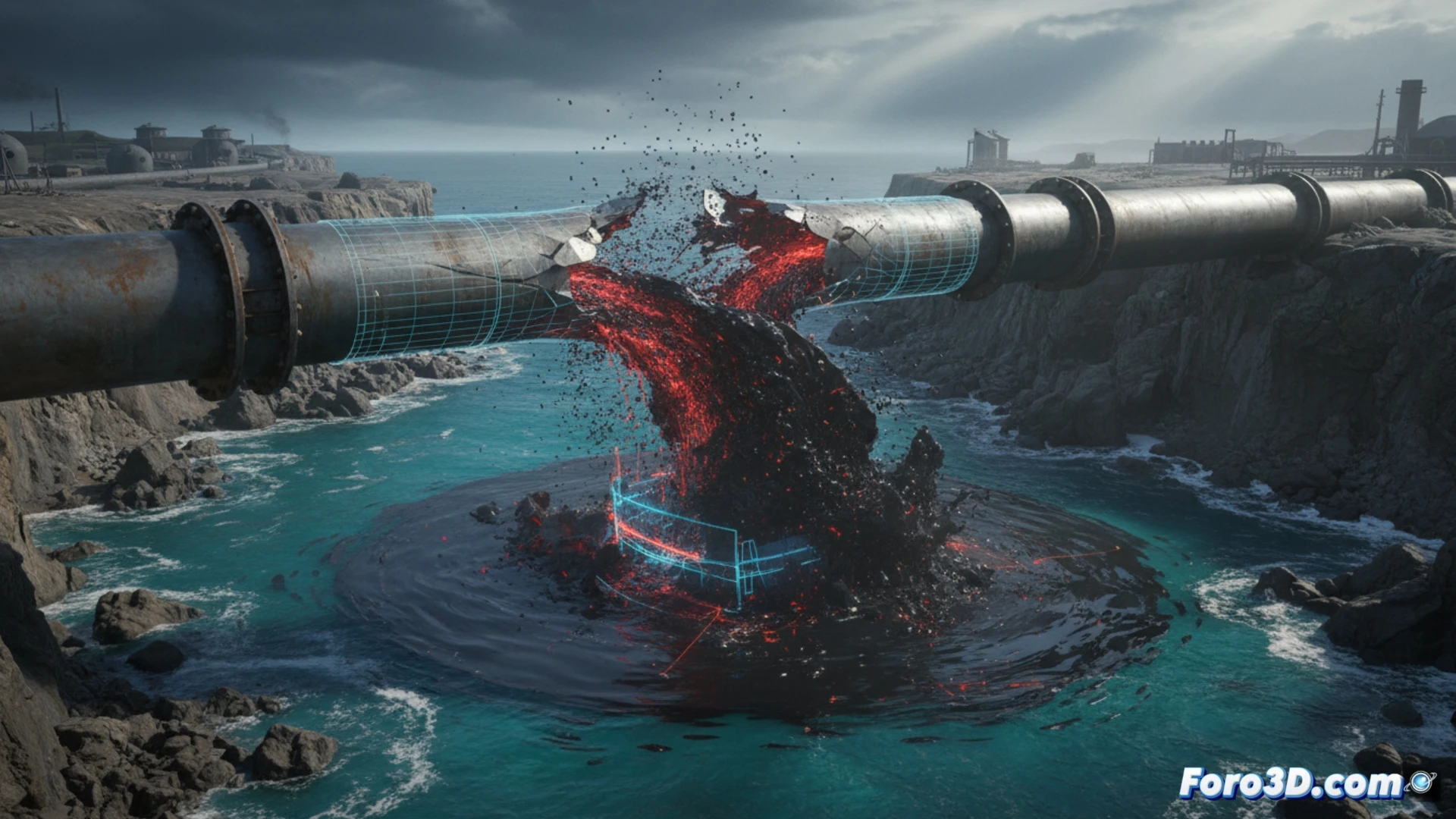
Geometric reconstruction and analysis of fracture mechanics 💥
The 3D simulation of the incident begins with modeling the pipe and its failure point. Based on pressure, material, and fatigue data, the sequence of cracking and explosion is reproduced. The model allows visualizing the shockwave and the trajectory of the discharge, calculating the radius of impact. The integration of topographic and meteorological data refines the dispersion of the contaminant. This tool is key for safety engineers, as it allows virtual testing of structural reinforcements and automatic shut-off systems, reducing the risk of real disasters.
Lessons for prevention from the simulated catastrophe 🛠️
The comparison with real cases, such as the Kalamazoo oil spill, reveals common patterns in material fatigue and corrosion. 3D simulation not only reconstructs the past but also anticipates failure scenarios. By visualizing the burst, maintenance teams can identify critical points and prioritize inspections. The true value of this technique lies not in the catastrophe itself, but in preventing the next one.
How can the 3D simulation of a discharge pipe burst accurately predict the dispersion of contaminants and their impact on aquatic ecosystems during the first critical minutes of the incident?
(PS: Simulating catastrophes is fun until the computer crashes and you are the catastrophe.)