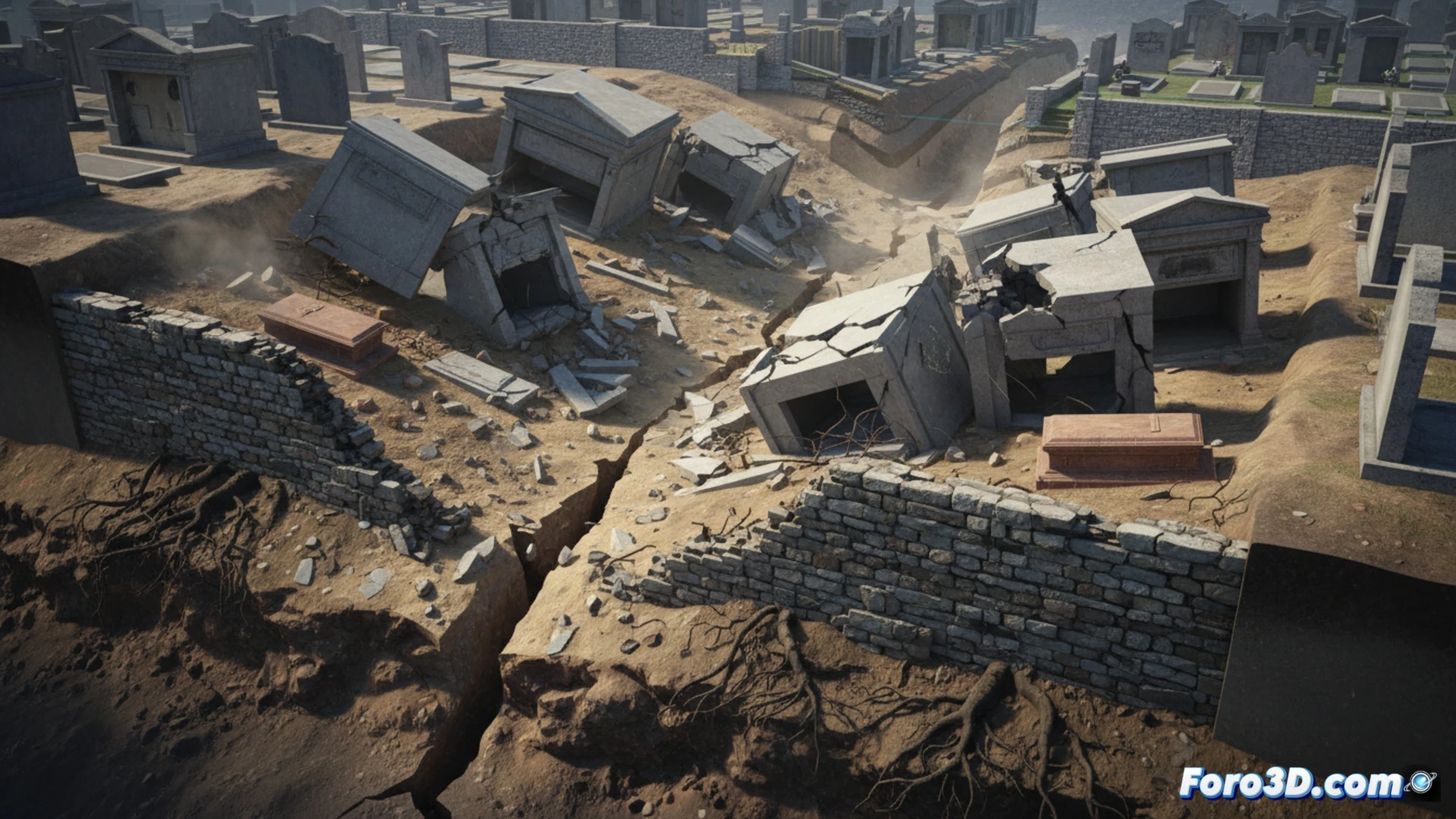
The structural collapse of a cemetery, known as cemetery collapse, represents a complex technical challenge combining geotechnics, meteorology, and material fatigue. Through 3D modeling of the terrain and affected infrastructure, we can break down the event into phases: substrate erosion, retaining wall failure, and progressive vault collapse. This analysis allows not only recreating the sequence of the incident but also identifying risk patterns in similar facilities.
Geotechnical modeling and structural failure analysis 🏗️
To recreate the collapse, a finite element model is used that integrates topographic data of the cemetery with soil parameters, such as cohesion and friction angle. The simulation reveals that the main cause is usually soil saturation due to heavy rainfall, which reduces bearing capacity and causes differential settlements. In the 3D animation of the process, it is observed how cracks in the crypts propagate from the base to the roof, culminating in a cascading collapse. The before-and-after infographics show the deformation of the terrain profile and the displacement of slabs.
Lessons for preventing future incidents 🛡️
The analysis of the cemetery collapse underscores the need for perimeter drainage systems and crack monitoring with IoT sensors. Simulations predict that the installation of micropiles and geotextiles reduces the probability of failure in clay soils by 60%. The 3D recreation not only documents the disaster but also becomes a teaching tool for engineers and heritage managers, demonstrating that technology can anticipate catastrophes where memory rests.
Is it possible to accurately predict the structural failure point in a cemetery through 3D simulations that integrate variables such as soil degradation, water infiltration, and the weight of underground tombstones, or are there still unpredictable factors that limit its reliability in preventing cemetery collapse?
(PS: Simulating catastrophes is fun until the computer crashes and you are the catastrophe.)