The rupture of a massive fish tank is not a simple household accident; it is a catastrophic hydraulic event capable of generating a liquid shock wave with forces comparable to a flash flood. In this technical article, we analyze how to model in 3D the fluid dynamics associated with the collapse of a large-volume aquarium, evaluating hydrostatic pressure, water propagation speed, and the structural impact on the urban environment.
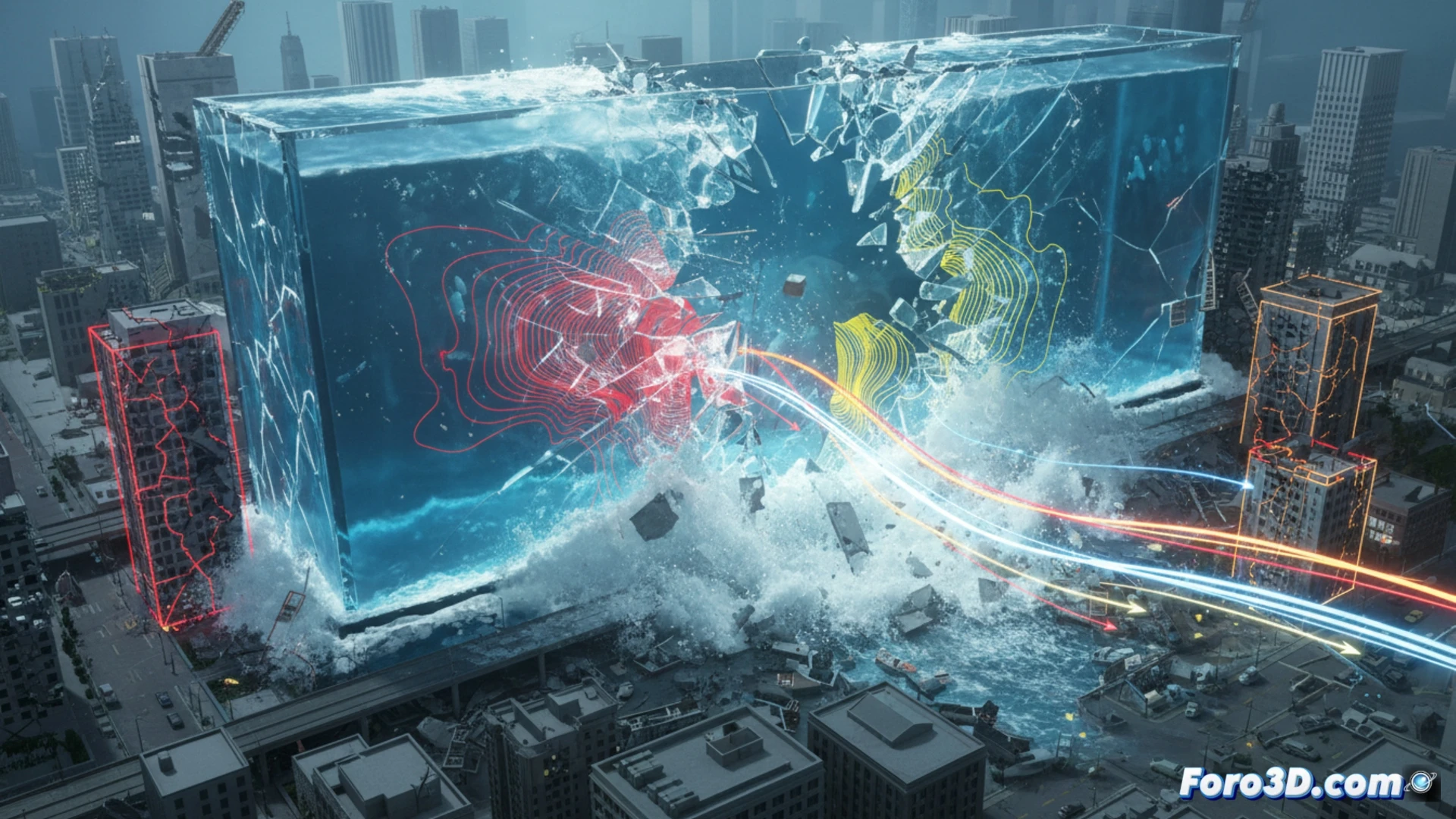
CFD modeling and simulation of structural collapse 💧
To recreate this disaster in a 3D environment, we apply a Computational Fluid Dynamics (CFD) approach using adaptive mesh solvers. The first step is to define the volume of water contained, calculating the pressure at the bottom of the aquarium using the equation P = pgh. When simulating the rupture of tempered glass, the model must consider the instantaneous release of potential energy, generating a wave front traveling at speeds exceeding 10 m/s. The impact visualization includes calculating drag forces on furniture and pedestrians, as well as water propagation through adjacent streets and buildings, using real incident data such as the Berlin Aquarium rupture in 2022 to calibrate the simulation.
Lessons for prevention and emergency response 🚨
This 3D recreation reveals that the evacuation time in an area affected by a massive rupture is less than 30 seconds, a critical margin that demands specific emergency protocols. The modeling allows identifying weak points in urban infrastructure and designing temporary containment barriers. As a technical community, we must promote the creation of digital twins for public and private aquariums to anticipate these failures, transforming a tragic event into an educational tool that saves lives.
How does the scale and geometry of a massive fish tank affect the propagation speed and profile of the hydraulic shock wave in a 3D simulation of its catastrophic rupture?
(PS: Simulating catastrophes is fun until the computer melts down and you are the catastrophe.)