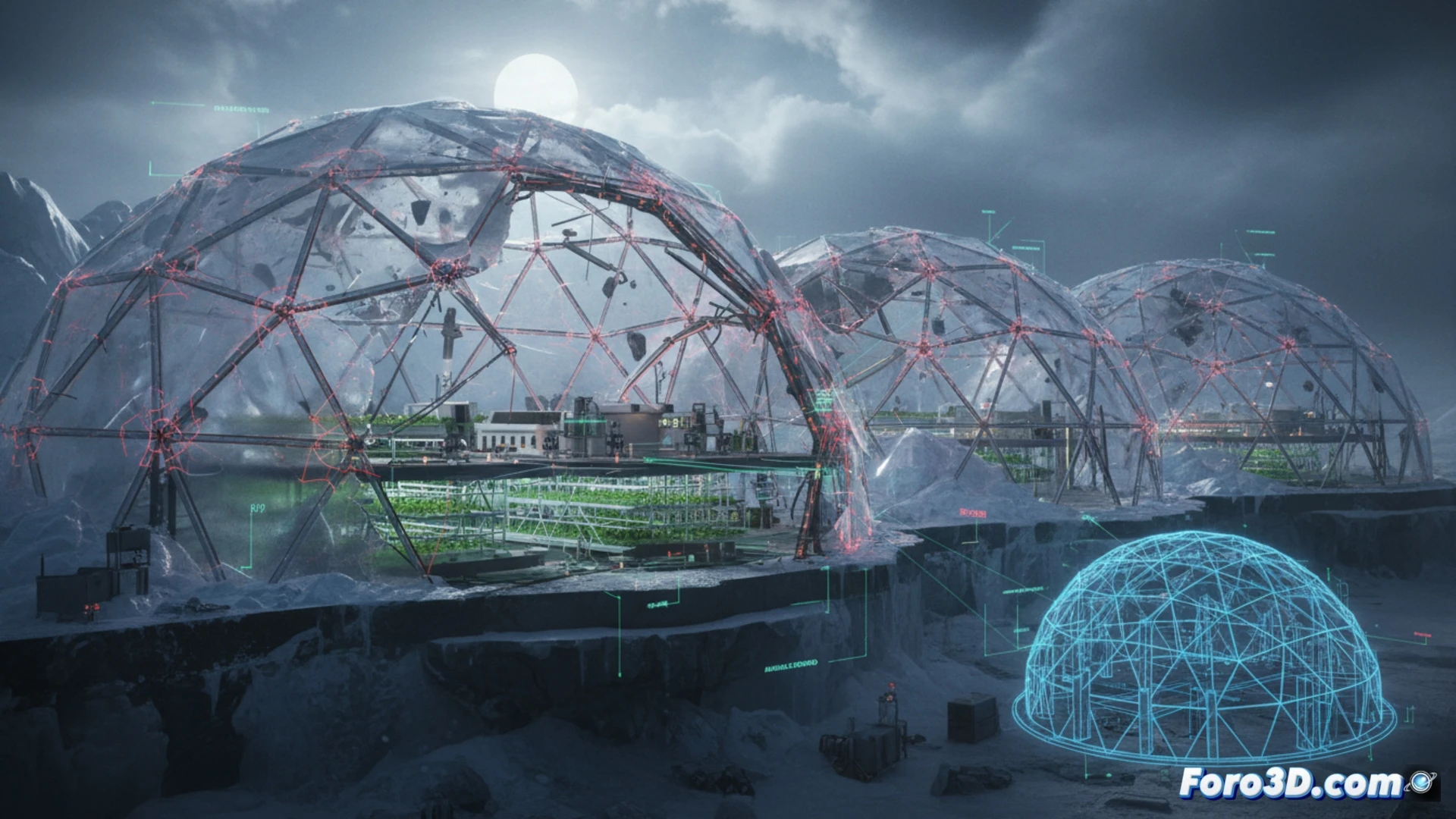
The collapse of greenhouses in polar regions represents a catastrophic failure where material fatigue is accelerated by extreme climate stress. We analyze the progressive deformation process using 3D simulation, from the initial microcrack to the total rupture of the structure. This article breaks down the critical environmental variables and proposes design improvements based on stress-strain data.
Fatigue modeling and extreme environmental conditions 🧊
The 3D simulation incorporates a finite element model to evaluate the resistance of polycarbonate and aluminum against combined loads. The input variables include wind gusts of up to 120 km/h, snow accumulation with variable density, and freeze-thaw cycles that generate microfractures. The software visualizes stress distribution in real time, identifying critical points in the joints and cover arches. The results show that 70% of collapses initiate at the permafrost anchors due to fatigue from differential thermal contraction.
Lessons for infrastructure in hostile climates 🌨️
The 3D visualization reveals that excessive rigidity in the side frames is counterproductive, as it concentrates stress at fixed points. A viable solution is to incorporate flexible joints with shape memory and reinforcements at the highest stress nodes. This analysis demonstrates that disaster prevention in polar infrastructure requires adaptive design that absorbs the energy of extreme weather, rather than resisting it statically.
How to model in 3D the progression of structural failure in a polar greenhouse when thermal fatigue microcracks combine with extreme wind loads to trigger catastrophic collapse.
(PS: Simulating catastrophes is fun until the computer melts down and you are the catastrophe.)