The recent collapse of a hangar has highlighted the need to review maintenance protocols in aeronautical infrastructures. Far from being a sudden failure, this type of incident is usually the culmination of a process of material fatigue and accumulated overloads. We analyze the incident from the perspective of 3D simulation to break down the technical causes of the collapse.
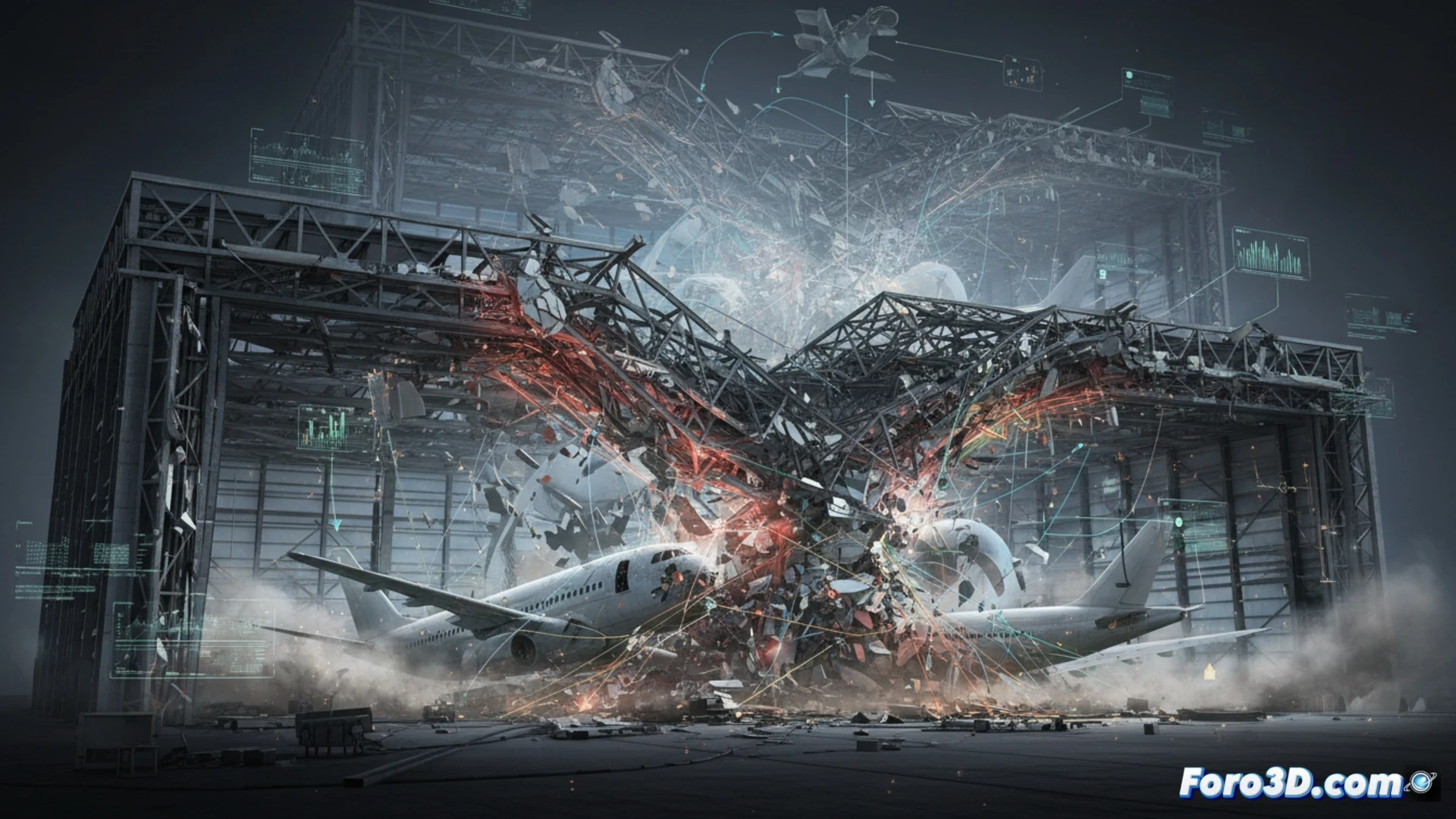
Virtual recreation of structural fatigue in the hangar roof 🏗️
Using a digital twin of the collapsed hangar, we have modeled the cyclic loads to which the structure was subjected during its service life. The 3D simulation, based on the finite element method, reveals microcracks originating in the welded joints of the main beams. These cracks, invisible in routine visual inspections, propagated under the combined stress of the roof weight and wind-induced vibrations. The dynamic analysis software shows that the critical failure point coincides exactly with the area of highest stress concentration, where water drip corrosion accelerated the fatigue process.
Lessons for the future: digital twins as a safety tool 🔧
The recreation of the disaster demonstrates that traditional periodic inspection is not sufficient. Implementing a digital twin of the hangar would allow real-time monitoring of the structure's deformation and prediction of its remaining service life. We propose integrating IoT sensors that feed these 3D models, activating alerts for any deviation from load thresholds. This technology would not only prevent future collapses but also optimize maintenance costs, replacing scheduled reviews with predictive interventions based on real data.
How can 3D simulation of structural fatigue in hangars predict critical failure points before a real collapse occurs, and which preventive maintenance parameters should be prioritized based on the results of these simulations
(PS: Simulating catastrophes is fun until the computer crashes and you are the catastrophe.)