Last Saturday, a deafening roar shook Boston and several neighboring states, rattling houses and alerting the population to a possible earthquake. However, NASA confirmed that it was a natural bolide that exploded in the atmosphere traveling at 120,000 km/h, releasing energy equivalent to 300 tons of TNT. The event, although spectacular, posed no danger, but the initial confusion between an earthquake and an astronomical phenomenon demonstrates the need for visual tools to educate and prevent panic.
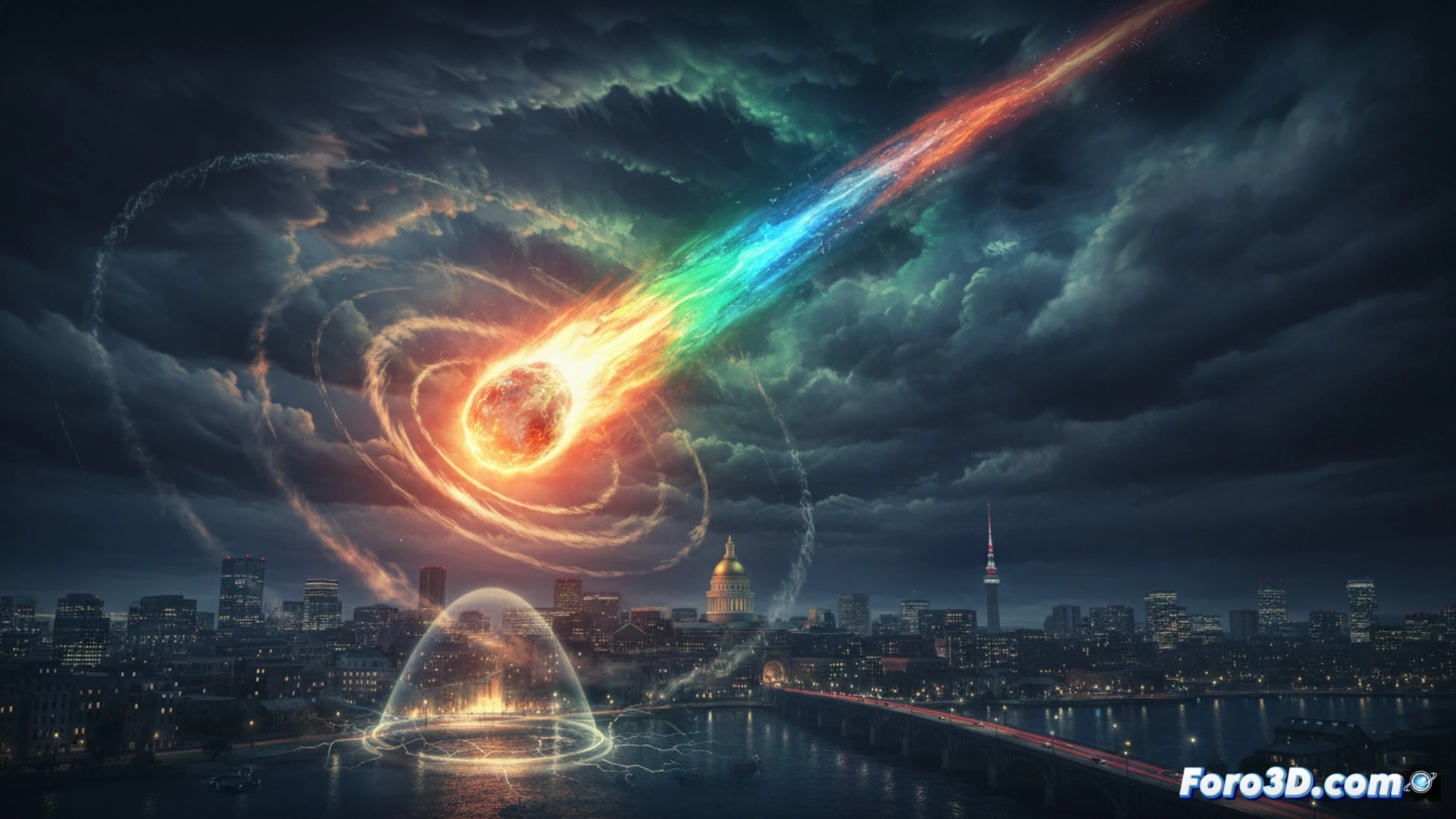
Trajectory and shock wave modeling in 3D environments 🌠
3D simulation technologies allow us to accurately recreate the trajectory of a bolide like the one in Boston, calculating its entry angle, supersonic speed, and fragmentation point. Using physics engines and fluid dynamics, we can model the propagation of the shock wave, visualizing how energy is distributed over a radius of hundreds of kilometers. These simulations are key to differentiating the vibration pattern of a meteorite (air blast waves) from that of an earthquake (seismic waves in the ground), helping emergency teams identify the real cause of the roar without mobilizing unnecessary resources.
Interactive visualization for informed citizen response 🚀
The confusion between a bolide and an earthquake is not trivial: panic can lead to mass evacuations or emergency calls that overwhelm systems. An interactive 3D simulation, accessible from a browser, would allow any citizen to enter their location and view the estimated sound intensity and vibration map for the Boston event. By visually comparing the perception zones of the meteorite with those of a simulated earthquake, the population would learn to identify these harmless phenomena, transforming an alarming event into a lesson in applied science for disaster management.
What variables would you consider for modeling this disaster?