The alcoholic explosion is a catastrophic phenomenon that occurs when flammable vapors of ethanol or methanol accumulate in an enclosed space and encounter an ignition source. Unlike solid fuels, alcohol generates a rapid deflagration that can fracture concrete walls in milliseconds. In this article, we will analyze how 3D simulation allows modeling the kinetics of the shock wave, gas dispersion, and structural collapse to improve industrial safety protocols.
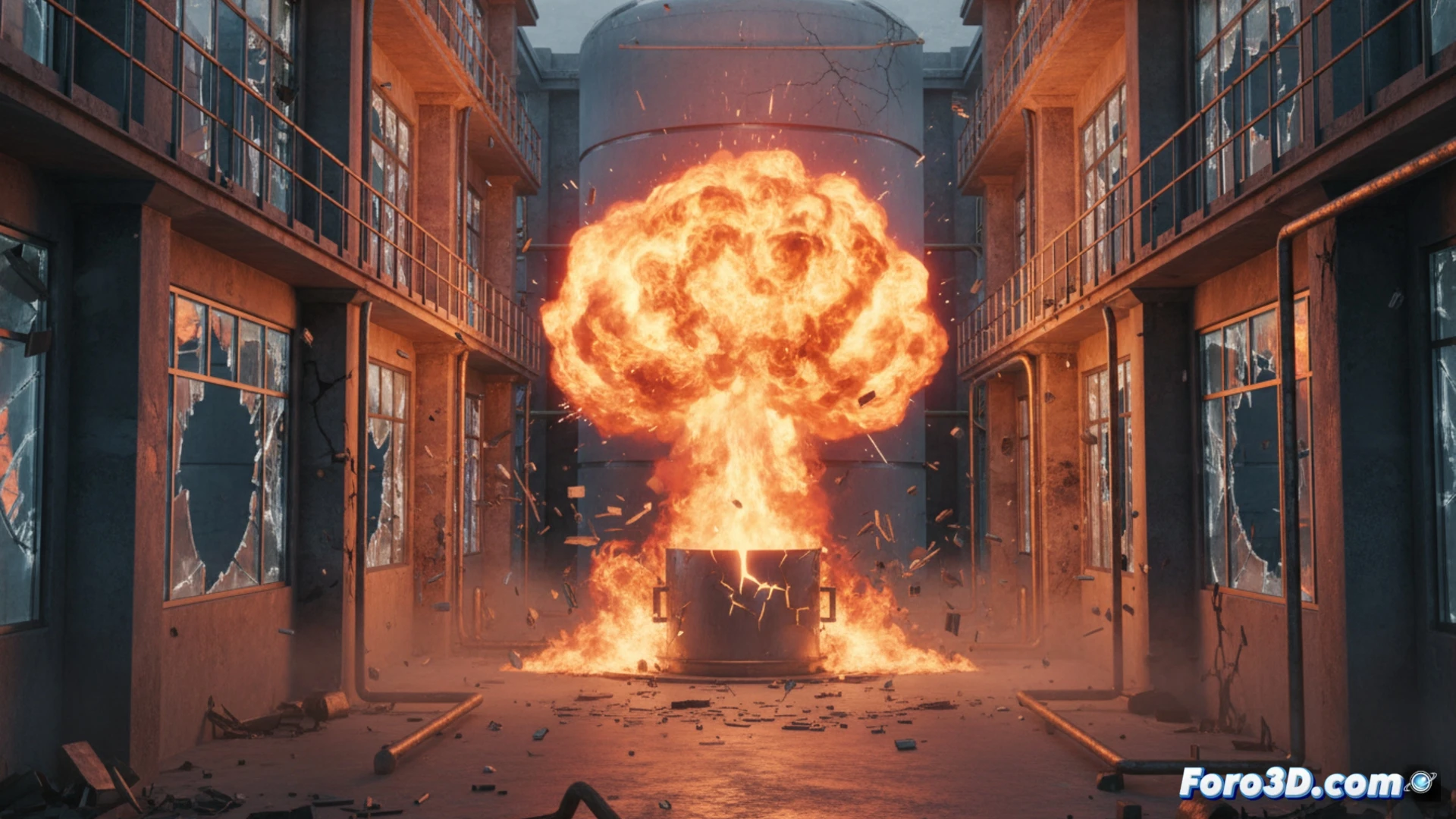
Modeling of propagation and structural damage 💥
To digitally recreate this disaster, a digital twin is used that integrates computational fluid dynamics (CFD) and finite element analysis. The model considers variables such as vapor concentration in the flammability range (3.3% to 19% for ethanol), ambient temperature, and enclosure geometry. The simulation of the alcoholic explosion shows how peak pressure exceeds 8 bars in less than 0.1 seconds, generating progressive fragmentation of glass panels and plastic deformation in metal structures. The results allow identifying weak points in storage tanks and critical ventilation routes.
Virtual lessons for real prevention 🛡️
Beyond visual spectacle, these virtual reconstructions have undeniable practical value. By simulating different ignition conditions, engineers can evaluate the effectiveness of nitrogen inerting systems or the installation of sacrificial walls. The alcoholic explosion ceases to be an abstract accident and becomes a measurable and preventable scenario. Each pixel of the simulation is a warning about the need to monitor vapor concentration and maintain forced ventilation in distillation plants.
Which physical and chemical parameters are most critical for accurately modeling the transition between deflagration and detonation in a 3D simulation of an alcoholic explosion in a confined environment?
(PS: Simulating catastrophes is fun until the computer melts down and you are the catastrophe.)