The recent breakage of an electric aircraft during testing has reopened the debate on the structural integrity of battery-powered aircraft. The fracture, which occurred in the rear fuselage during a stress maneuver, not only left striking images but also raises crucial technical questions for the industry. At Foro3D, we analyze this incident through a detailed virtual reconstruction, modeling the fracture points and the behavior of the composite material under extreme loads.
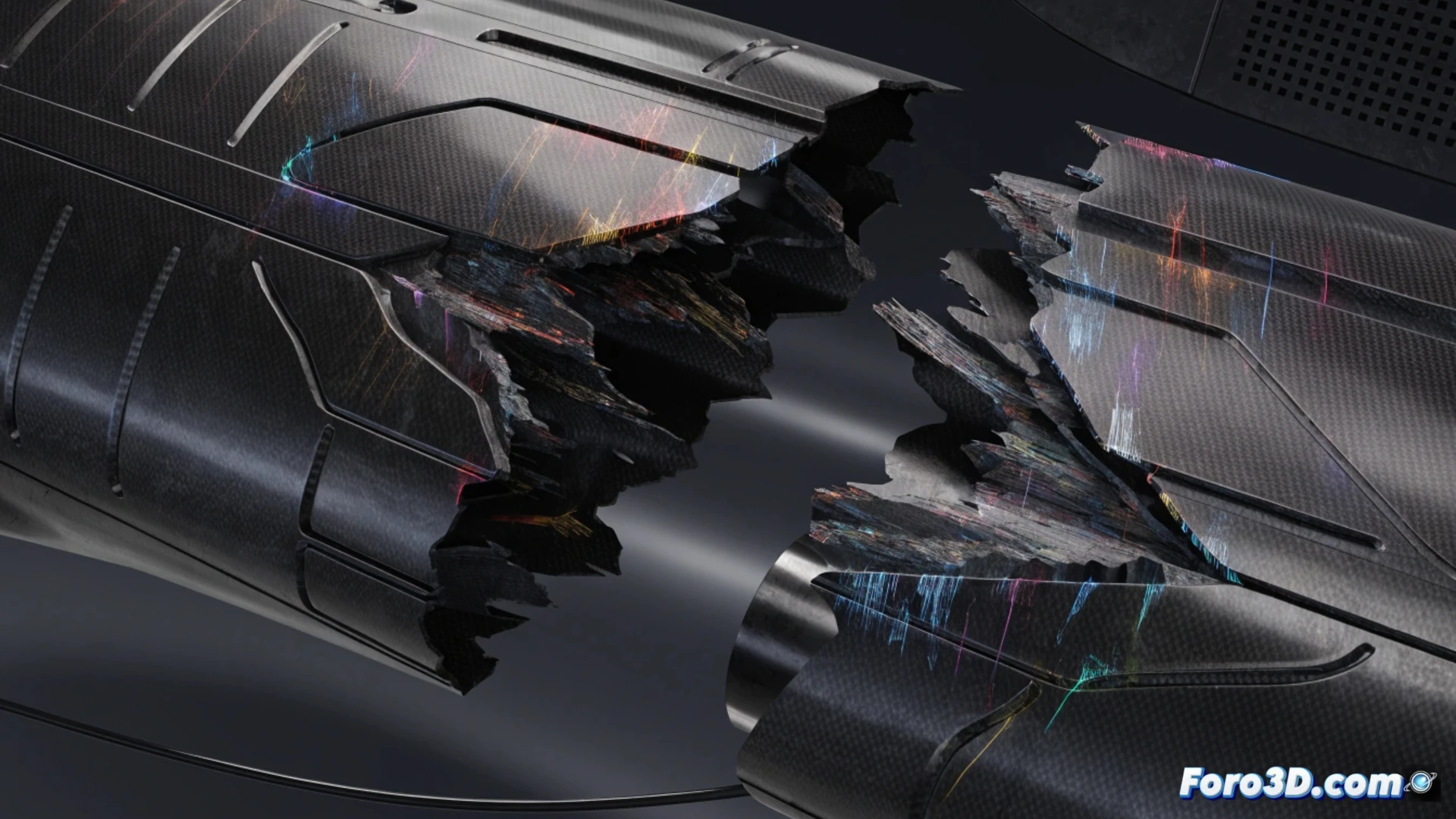
Virtual reconstruction of the failure: digital twins and stress analysis 🛩️
To understand the mechanics of the collapse, we have generated a digital twin of the crashed aircraft using telemetry data and accident photographs. The 3D model has undergone a finite element analysis (FEA) that reveals a critical stress concentration at the junction of the wing with the battery gondola. The simulation shows that the harmonic vibration generated by the electric motors, combined with the rigidity of the lithium-ion battery pack, created a point of premature fatigue in the carbon fiber laminate. The fracture was not explosive, but progressive, propagating along the bond line of the structural adhesive.
Lessons for design: towards safer virtual certification ⚙️
This case demonstrates that 3D simulation is not just a visualization tool, but an indispensable testing laboratory. The breakage was not due to an impact, but to a cyclic fatigue failure underestimated in the initial models. I propose integrating digital twins with real-time IoT sensors to monitor fuselage deformation during flight. If we apply these predictive simulations in the design phase, we could prevent the next generation of electric aircraft from repeating these structural errors.
How do dynamic loads and fatigue cycles influence the prediction of structural failures in 3D simulations of electric aircraft components during strength testing?
(PS: Simulating catastrophes is fun until the computer crashes and you are the catastrophe.)