The convergence of vertical farming and water disasters presents a unique catastrophic scenario. A vertical farm flood not only involves the spread of water at height but also the progressive collapse of hydroponic systems, total crop loss, and structural failure of cultivation towers. 3D modeling allows us to anticipate these failures, simulating hydrostatic pressure on solar panels, short circuits in climate control systems, and the rupture of nutrient tanks.
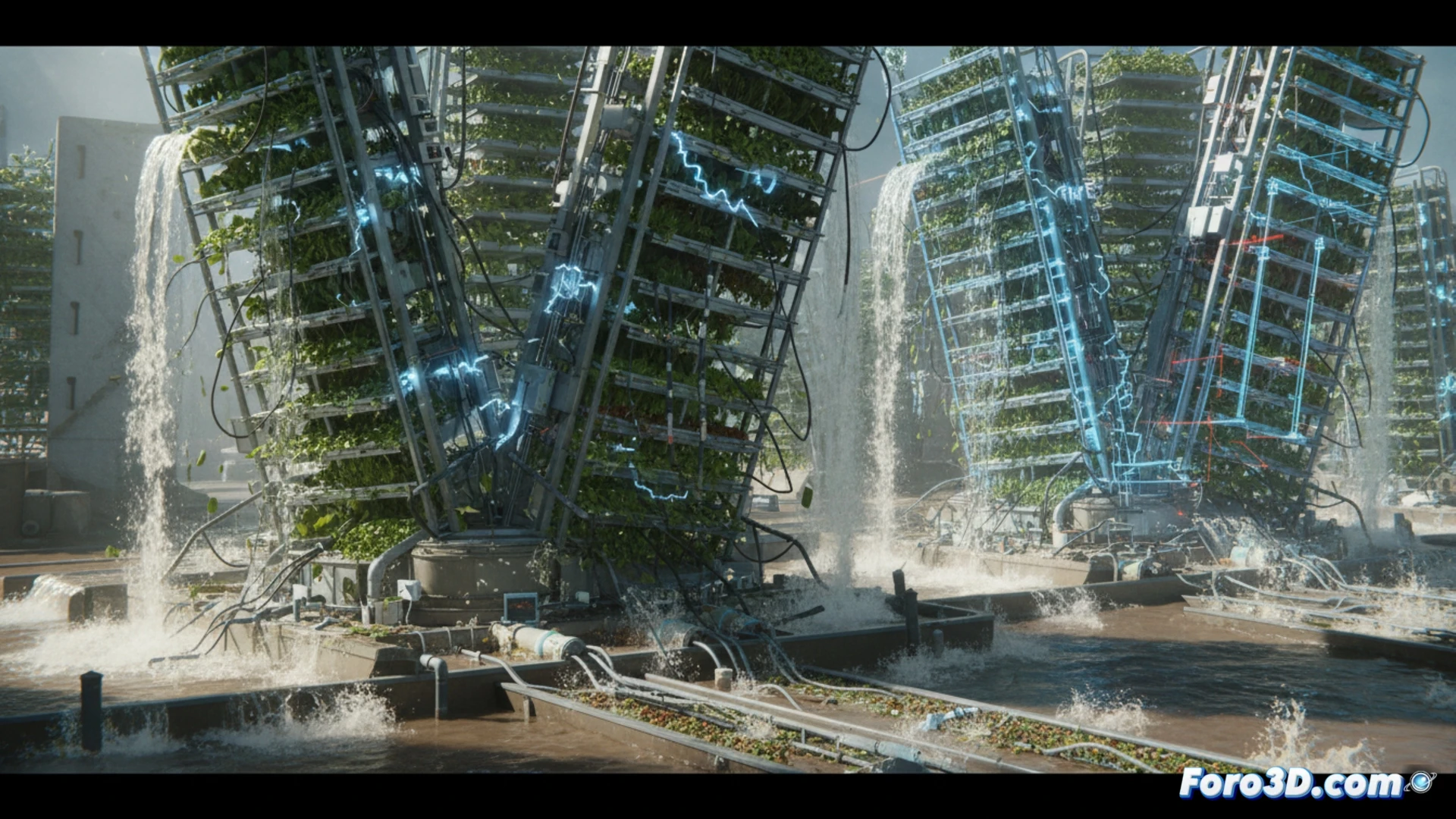
Modeling Water Propagation and Structural Damage in Hydroponic Racks 🌊
Simulating this disaster requires a digital twin that integrates IoT sensor data (humidity, flow rate, pressure) with a 3D physics engine for fluids. The algorithm must calculate the water's trajectory from the point of rupture (e.g., a main irrigation pipe) to the lower levels. The technical visualization shows how water saturates rock wool substrates, destabilizes stacked racks, and creates a domino effect. Structural stress simulation (FEM analysis) reveals critical collapse points, allowing for the design of reinforcements at vertical scaffold joints and emergency drainage systems.
Visual Prevention and Response to the Food Disaster 🚨
The catastrophe is not only structural; it is a supply crisis. The 3D model allows for planning personnel evacuations in narrow corridors and simulating the rescue of genetically valuable crops. Digital twins offer a safe laboratory for testing watertight doors and automated bilge pumps. In the response, augmented reality (AR) overlays escape routes onto virtual debris, showing how a failure in agricultural verticality can trigger a local famine if not mitigated in time.
What variables would you consider for modeling this disaster? 🤔