Electromagnetic interference in vehicle lighting systems is a growing challenge with the adoption of LED headlights and adaptive matrices. These technologies, sensitive to high-frequency noise, can cause flickering or communication failures. 3D modeling and digital twins offer a predictive solution, allowing engineers to visualize and correct these interferences in a virtual environment before producing a single physical prototype.
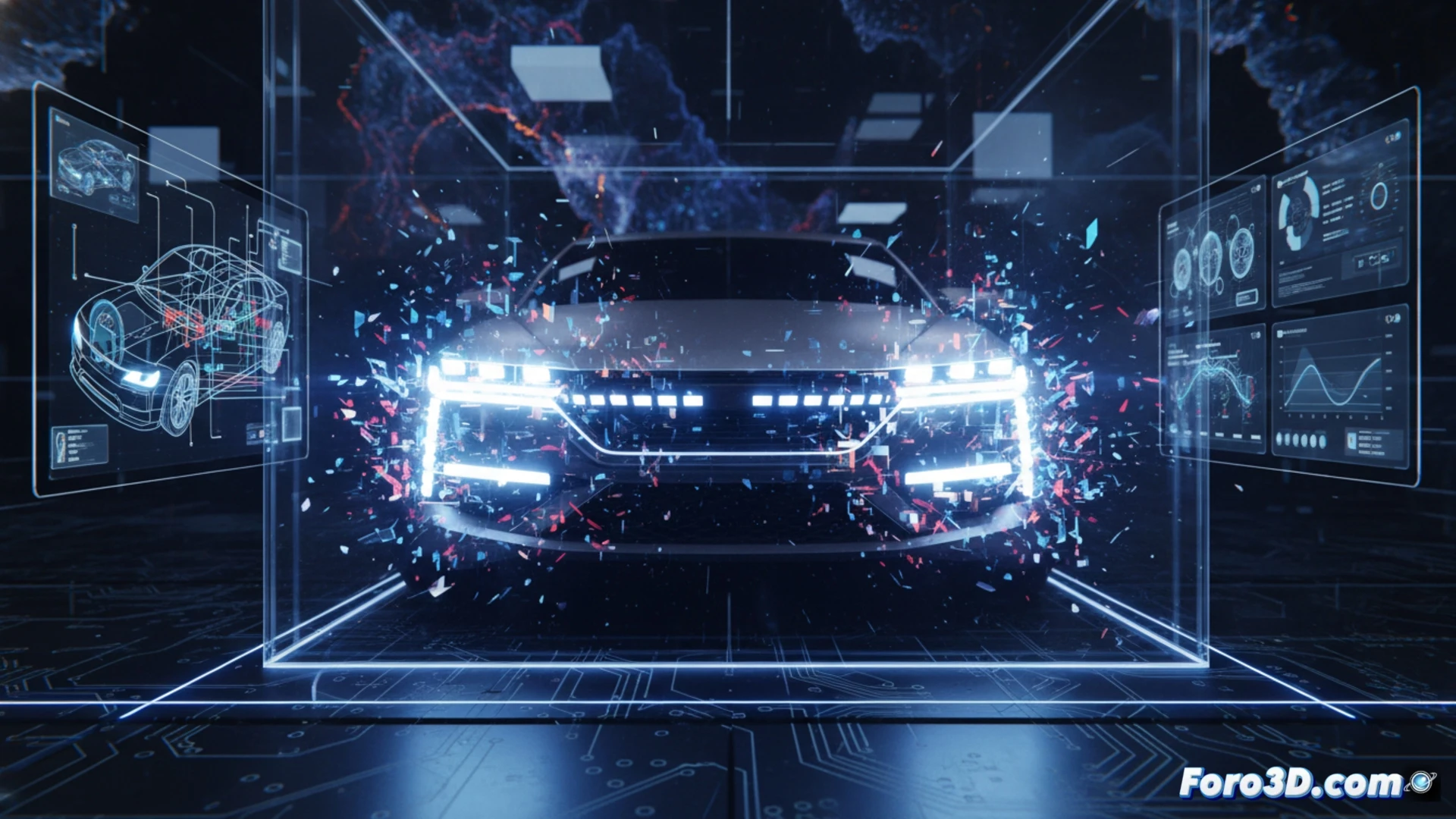
Modeling EMI in Digital Twins for LED Headlights 🚗
The use of 3D electromagnetic simulation software allows recreating the behavior of LED drivers and pixel matrices. By integrating these models into a digital twin of the vehicle, it is possible to analyze how signals from the ignition modules interact with the body wiring. Critical points of capacitive or inductive coupling that cause fluctuations in light intensity can be detected. This approach reduces redesign costs and accelerates homologation, ensuring that adaptive lighting responds correctly without external interference.
Virtual Optimization Before the Real Prototype 💡
The automotive industry is moving towards simulation-based design, where fault prediction is key. Modeling interference in vehicle lighting with 3D tools not only improves system reliability but also allows experimenting with virtual shields and filters. This method transforms a complex technical problem into a controllable variable, ensuring that the headlights of the future are as intelligent as they are robust against the vehicle's electrical noise.
How can 3D simulation predict and mitigate electromagnetic interference in adaptive LED headlights without compromising luminous efficiency or the integrity of the vehicle design?
(PS: car electronics are like family: there's always a fuse that blows)