Railway accident analysis has evolved beyond the visual inspection of wreckage. Today, 3D simulation allows recreating every fraction of a second of an impact, from steel deformation to the dynamics of derailed cars. This technology not only helps determine the root cause of a catastrophe but also provides critical data for redesigning infrastructure and improving emergency braking systems.
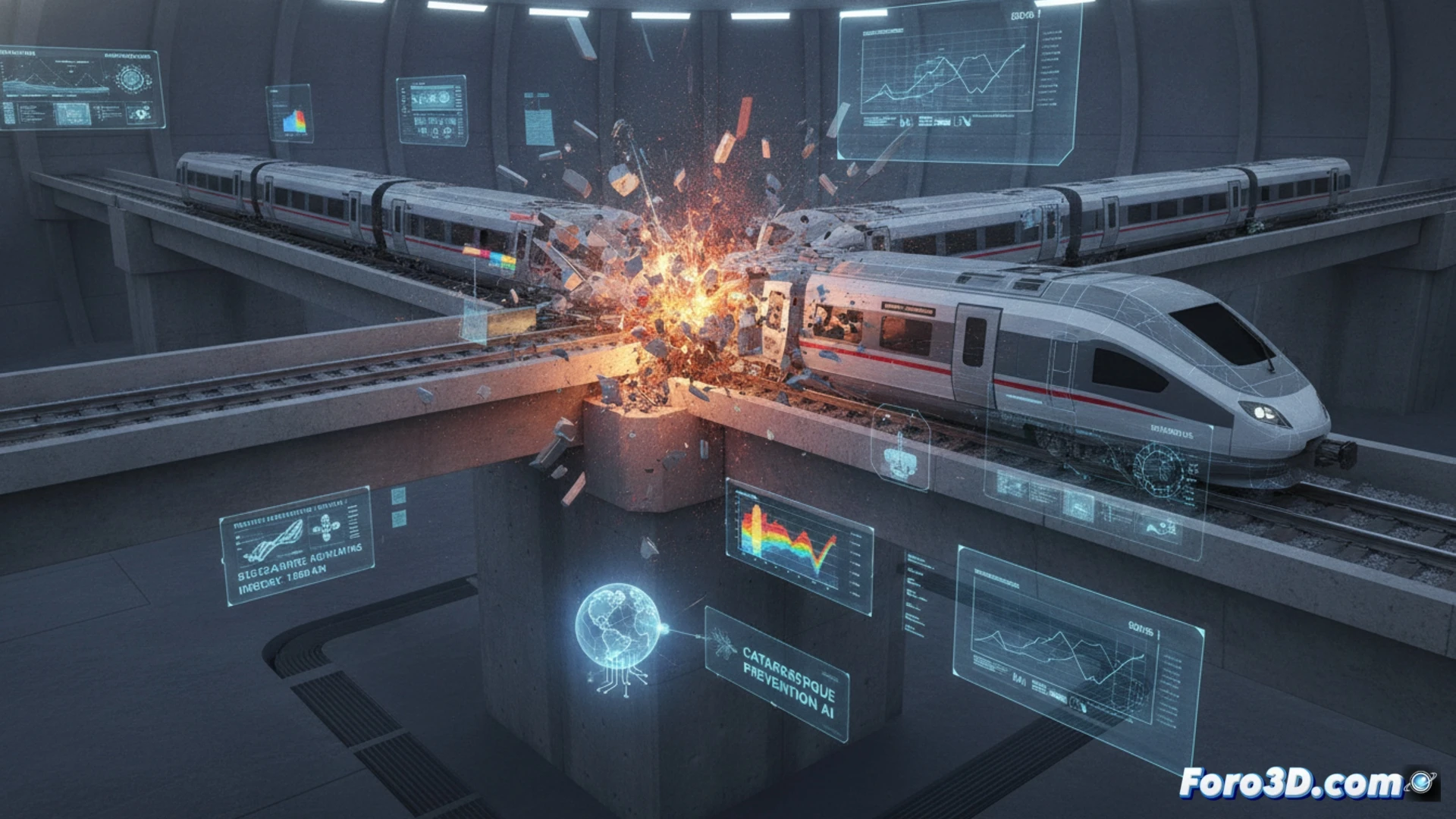
Virtual reconstruction and digital twins in forensic investigation 🚆
Creating a digital twin of the railway track and rolling stock allows forensic engineers to run hundreds of collision scenarios without physical risks. Using finite element modeling, stresses on rails, bogie fatigue, and the response of damping systems to high-speed impacts are analyzed. For example, after a multiple derailment, the 3D model can be loaded with real sensor data (accelerometers and GPS) to validate hypotheses. This approach has revealed hidden flaws in track welds and has allowed optimizing the profiles of buffer stops at terminal stations.
The human cost behind technical precision 💔
Beyond algorithms and polygon meshes, each simulation represents potentially saved lives. The precision in modeling structural deformations defines whether a car will maintain its integrity or become a death trap. By understanding how steel behaves under extreme compression, designers can create survival compartments and improve load restraint systems. 3D technology does not just investigate the past; it builds a future where the next railway impact is only a memory of what we managed to prevent.
Which physical and material behavior parameters are most critical to model in a 3D railway impact simulation to ensure reliable results for catastrophe prevention?
(PS: Simulating catastrophes is fun until the computer melts down and you are the catastrophe.)