The fracture of a ceramic dental bridge is not a simple clinical accident, but a predictable mechanical phenomenon through finite element simulation. In this technical article, we analyze how 3D modeling allows visualizing stress concentration under cyclic chewing loads, identifying the exact point of crack initiation and subsequent catastrophic material failure.
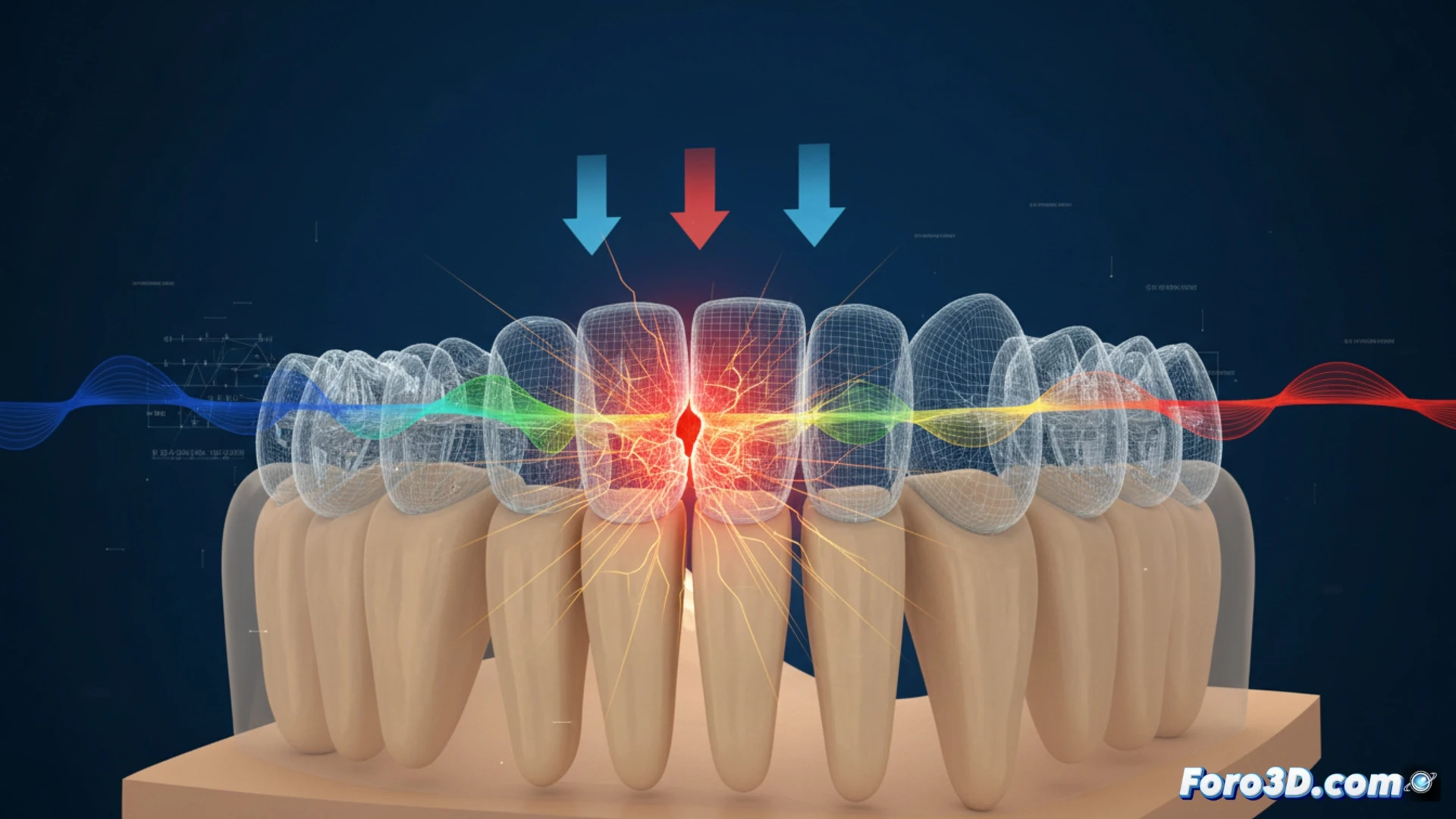
Stress modeling and crack propagation 🔬
To simulate fatigue in a zirconia or lithium disilicate prosthesis, a 3D model of the bridge is built with realistic geometry, including connectors and pontics. Forces of up to 250 N are applied at the occlusal contact points, simulating 10,000 chewing cycles. The analysis reveals that the highest stress zones are concentrated in the interproximal connectors, where the radius of curvature is minimal. Here, the maximum principal stress exceeds the material's fatigue strength limit, initiating microcracks that propagate subcritically until reaching a critical size that causes complete fracture. This behavior is analogous to that observed in fatigue simulations of titanium alloys for implants, although ceramics lack the plastic deformation phase that dampens energy in metals.
Lessons for predictive design ⚙️
3D simulation not only explains the failure but also allows redesigning the bridge before manufacturing it. Increasing the connector thickness by 0.5 mm or modifying the abutment angle reduces the maximum stress by up to 40%, preventing breakage. This predictive approach, common in the aerospace industry, is becoming essential in digital dentistry to ensure the longevity of prostheses and minimize clinical failures due to fatigue.
How can finite element simulation predict the exact point of fatigue initiation in a ceramic dental bridge before fracture occurs in clinical practice?
(PS: Material fatigue is like yours after 10 hours of simulation.)