The structural integrity of a bulletproof vest depends not only on its ability to stop a projectile, but on how its composite materials manage the accumulated stress after repeated impacts. At Foro3D, we analyze how finite element simulation technologies allow us to visualize the progressive deformation of Kevlar layers and ceramic plates, revealing critical fatigue points that the human eye cannot detect. This approach is vital for predicting the lifespan of personal armor.
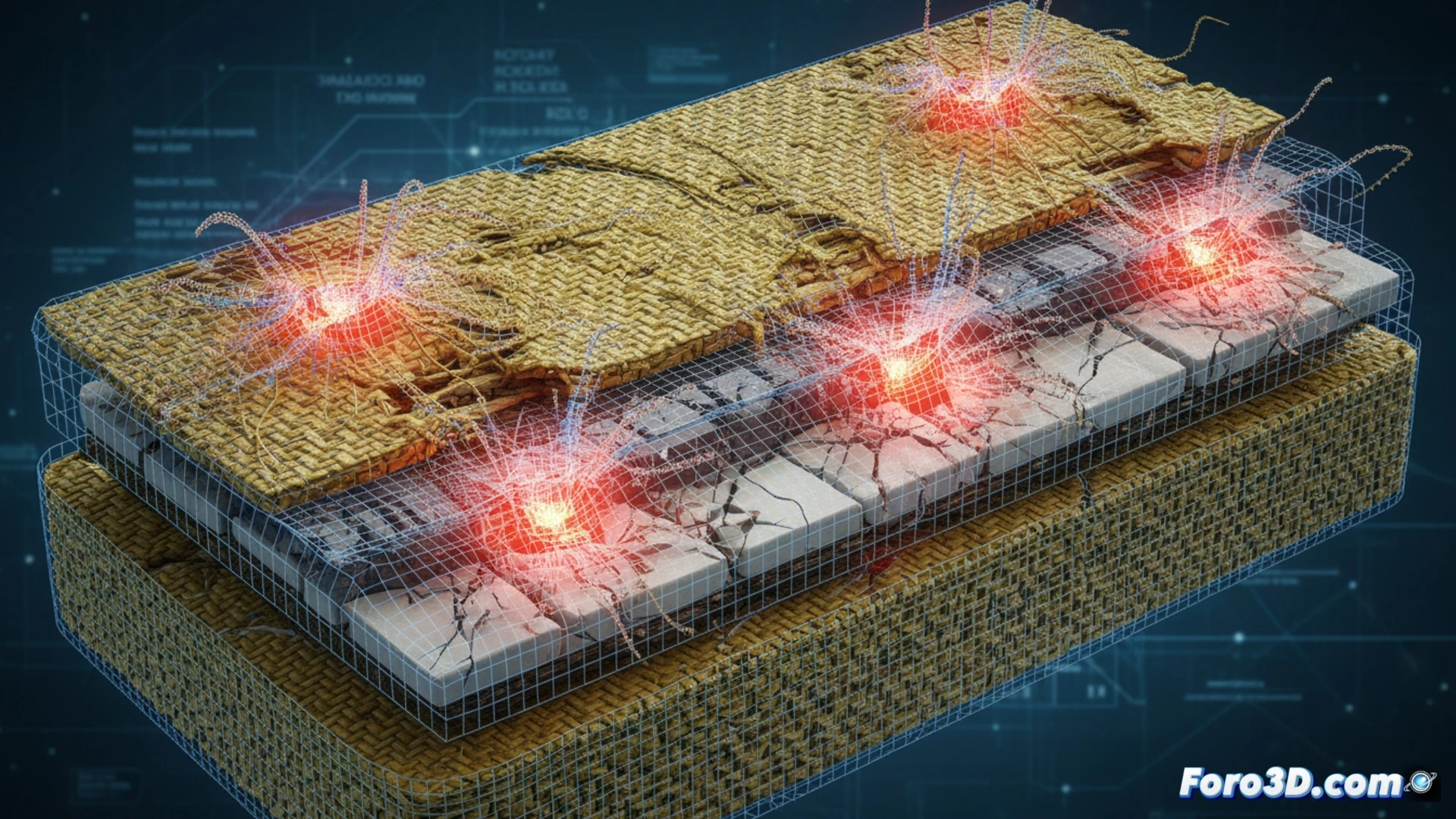
Technical analysis: meshing and stress in composite materials 🛡️
To model fatigue, a detailed 3D mesh is generated representing the aramid fibers and ceramic inserts. The simulation applies cyclic loads equivalent to ballistic impacts, recording the Von Mises stress distribution. The results show that the bonding zones between the ceramic and the textile backing are the first to develop microcracks, visible in progressive deformation animations. When comparing a new material with one degraded by 20 impacts, the elastic modulus drops by up to 35%, evidencing a critical loss of localized stiffness that compromises energy absorption capacity.
Predictive visualization and future design 🔬
The ability to render these fatigue patterns in 3D transforms armor design. We can observe in real-time how a crack propagates from the impact point to the panel edges, or how delamination between layers reduces overall resistance. This tool not only optimizes material selection but establishes a new standard for certifying vests based on their simulated fatigue history, not just destructive laboratory tests.
How can 3D fatigue simulation in bulletproof vests predict the progressive deformation of their composite layers and anticipate structural failure before it occurs under real repeated use conditions?
(PS: Material fatigue is like yours after 10 hours of simulation.)