The fracture of a silent turbine is not usually a sudden event, but rather the culmination of a process of accumulated fatigue. In the field of materials engineering, these failures represent a critical challenge, especially in components subjected to cyclic loads such as wind. This article analyzes how finite element analysis (FEA) allows modeling crack propagation in wind turbine blades, offering a virtual window into the exact moment of structural collapse.
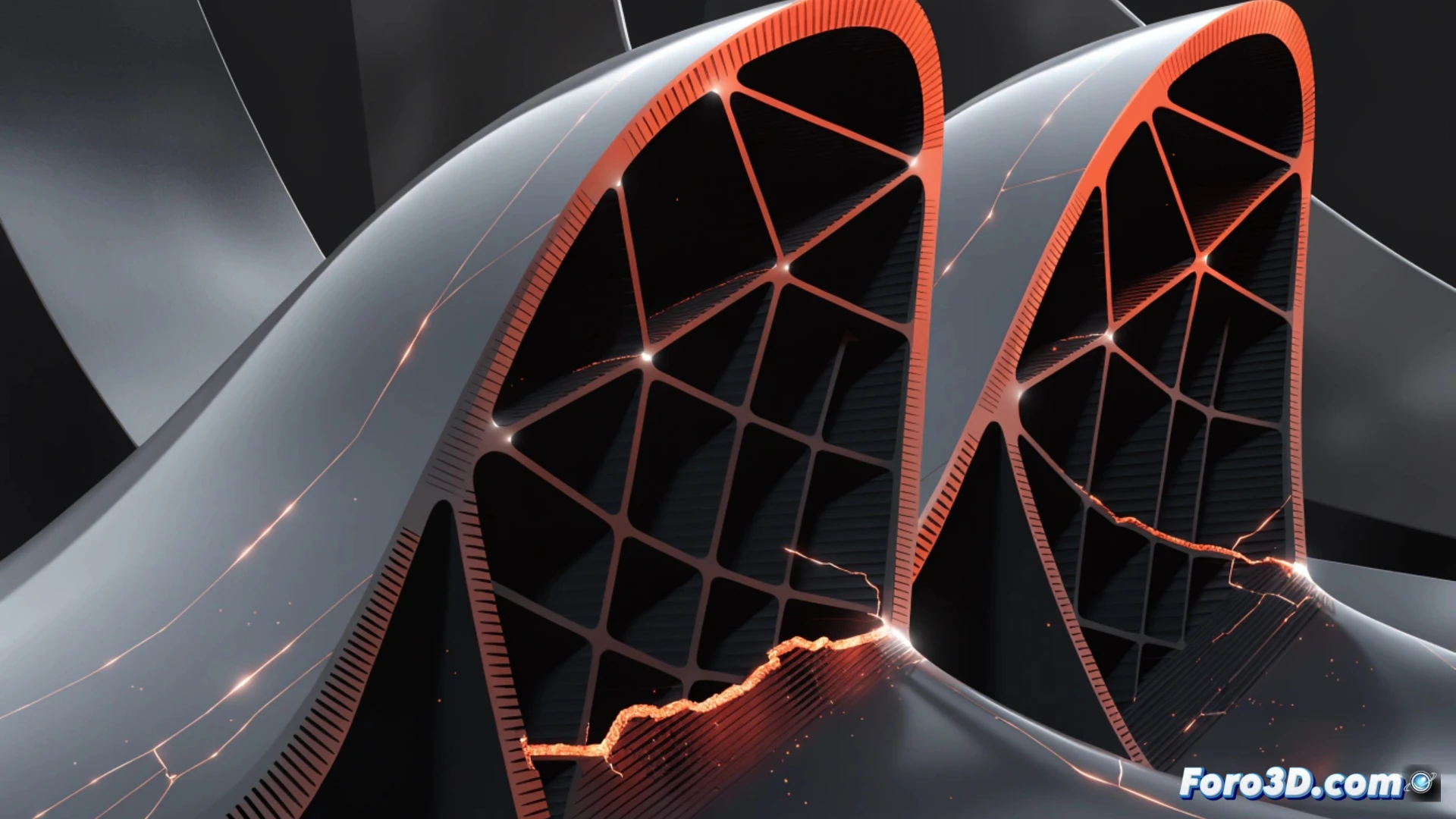
FEA modeling and failure criteria due to cyclic stress ⚙️
To digitally recreate the fracture, we start from a high-fidelity 3D model of the damaged blade. The simulation process applies fluctuating loads that mimic wind gusts and the harmonic vibrations inherent to the rotor. Using Paris' law for crack propagation, the FEA software calculates the remaining useful life of the component. The visualization of the stress map reveals the critical points where the stress concentration exceeds the strength limit of the composite material, initiating a microcrack that, cycle by cycle, expands until total fracture.
Lessons from fracture for sustainable design 🌱
Beyond predicting a failure, this simulation forces us to reflect on the thin line between energy efficiency and structural integrity. A silent turbine, optimized to reduce aerodynamic noise, may feature geometries that alter load distribution. Fatigue analysis reminds us that innovation in 3D design must be accompanied by rigorous validation of the material's life cycle, preventing the pursuit of acoustic efficiency from compromising the mechanical safety of the system.
How to accurately simulate the behavior of microcracks in the blades of a silent turbine during repetitive load cycles to predict the exact point of rupture due to accumulated fatigue
(PS: Material fatigue is like yours after 10 hours of simulation.)