When a pipeline fails, reaction time is critical. 3D modeling allows engineers and emergency teams to predict the trajectory of an oil spill in real time, evaluating variables such as terrain slope, soil permeability, and proximity to bodies of water. Tools like Unreal Engine or Blender have become allies in recreating these crisis scenarios with unprecedented realism.
Digital Twins and Structural Analysis of Pipelines 🛢️
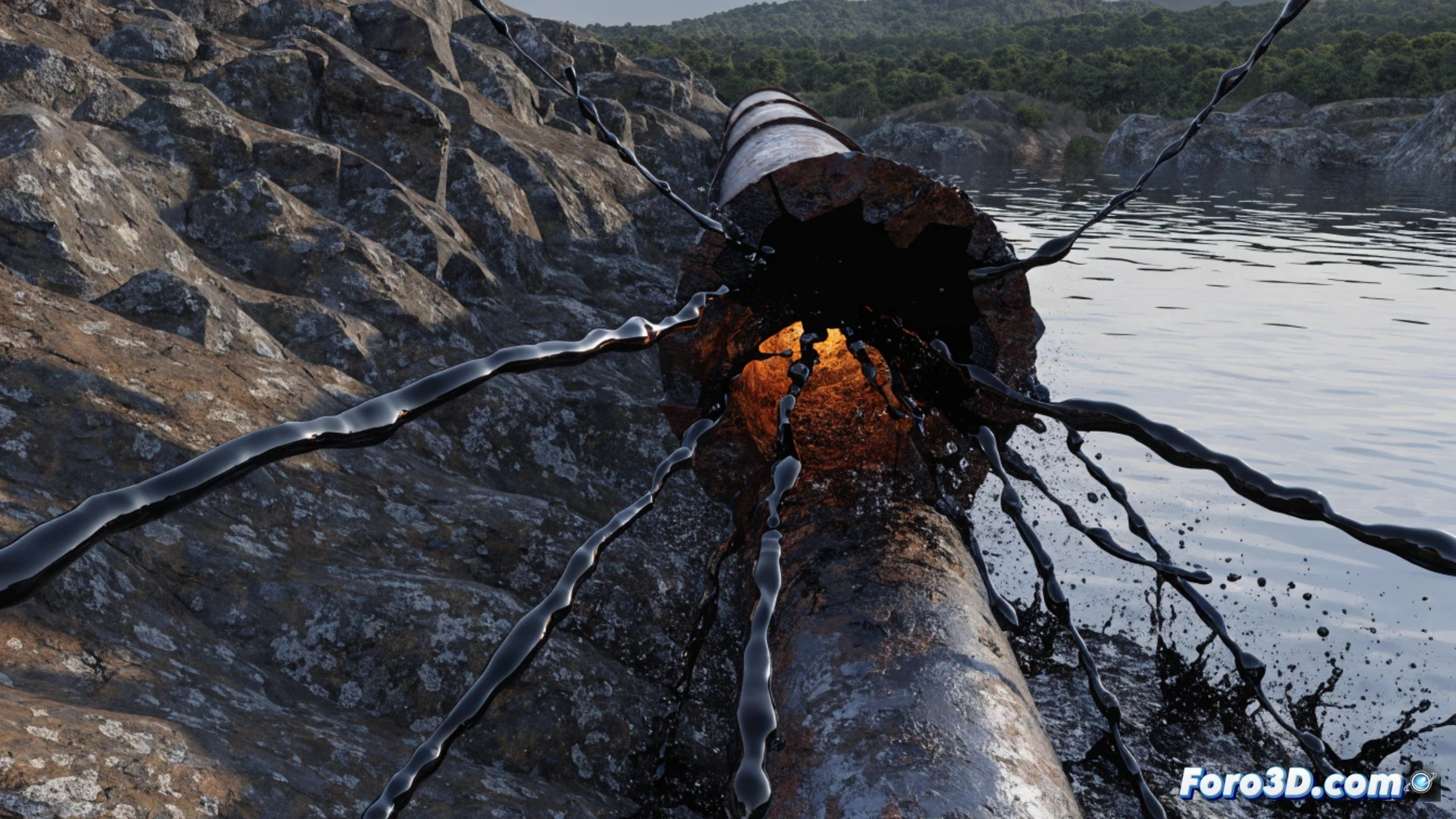
Digital twin technology applied to critical infrastructure allows for 3D visualization of every joint, valve, and section of the pipeline. By inputting real sensor data on pressure, corrosion, or metal fatigue, the model can simulate rupture points before they occur. In cases like the Plains All American pipeline failure in 2015, a post-event 3D simulation would have shown how internal corrosion generated micro-cracks that led to a massive leak. Today, Blender is used to recreate these failures, allowing inspectors to visualize damage from angles impossible in reality.
Environmental Assessment and Containment Planning 🌍
Beyond the pipeline, 3D simulation models the ecological impact. With bathymetric and topographic data, it is possible to predict how an oil slick will move across rivers or coastlines, helping to position containment booms at strategic points. This visualization not only saves ecosystems but also optimizes response resources, reducing cleanup costs and times. In a world where pipelines are aging, mastering these 3D tools is a matter of environmental survival.
How can 3D simulation predict the exact trajectory of a spill in real time to minimize environmental and human impact during a catastrophic pipeline failure?
(PS: Simulating catastrophes is fun until your computer melts down and you become the catastrophe.)