Transcritical CO2 has become established as a refrigerant fluid in commercial and industrial applications, operating above its critical point (31°C and 73.8 bar). In this zone, the fluid does not condense conventionally, introducing unique challenges in pressure and temperature control. A failure in this regime can trigger catastrophic leaks or system shutdowns, making 3D simulation the most effective tool for predicting and visualizing these events before they occur in the field.
Thermodynamic modeling and visualization of the transcritical cycle 🔬
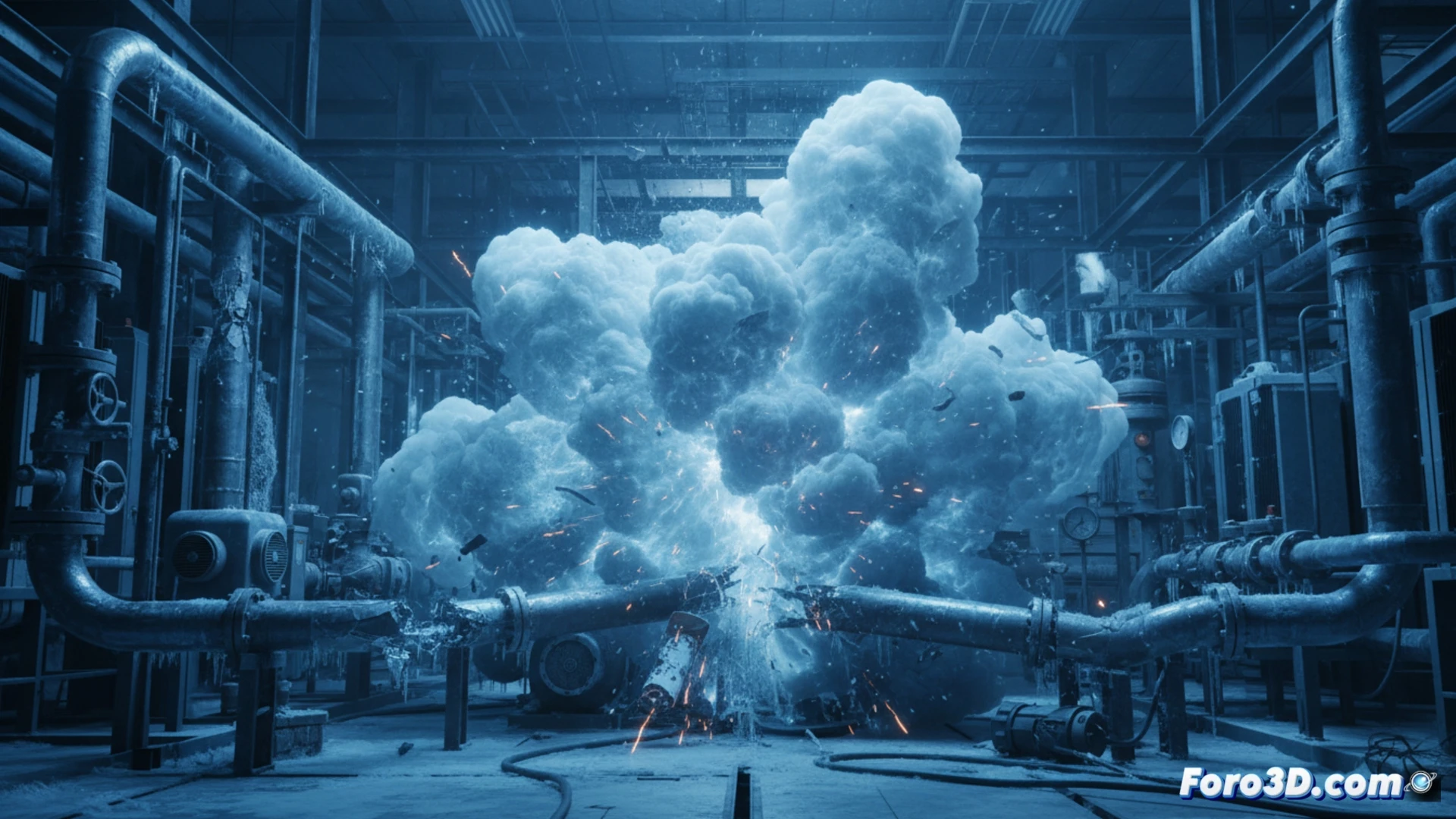
To address the failure, a 3D model of the system is built, integrating the compressor, gas cooler, expansion valve, and evaporator. Computational fluid dynamics (CFD) simulation allows mapping the temperature and pressure distribution in each component. The failure point is typically identified in the high-pressure zone of the gas cooler, where an excessive thermal gradient or partial blockage generates pressure peaks that exceed the design limit. The animation of the thermodynamic cycle shows in real time how CO2 deviates from the expected path, becoming unstable and generating vibrations that compromise the structural integrity of the pipes.
Breakdown prevention through predictive analysis 🛡️
3D visualization not only diagnoses the failure but also allows the engineer to test solutions without risk. By modifying parameters such as valve opening or compressor speed in the model, one can observe how the transcritical system responds, avoiding reaching the point of collapse. This approach transforms simulation into a virtual laboratory where prevention surpasses repair, increasing the reliability of CO2 installations and reducing operational costs.
How does 3D simulation of transcritical failure in CO2 systems affect the design of safety strategies and risk mitigation in industrial installations?
(PS: Simulating industrial processes is like watching an ant in a maze, but more expensive.)