In 1962, Rachel Carson published a work that shook the foundations of the chemical industry. Silent Spring not only denounced the massive use of pesticides like DDT but also showed how these compounds accumulated in the food chain. Its impact was immediate: citizens began to question what they breathed and ate, and governments started legislating on environmental protection.
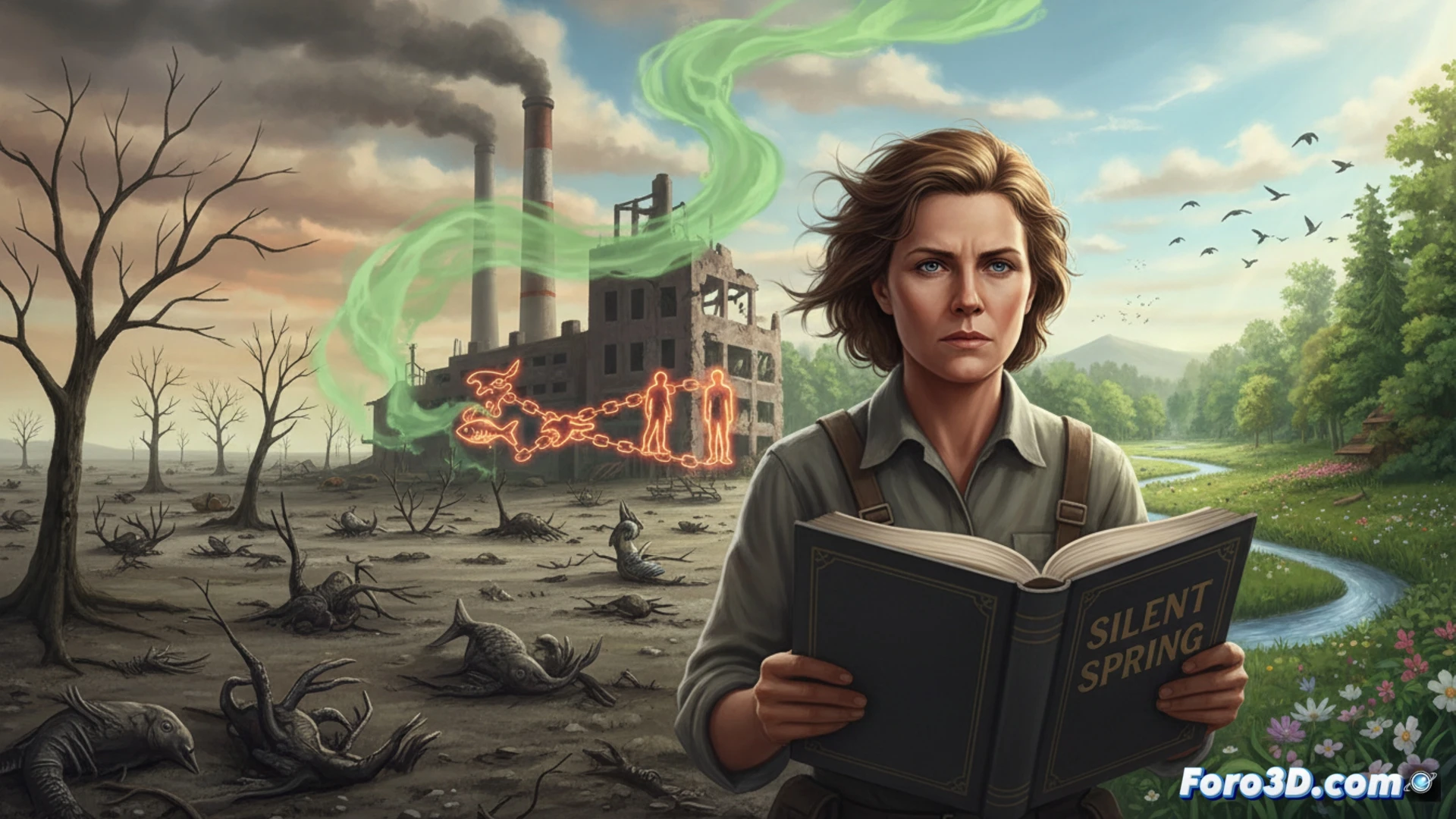
The technology born from an ecological warning 🌱
Carson's denunciation spurred the development of more precise chemical analysis technologies, such as gas chromatography and mass spectrometry. Today, these tools allow the detection of toxic residues in concentrations of parts per billion. It also accelerated the creation of integrated agriculture methods and advanced filtration systems for wastewater. Without that early warning, the development of environmental sensors and regulations like the Clean Water Act in the U.S. would have taken decades longer.
DDT: once it killed insects, now only in movies 🦟
Ironically, DDT was considered a miracle of modern chemistry. It was sprayed in parks, crops, and even inside homes. Today, any child knows that spraying your garden with a persistent insecticide is not a good idea, although sometimes mosquitoes seem not to have read the book. The curious thing is that, decades later, we are still debating whether certain chemicals are safe, as if we needed another Carson to remind us that pouring poison into breakfast is not advisable.