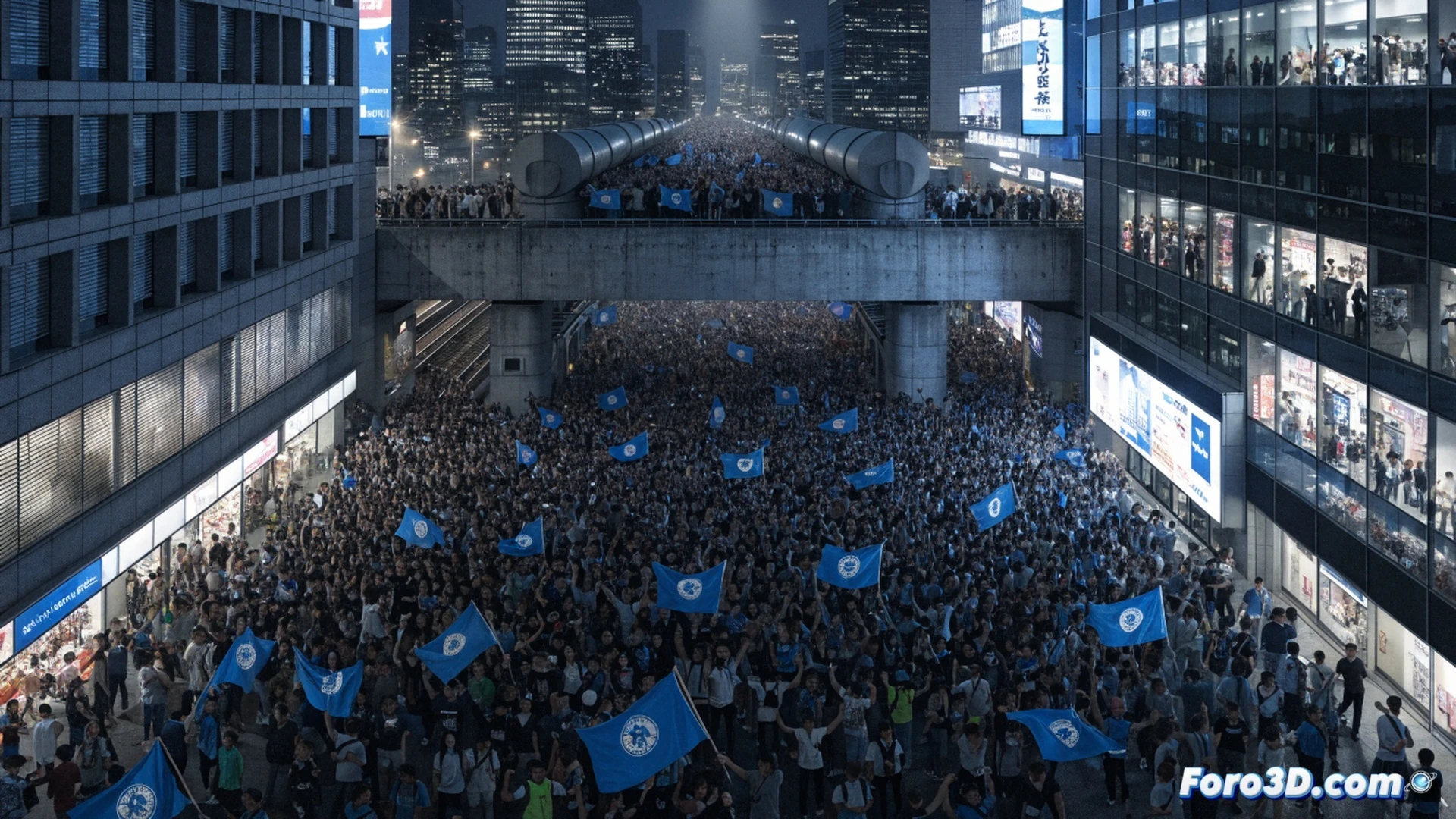
The Japanese celebration after qualifying for the Round of 16 of the World Cup turned the Shibuya crossing and its bars into a hotbed of blue flags. For the citizens, football acts as a social catalyst, creating moments of collective joy that transcend differences. However, these massive mobilizations also strain public transportation and generate crowds, reminding us that sporting fervor comes with a logistical price.
Big data and mobility: managing festive chaos 🚇
Japanese authorities use real-time monitoring systems to regulate pedestrian flows in Shibuya, employing volumetric sensors and density prediction algorithms. The smart city application allows rerouting subway lines and adjusting train frequencies during peak attendance. However, the current infrastructure shows its limits when 50,000 fans chant in unison, highlighting the need for dynamic models that integrate sporting events with urban mobility patterns.
The fan's emotional salary: free but with transportation costs 🚕
While players earn bonuses for advancing, fans pay double for the taxi ride home. Collective euphoria is an intangible asset not traded on the stock market, though it does inflate drink prices at Shibuya bars. That said, no one complains: for a while, the whole city is one single cheering squad, until the last train departs and it's time to walk 40 minutes with the scarf over your shoulder.