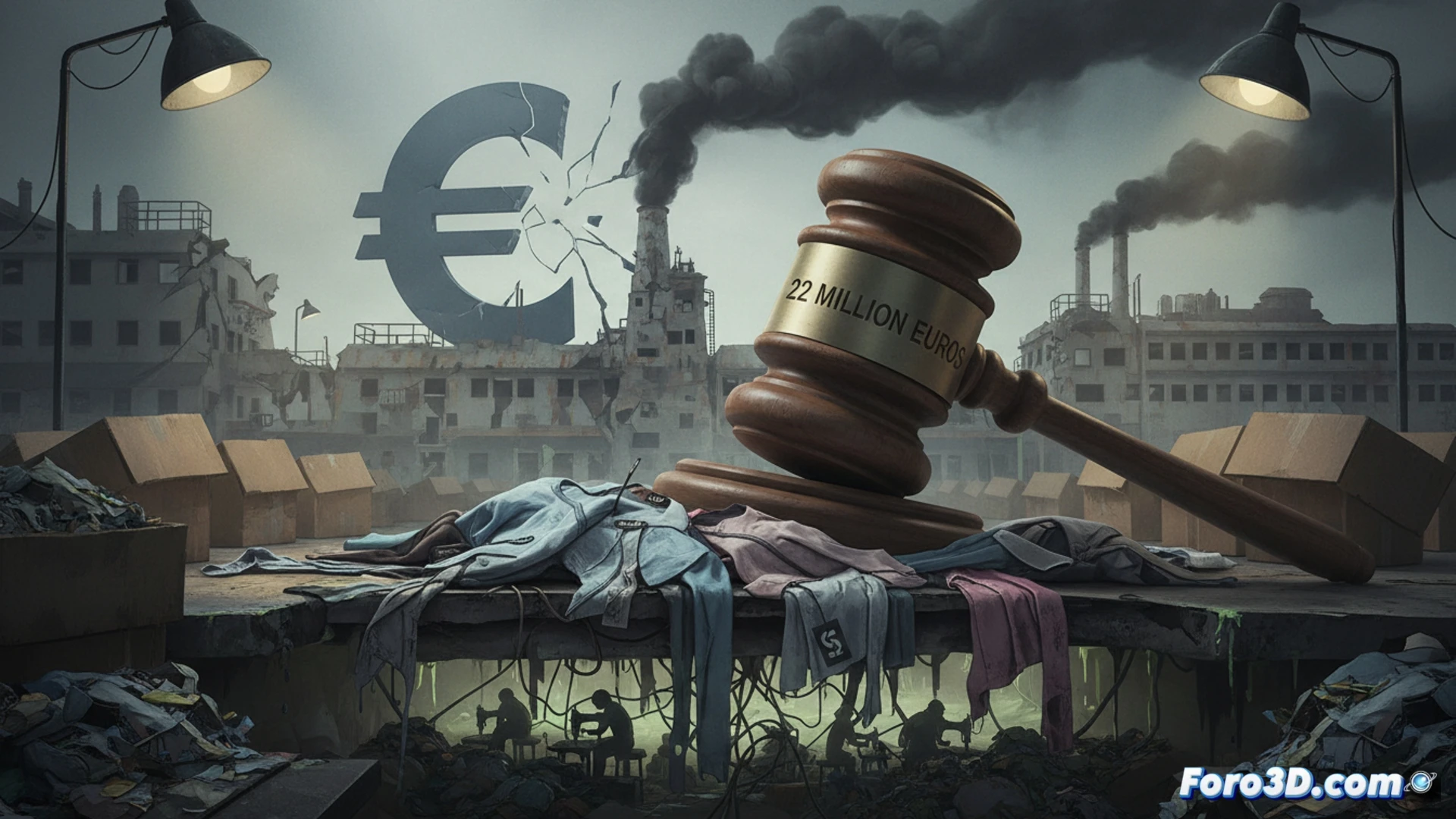
France has imposed a fine of 22 million euros on Shein for fraudulent practices in pricing and sales conditions. It is the second sanction in the country against the fast fashion giant. While the company announces it will appeal, millions of Europeans continue buying t-shirts for two euros without questioning how this is possible. It is not. That price is only sustained by poverty wages, precarious working conditions, and a massive production of textile waste.
The Algorithm of False Urgency and Fictitious Discount 🛑
Shein's business model relies on a technical system that manufactures artificial scarcity. Its platform uses countdown timers, push notifications, and rotating offers that generate purchase pressure. Original prices are inflated to later show unrealistic discounts. Inventory is renewed every week with thousands of new garments, saturating the market with low-quality clothing that becomes textile waste after a few uses. It is not fashion: it is a continuous flow of digitized garbage.
How to Pay 22 Million Without Stopping Selling T-shirts for Two Euros 💸
The fine is equivalent to what Shein invoices in a few hours in Europe. They will appeal, pay if necessary, and continue selling. And we will keep buying, because conscience hurts less than the low price. The system works like this: the sanction is the cost of doing business, and the consumer finances everything. In the end, the only real urgency is not looking away while the wardrobe fills with plastic.