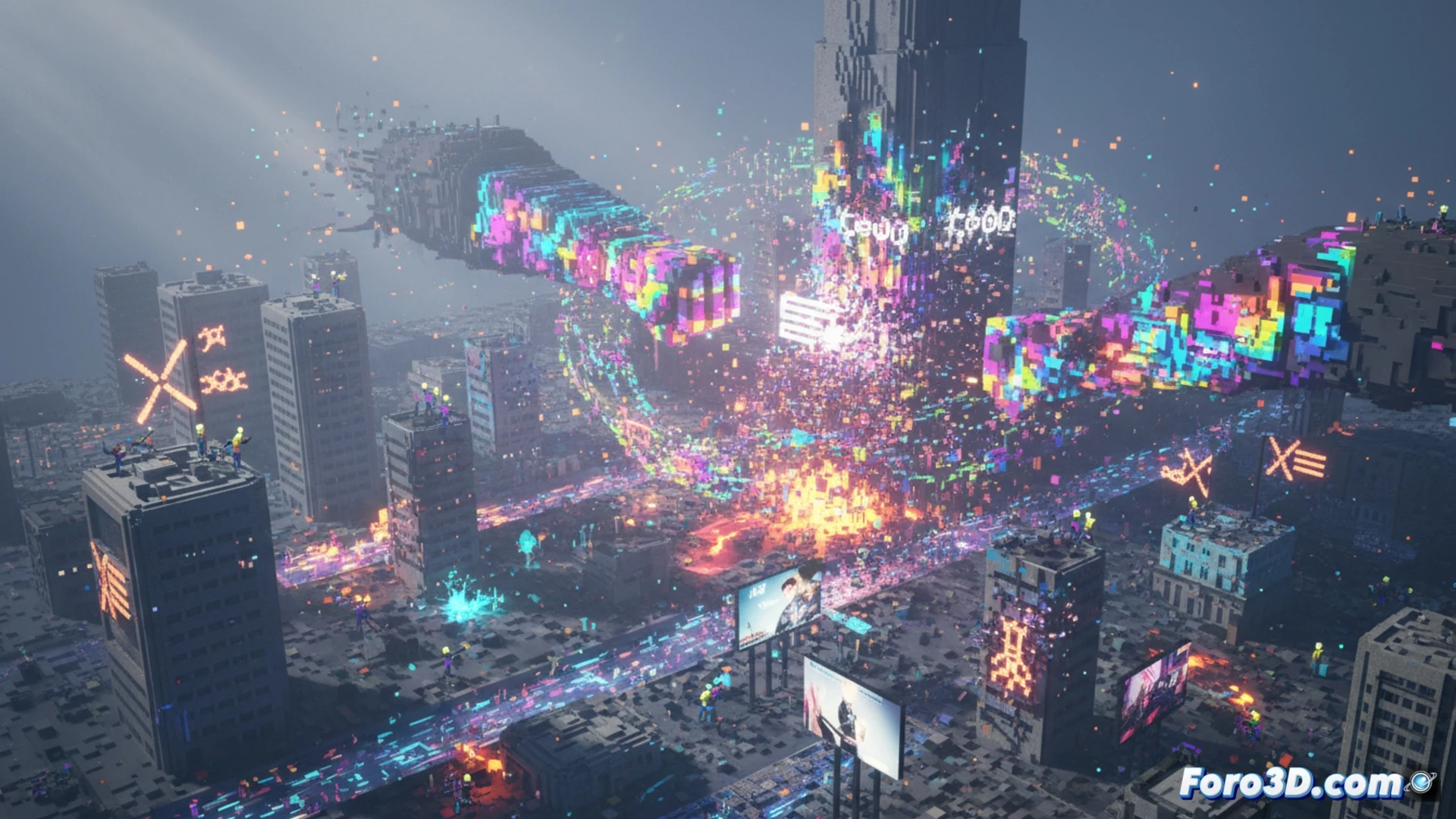
In the era of metaverses and multiplayer video games, the digital space has become a new ideological battlefield. Voxel sabotage emerges as a form of visual activism that uses the manipulation of 3D environments to subvert corporate or political narratives. It is not mere virtual vandalism, but a calculated intervention where each cube of information becomes a brick of aesthetic resistance.
Technical Anatomy of Voxel Intervention 🛠️
The process begins with the identification of a vulnerable asset, typically a low-polygon 3D model or a voxelized terrain in games like Minecraft or virtual reality platforms. The technique can range from injecting textures with encrypted messages in the alpha channel of a .png file, to directly modifying volume data using Python scripts that alter the coordinate matrix. The goal is to break the visual coherence of the original space, inserting a dissonant element that, by its very pixelation, forces the viewer to question the simulated reality. A recent example includes replacing urban furniture models with representations of historical barricades, synchronized with real political events.
The Aesthetics of Error as Political Discourse 🎨
Beyond the technique, voxel sabotage raises a fundamental question: whoever controls the digital space, controls the narrative. By introducing intentional glitches or impossible geometries, the activist not only protests against a system but also highlights the fragility of its construction. This form of ephemeral art, often erased by patches or moderators, leaves a powerful documentary trace: screenshots that travel through social networks, demonstrating that even in a world of perfect polygons, disorder and criticism find a space to flourish.
Can a simple block of pixels in Minecraft or a rebuilt building in VRChat be considered a form of civil disobedience as effective as a graffiti on a real wall?
(PS: digital political art is like an NFT: everyone talks about it but no one really knows what it is)