The fragmentation of a satellite in low Earth orbit is not just a technical failure; it is a slow-motion disaster. This event generates a cloud of debris traveling at hypersonic speeds, capable of disabling communication systems and threatening manned missions. Here we analyze how 3D simulation tools allow us to model this orbital chaos and predict its consequences.
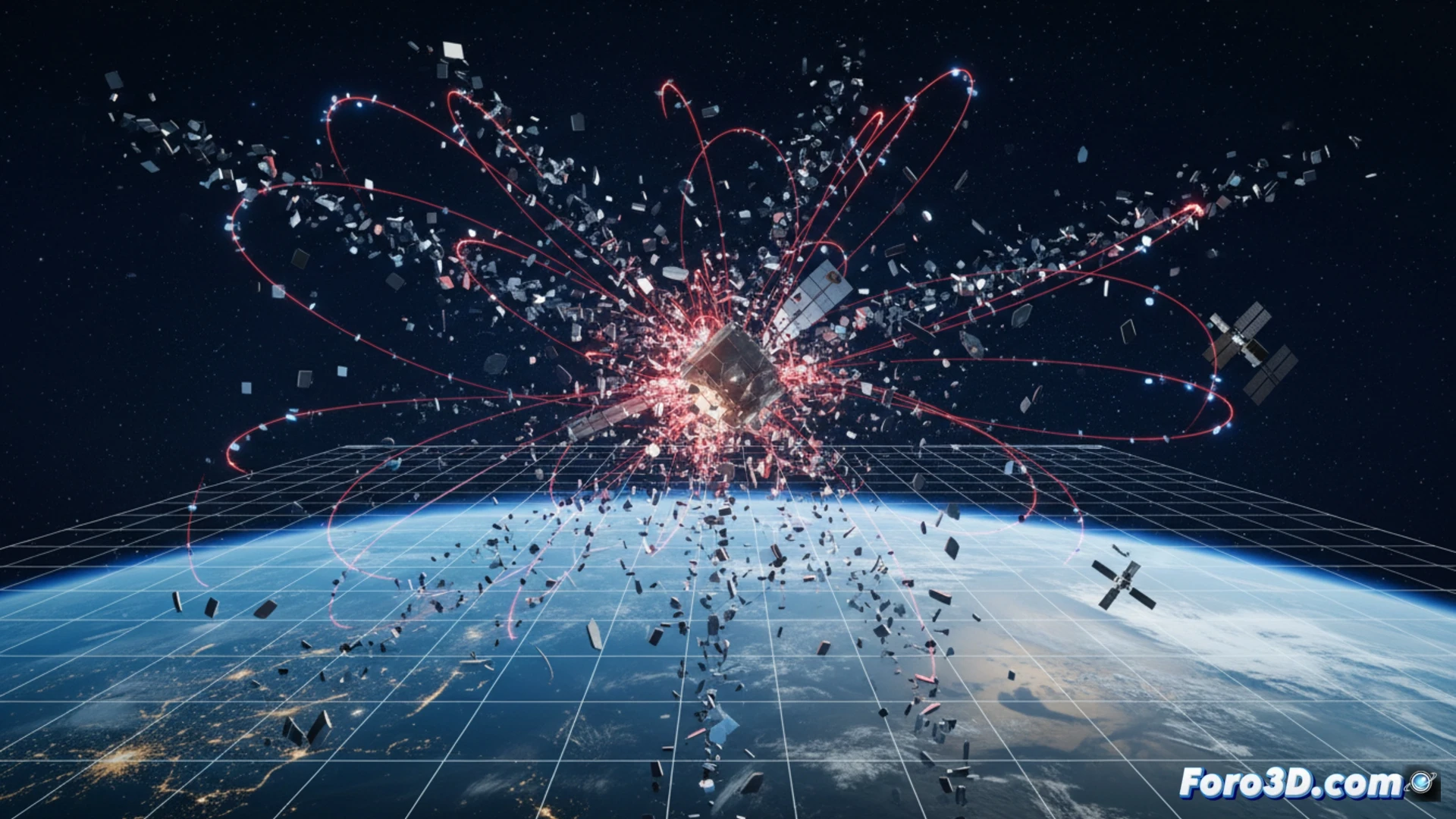
Kinetic Modeling of the Debris Cloud 🛰️
Using computational fluid dynamics software and precision physics engines, we can recreate the satellite explosion and the dispersion of its fragments. 3D simulation allows us to trace velocity and altitude vectors for each piece, from a few-millimeter screw to car-sized solar panels. The goal is to calculate the probability of impact with the International Space Station or with active constellations like Starlink. By overlaying this data with updated space debris density maps, high-risk corridors are visualized where a single collision could trigger the dreaded Kessler syndrome, a chain reaction that would render an entire orbital band uninhabitable.
Visual Prevention against the Kessler Syndrome 🌍
Technical animation of this type of catastrophe serves not only to document the disaster but also to design mitigation protocols. By rendering future trajectories, engineers can plan evasive maneuvers for active satellites or identify windows of opportunity for debris capture using orbital nets. At Foro3D.com, we believe that visualizing risk is the first step to mastering it; a moving image of space debris is more effective than a thousand text reports for raising awareness about the fragility of our orbital environment.
How can 3D simulation of satellite fragmentation in low Earth orbit predict debris trajectories and help calculate the risk of chain collisions for future space missions
(PS: Simulating catastrophes is fun until the computer crashes and you are the catastrophe.)