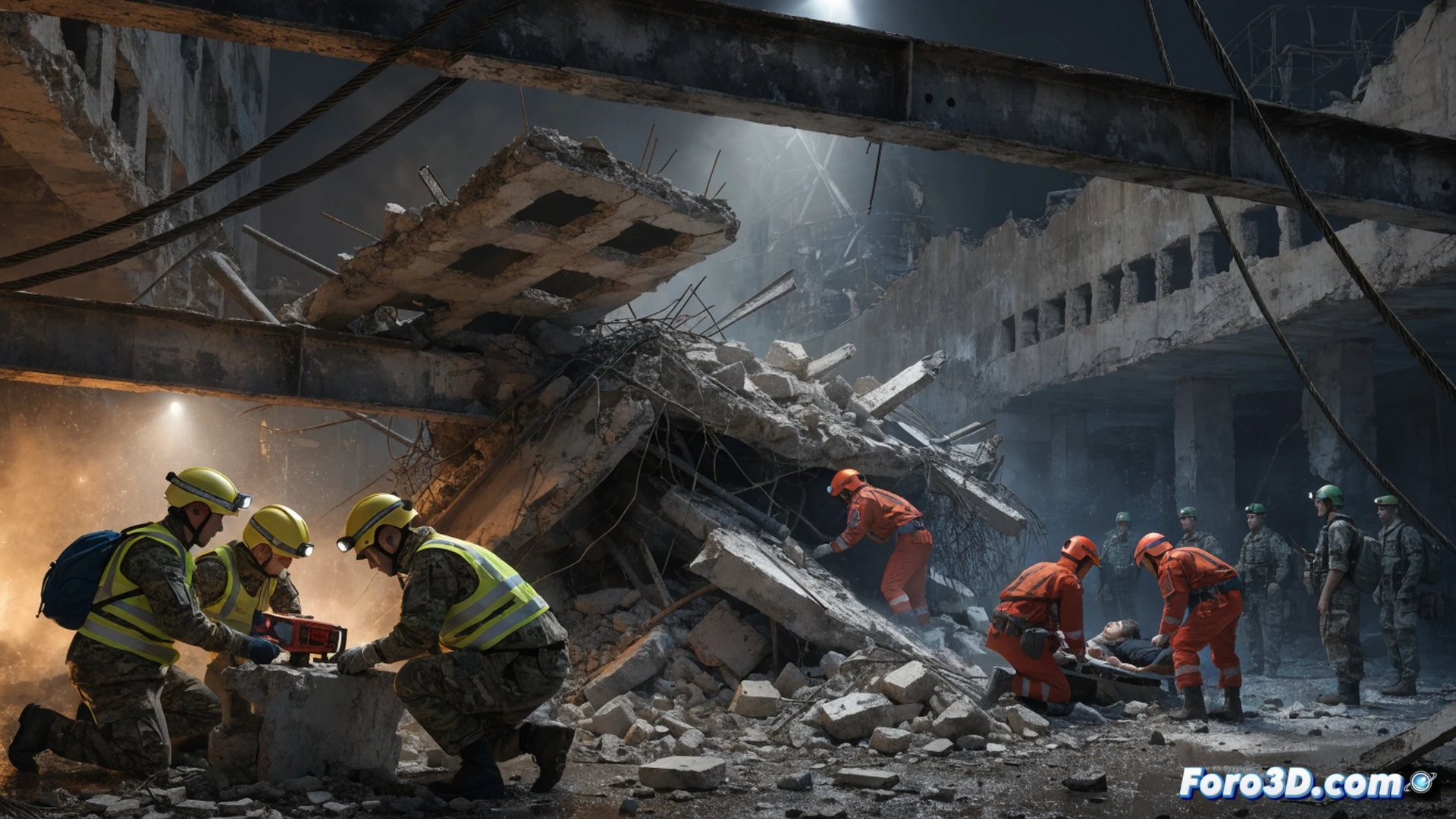
The Spanish Military Emergency Unit managed to rescue a person alive who had been trapped for 72 hours under the rubble in La Guaira, Venezuela, following the recent earthquakes. This event demonstrates that international aid, even after days of waiting, can make the difference between life and death. While the Spanish government reports 133 missing and sends financial support and rescuers, cooperation between countries proves to be a fundamental pillar for facing natural disasters and protecting those affected.
Search technology: sensors and drones in locating victims 🚁
To locate the buried person, rescue teams used seismic sensors and thermal cameras mounted on drones, capable of detecting body heat under tons of concrete. These devices, combined with trained dogs and ground-penetrating radars, allow mapping cavities in the rubble without needing to move it. The integration of these systems with artificial intelligence accelerates real-time data analysis, reducing response time. Although technology does not replace human expertise, it optimizes resources in situations where every minute counts.
72 hours under rubble: the most extreme Airbnb of the year 😅
Surviving 72 hours trapped under rubble is not a weekend plan recommended by any travel agency. But the affected person in La Guaira can boast of having enjoyed accommodation with underground views, no room service, and minimalist decor of dust and twisted beams. The UME, in its role as an emergency real estate agency, offered them the best possible move: from an improvised basement to a hospital. All thanks to international cooperation, which shows that even the worst neighborhood does have coverage.