The evolution of computer graphics has reached a critical point where hyper-realistic replicas of human faces, generated through synthetic 3D models, are capable of deceiving biometric verification systems. This phenomenon, known as 3D deepfake, exploits vulnerabilities in facial recognition algorithms by presenting a perfect geometry that lacks the biological imperfections of the real world. For digital security auditors, distinguishing between a living face and a textured polygonal mesh has become the new forensic battlefield.
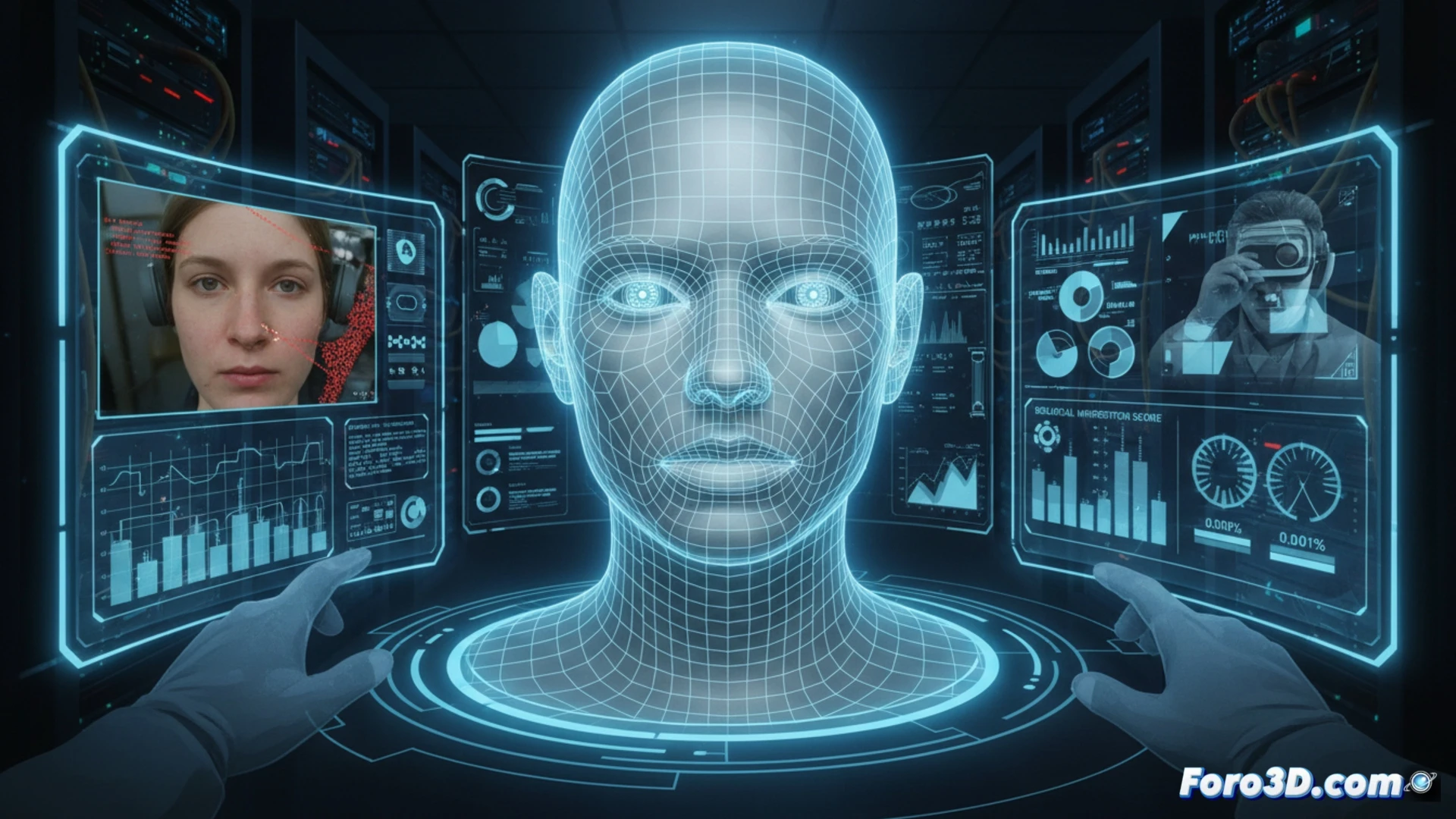
Forensic Analysis of Texture and Microexpressions 🕵️
The technical detection of these replicas is based on spectral texture analysis and temporal dynamics. 3D renders often present a uniform noise pattern in the sub-surface of the skin, lacking the natural light scattering (subsurface scattering) that occurs in real dermis. Forensic tools such as bidirectional reflectance distribution function (BRDF) analysis allow identifying inconsistencies in ambient lighting. Furthermore, synthetic models fail to replicate involuntary microexpressions and saccadic eye movements; a real face exhibits asynchronous blinks and slight muscle contractions in the periorbital area that no current rendering engine can simulate without timing errors.
The Dilemma of Synthetic Identity ⚖️
The ability to create an indistinguishable digital twin poses an ethical paradox for the industry. While VFX departments strive for absolute realism, security systems struggle to maintain trust in visual identity. The solution lies not in banning the technology, but in implementing anti-tampering digital signatures embedded within the 3D model's depth map itself. Deepfake auditing must evolve towards a hybrid model that combines 3D geometry analysis with behavioral biometric verification, accepting that visual perfection is, precisely, the biggest red flag.
In a deepfake audit, how can one distinguish a hyper-realistic 3D replica of a computer-generated human face from a real video, when the 3D model is specifically designed to deceive facial recognition systems?
(PS: Detecting deepfakes is like playing Where's Wally? but with suspicious pixels.)