Solar reflectance on glass facades is not just an aesthetic or thermal comfort issue. Under specific conditions, the concentration of rays can generate hot spots with temperatures exceeding 200 degrees Celsius, enough to melt plastics, char wood, or even ignite fires in parked vehicles. This phenomenon, known as the urban magnifying glass effect, turns seemingly harmless skyscrapers into giant lenses capable of unleashing catastrophes.
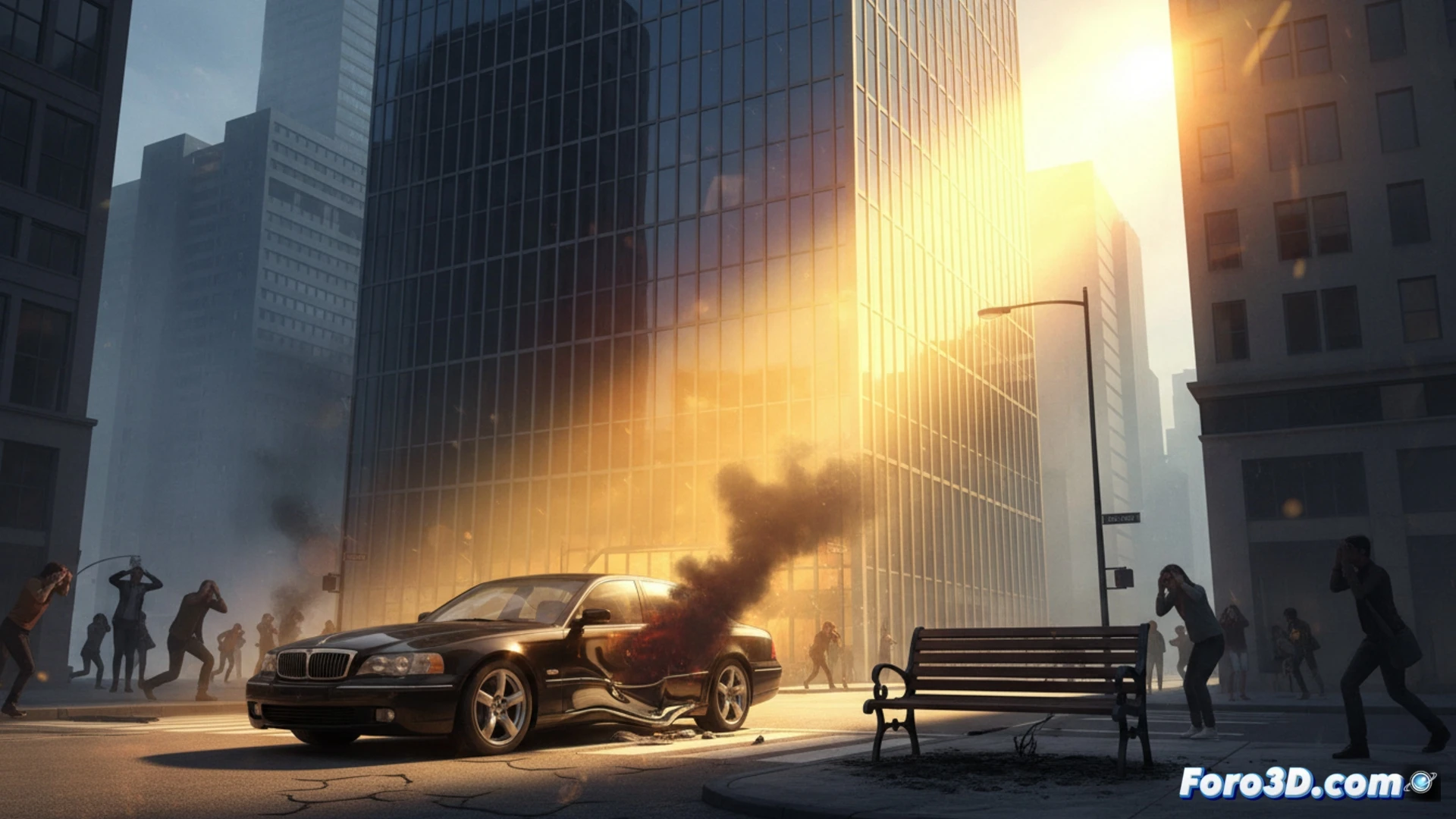
3D Simulation of Ray Paths and Critical Points 🔥
To model this risk, we employ ray tracing simulations in digitized urban environments. Using physical rendering software and global illumination engines, we calculate the intersection of solar beams with curved or flat reflective glass surfaces. The result is a three-dimensional heat map identifying areas of highest thermal concentration in public spaces. Documented cases, such as the Vdara building in Las Vegas or the Walkie Talkie in London, demonstrate that facade geometry and the angle of solar incidence can turn sidewalks and parking lots into solar ovens. Parametric simulation allows predicting these critical points before construction.
Towards Resilient Urban Design with Digital Twins 🏙️
The solution is not to eliminate glass, but to integrate digital twins into the design phase. These virtual models allow testing variations in glass tilt, applying anti-reflective coatings, or installing smart sunshades that adapt to the solar path. By simulating the impact of deadly reflectance in dense urban environments, architects can mitigate risks and prevent architectural aesthetics from becoming a vector for disaster. Prevention, once again, begins in the 3D model.
What architectural and regulatory mitigation mechanisms exist to prevent the reflectance of glass buildings from causing catastrophic thermal or visual damage in the urban environment?
(PS: Simulating catastrophes is fun until the computer melts down and you are the catastrophe.)