Digital archaeology has taken a firm step by applying craniofacial reconstruction techniques to the remains of a bog mummy, a body preserved for centuries in anaerobic conditions. This process, which combines three-dimensional scanning with anthropological data, allows a face to be restored to individuals from the past without damaging fragile heritage. The methodology used not only seeks a visually striking result but is also based on rigorous forensic protocols to ensure anatomical accuracy.
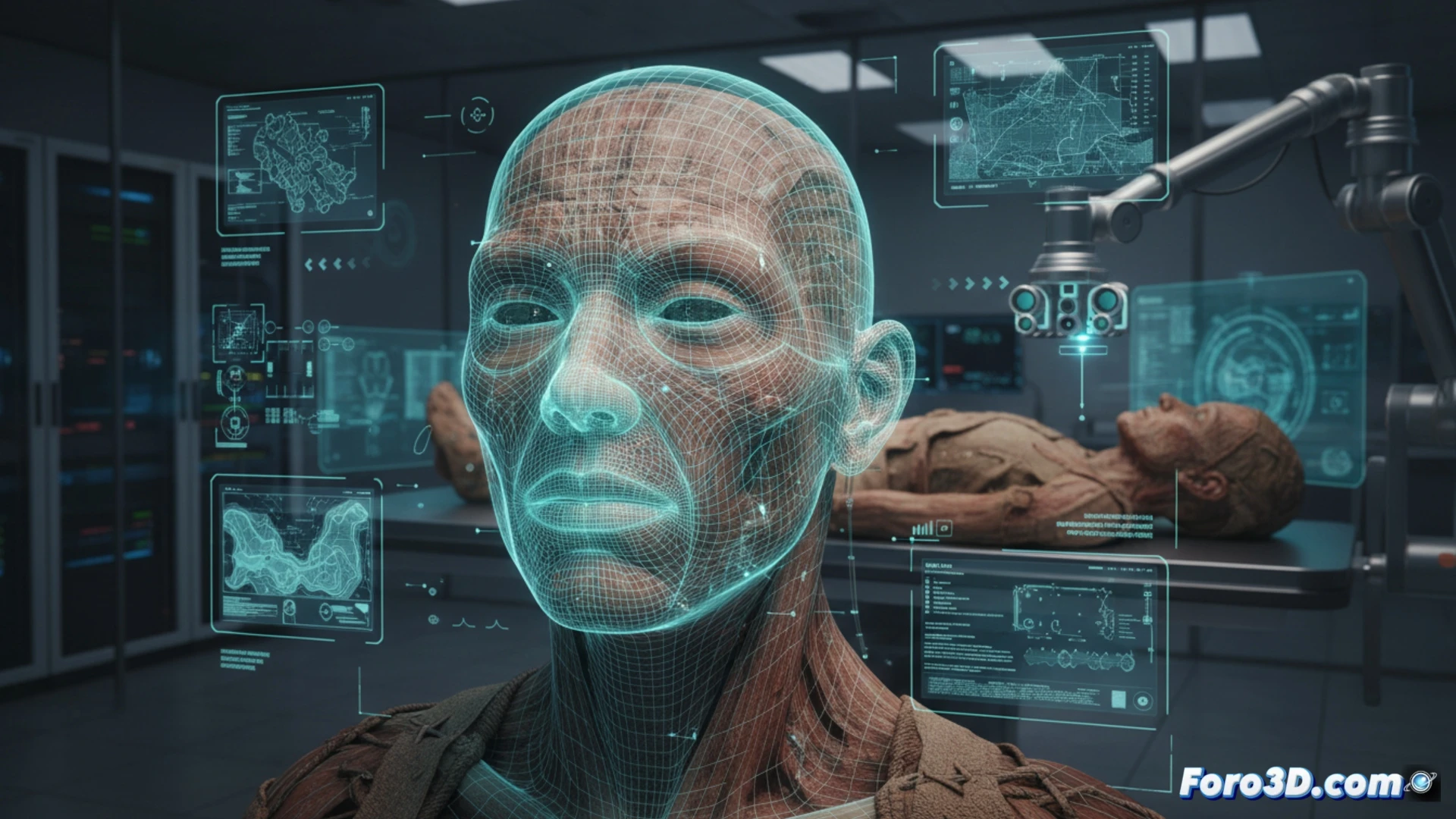
Technical workflow: from scanner to soft model 🛠️
The process begins with capturing the mummified skull using photogrammetry or laser scanning, generating a high-resolution polygonal mesh. Software such as Agisoft Metashape allows aligning and processing the photographs to obtain a textured 3D model of the bone. Subsequently, in Blender, soft tissue markers are applied based on standard facial thickness tables for specific historical populations. The main muscles, such as the masseter and orbicularis, are modeled following bone insertions. Finally, skin is added and textured with pigment references from the era, validating each step with forensic identification criteria to avoid speculation.
The educational value of lost identity 📜
Beyond the technical challenge, these recreations serve a crucial social and educational function. By humanizing archaeological remains, they bring the general public closer to stories that would otherwise be relegated to academic reports. The reconstruction of the bog mummy not only reveals physical features but also contextualizes its life and death, generating empathy and curiosity about the past. Each digital fold is a bridge between science and collective memory, demonstrating that 3D technology is an indispensable tool for disseminating cultural heritage.
How was the accuracy of the 3D facial reconstruction validated by comparing it with known forensic features of the bog mummy?
(PS: and remember: if you can't find a bone, you can always model it yourself)