The collapse of a modular bridge is not a sudden event, but the culmination of microcracks and progressive deformations that visual inspection cannot detect. In this technical analysis, we employ parametric 3D simulation to virtually reconstruct the structure from its original design state to the moment of collapse. The objective is to identify critical stress points and validate how material fatigue, combined with cyclic loads, exceeded the strength limits at the modular joints.
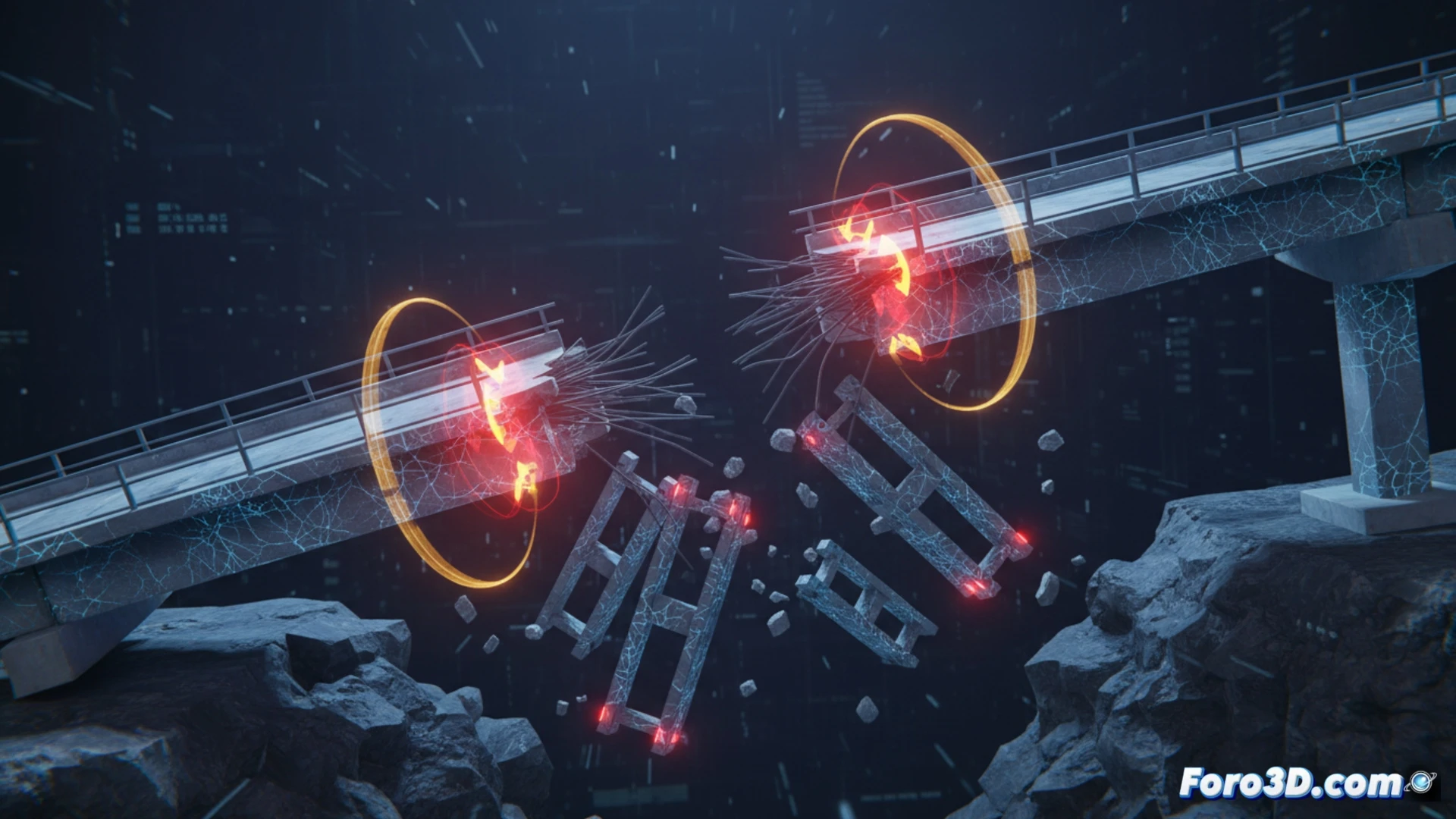
Parametric simulation of structural failure in modular joints 🏗️
For the virtual reconstruction, we modeled the modular bridge using finite elements in a 3D environment. Key parameters include the tensile strength of structural steel, the modulus of elasticity, and the simulated vehicular load frequency. We applied a high-cycle fatigue analysis to the connectors and main beams. The results show a stress concentration at the bolted joints of the central span, where microcracks propagated non-linearly. The simulation reveals that the accumulated plastic deformation at these nodes reached 12% before brittle fracture, a value that exceeds the design tolerance by 40%. The visual comparison between the original model and the collapsed state shows a progressive twisting of the deck, which precedes the catastrophic failure of the lateral supports.
Lessons from the virtual model for forensic analysis 🔍
The main lesson from this simulation is that the collapse was not random; it followed a logical sequence of crack propagation that 3D modeling can anticipate. By visualizing the process step by step, engineers can identify that the actual failure began at the deck connection bolts, not in the main beams as initially suspected. This demonstrates that fatigue in fastening elements is the weak link in modular structures. For future designs, we recommend integrating virtual sensors in 3D models that alert about accumulated deformations, allowing interventions before collapse.
Which 3D reconstruction methodology allows for greater precision in visualizing the propagation of microcracks in a modular bridge collapsed due to fatigue, considering the progressive deformations prior to failure?
(PS: Simulating a collapse is easy. The hard part is keeping the program from crashing.)