The partial collapse of a high-capacity wind tunnel during a fatigue test has triggered an unprecedented forensic investigation. The infrastructure, designed to simulate extreme aerodynamic conditions, gave way in its compressor section, releasing a pressure wave that devastated the laboratory. This incident not only represents a multi-million dollar loss in equipment but also exposes critical vulnerabilities in the design of systems subjected to cyclic loads. The structural engineering community now seeks answers in the digital analysis of every fragment. 🔍
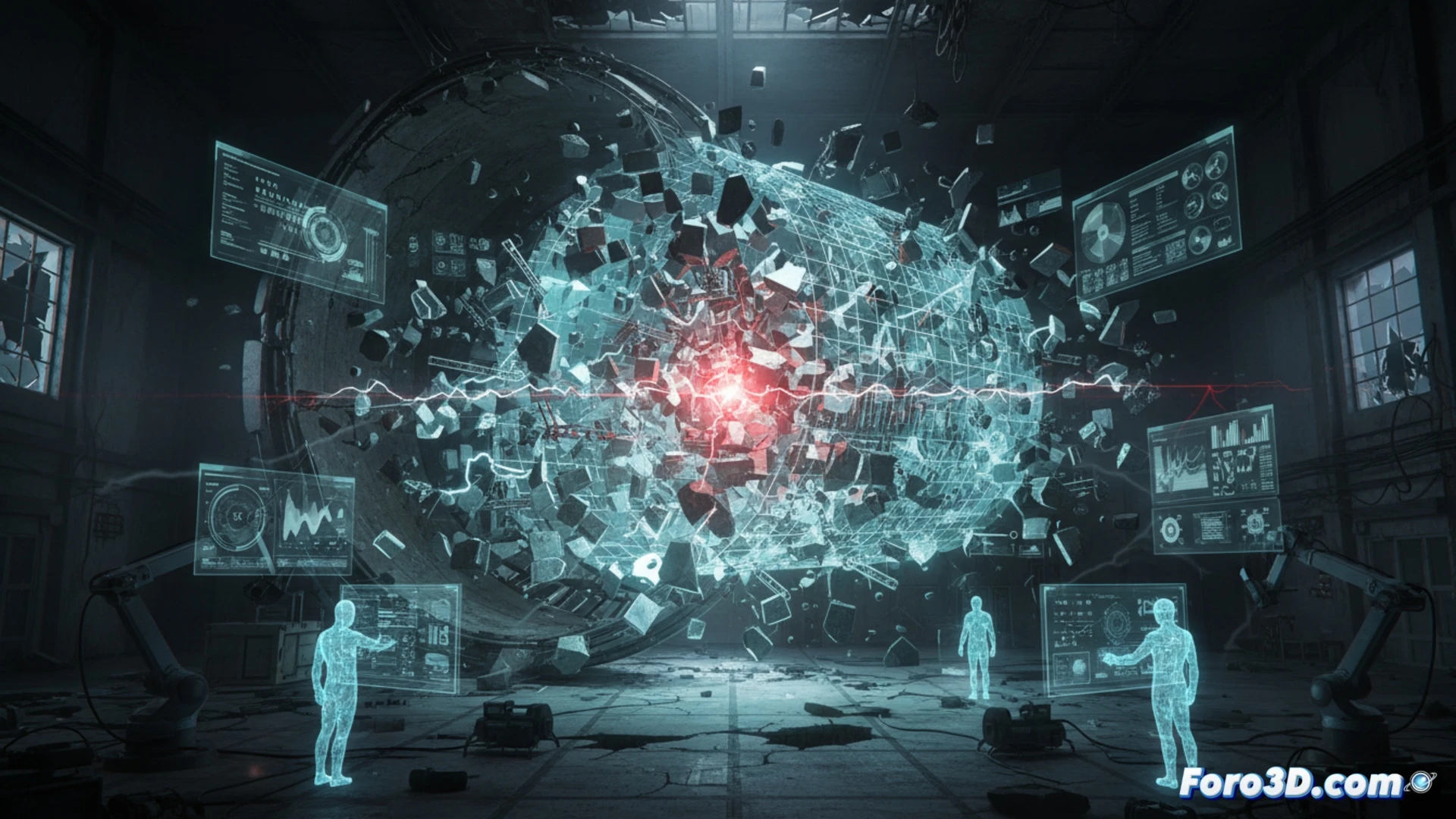
Photogrammetry and FEM for collapse analysis 🛠️
The research team deployed a 3D documentation protocol that combined terrestrial LiDAR scanning with high-resolution photogrammetry. Over 15,000 images of the debris were captured, generating a point cloud of 2.3 billion coordinates. This digital mesh allowed the creation of an exact twin of the post-failure state. In parallel, a finite element analysis (FEM) of the critical section was executed, simulating the 12,000 hours of operation prior to the incident. Preliminary results point to a fatigue microcrack in the welded joint of the diffuser, propagated by undamped vibrations that the original design did not account for.
Digital twins as a barrier against future disasters 💡
The most valuable lesson from this incident is the need to implement living digital twins in testing infrastructures. These models, fed in real-time by stress and temperature sensors, allow anticipating the failure point before it occurs. The forensic 3D reconstruction not only clarifies the cause of the collapse but also establishes a virtual inspection protocol for all wind tunnels in the consortium. The industry now knows that simulating degradation in a virtual environment is cheaper than rebuilding a laboratory after a catastrophe.
Which forensic 3D reconstruction methodology allows differentiating between a failure due to accumulated fatigue and a design defect in the partial collapse of a wind tunnel during high-capacity tests?
(PS: Simulating catastrophes is fun until the computer melts down and you are the catastrophe.)