When a wild animal breaks into a property or attacks a person, the physical evidence is often chaotic and difficult to interpret. Traditional forensic expertise faces limitations in measuring forces, trajectories, or hidden damage. This is where 3D technology becomes an indispensable tool for transforming a confusing scene into an objective, measurable digital model.
Photogrammetry and Laser Scanning for Evidence Capture 🐾
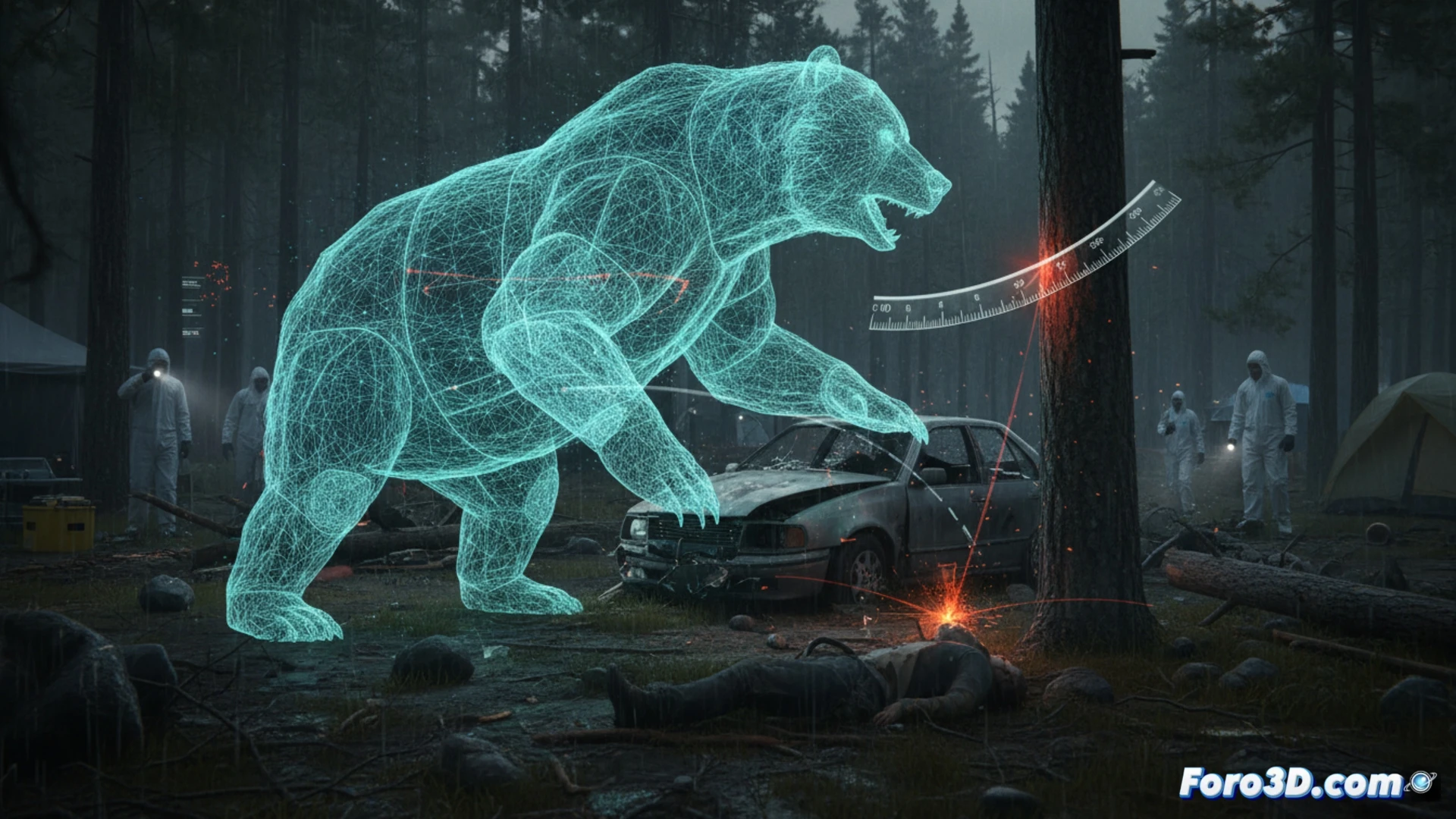
The first step in the expert assessment is on-site capture. Using photogrammetry, hundreds of overlapping images of the attack area are taken, from claw marks on wood to blood patterns on the ground. Simultaneously, laser scanning (LiDAR) generates a millimeter-precise point cloud that records the exact geometry of the terrain and objects. This data is merged to create a high-fidelity textured 3D model. On this digital twin, experts can measure the exact height of a jump, the angle of a scratch on a beam, or the deformation of a metal grate after the animal's impact, without needing to return to the scene.
Physical Simulation and Prevention of Future Incidents 🔍
Beyond documentation, the 3D model allows for simulation. By applying parameters of the animal's mass and speed (estimated from tracks or biology), we can recreate the dynamics of the attack. This helps validate whether a fence gave way due to a bear's weight or a structural defect. Additionally, the digital twin serves to plan virtual physical barriers or escape routes, testing their effectiveness before investing in civil works. 3D reconstruction not only explains the past but also models solutions for the future.
How can 3D reconstruction applied in forensic assessments help differentiate between damage patterns caused by a wildlife attack and those produced by common accidents or malicious human acts in chaotic scenes?
(PS: Simulating disasters is fun until the computer crashes and you are the disaster.)