The incident known as the Painter Robot Error has sparked a technical debate in the field of industrial safety. A robotic arm, programmed to apply coating to automotive parts, abruptly deviated from its trajectory, impacting a metal structure. This case becomes a perfect study object for the forensic pipeline, where 3D reconstruction of the scene allows isolating variables such as actuator kinematics, encoder readings, and control system response.
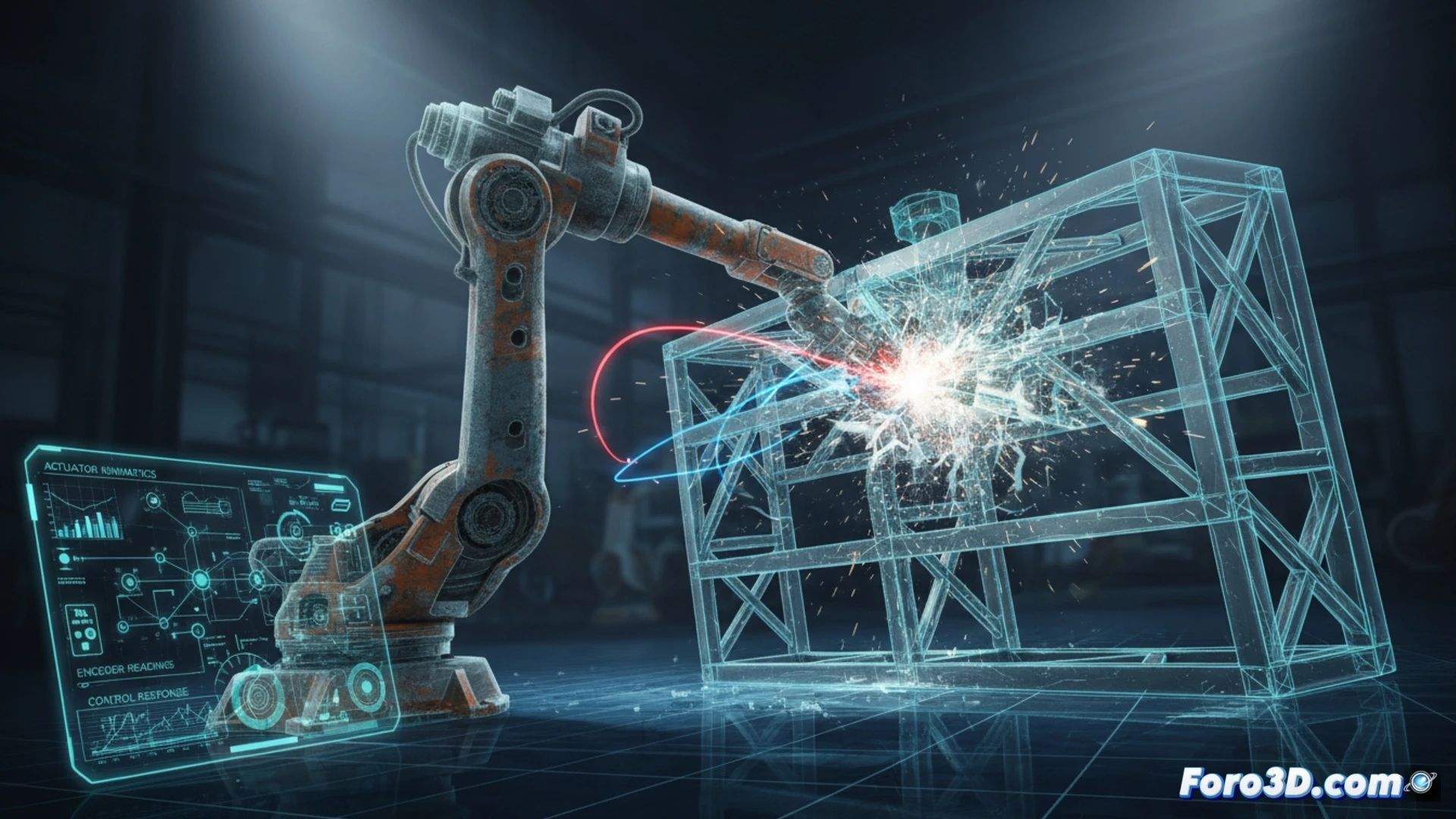
Trajectory Simulation and Mechanical Failure Analysis 🔧
To approach the investigation, a digital model of the environment is generated using point clouds captured with a LiDAR scanner. The dynamic simulation of the robotic arm, based on motion logs prior to impact, reveals an anomaly in the wrist rotation axis. The 3D forensic analysis allows isolating the exact moment when the angular velocity exceeded the safety threshold, suggesting a failure in the harmonic drive or corruption in the resolver signal. This approach rules out human errors and focuses the cause on premature wear of the mechanical component.
Lessons for Prevention in Automated Environments 🛡️
The visualization of the accident through forensic animation not only identifies the breaking point but establishes a review protocol for predictive maintenance. The integration of vibration sensors and real-time monitoring of inverse kinematics can anticipate similar deviations. This case demonstrates that 3D documentation of incidents is an indispensable tool for safety engineering, transforming an isolated error into a replicable lesson for the entire robotics industry.
Which forensic pipeline methodology allows differentiating between an algorithmic failure in trajectory planning and a non-modeled physical deviation in the 3D reconstruction of the industrial painter robot error?
(PS: In the forensic pipeline, the most important thing is not to mix evidence with reference models... or you'll end up with a ghost in the scene.)