In the field of the forensic pipeline, the documentation of domestic incidents requires a precise analysis of the physical variables involved. The case of a baby monitor detaching from a crib presents a technical challenge: determining whether the cause was a mechanical failure of the mount, incorrect installation, or an external force. Here we detail the modeling and simulation process to clarify the facts.
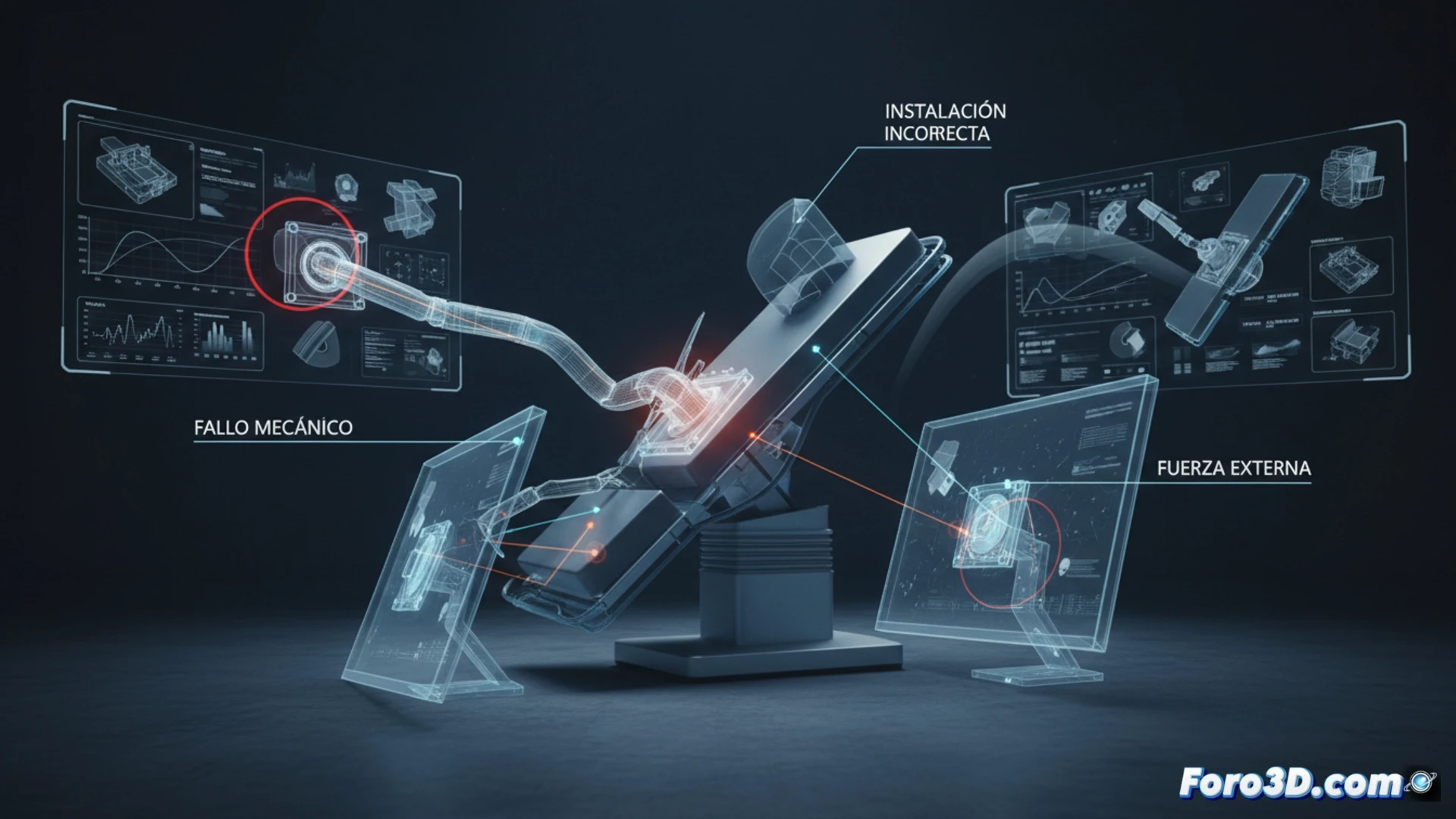
Parametric modeling and load simulation 🛠️
We begin with the 3D modeling of the crib and monitor in Blender, using low-polygon meshes to optimize physics calculations. The fastening system was parameterized with torsion joints and anchor points. Subsequently, in the simulation engine, we applied force vectors to recreate the detachment. Three scenarios were analyzed: plastic material fatigue, vibration from baby movement, and an accidental cable pull. Screenshots of the process show the deformation of the mount and the monitor's trajectory up to the point of impact.
Lessons for prevention and design 🧠
The simulation revealed that the most likely failure was a combination of material fatigue and off-center mounting. This analysis not only serves as expert evidence but also provides concrete data for redesigning safer fastening systems. In the forensic pipeline, each 3D model is a tool to prevent future incidents, transforming reconstruction into prevention.
How does the precision of the 3D meshing of the forensic crib affect the determination of the monitor's speed and trajectory during detachment to validate impact hypotheses in the forensic analysis pipeline?
(PS: don't forget to calibrate the laser scanner before documenting the scene... or you might be modeling a ghost)