The recent collapse in a mining excavation has brought to the forefront the need for advanced analysis techniques. Far from limiting ourselves to reporting the facts, 3D technology offers an unprecedented forensic tool. Through photogrammetry and digital twins, we can freeze the moment of collapse, dissect the geotechnical variables, and understand the exact sequence of structural fatigue that led to the disaster.
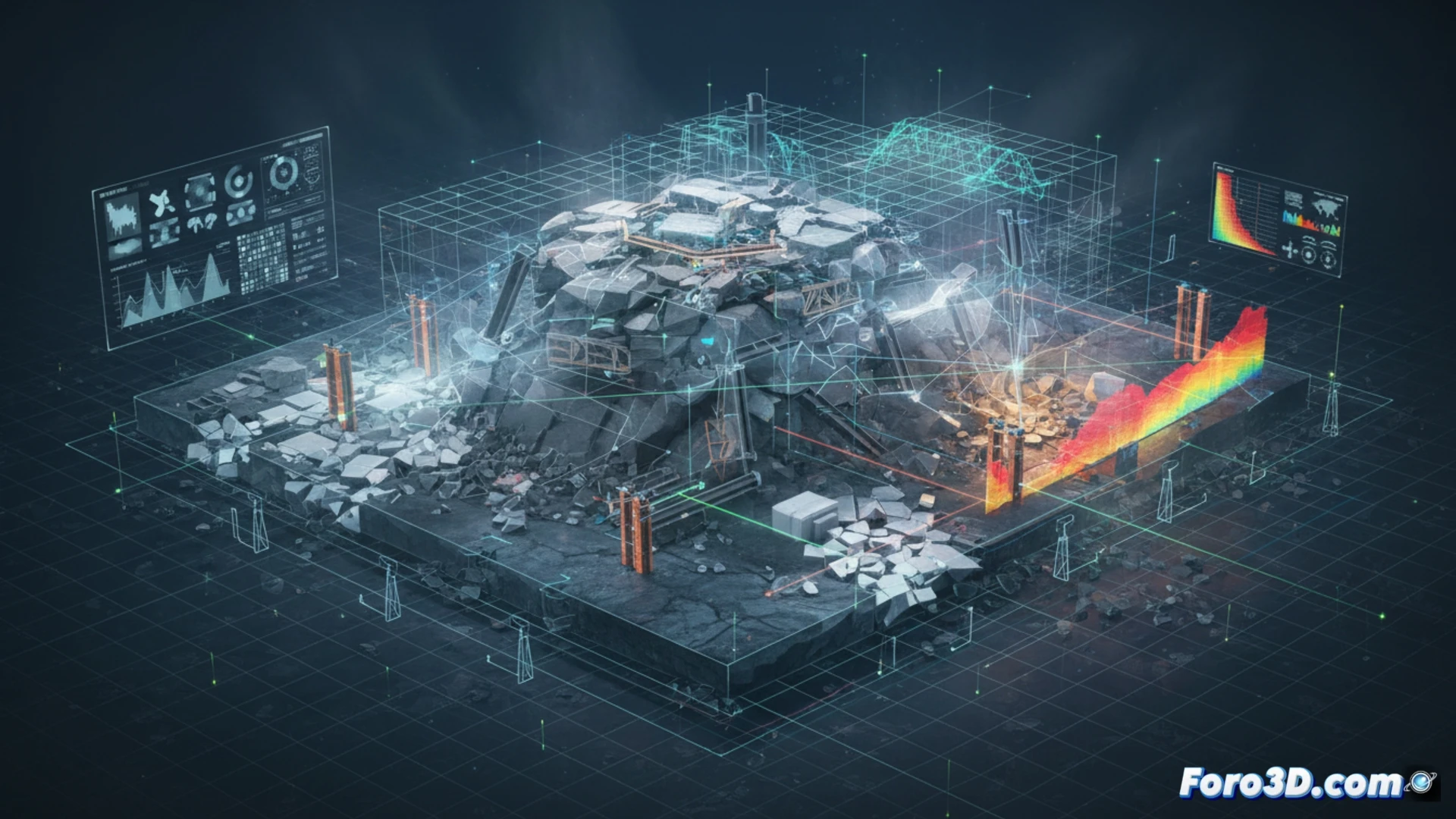
Material fatigue simulation and collapse modeling 🏗️
To unravel the causes, we apply a digital twin of the excavation face. Using finite element simulation, the accumulated stresses in the rock mass are modeled. Field data, such as joint orientation and ground moisture, are integrated into the model. The result is a technical animation that reproduces the critical moment: the propagation of a shear crack that exceeded the material's strength limit. This 3D forensic analysis allows validating or discarding hypotheses, from incorrect blasting to poor drainage.
Intelligent prevention: the digital twin as a shield 🛡️
Beyond investigation, the lesson is clear. 3D technology not only reconstructs the past but also anticipates danger. Implementing a real-time updated digital twin allows monitoring ground deformation and activating early warnings. The design of safety protocols is no longer based on intuition, but on precise volumetric data. The final question is not whether a collapse will occur, but whether our 3D tools will be fast enough to prevent it.
How does the precision of the 3D model generated from the mining collapse influence the identification of structural causes and the prevention of future collapses during excavation?
(PS: Simulating catastrophes is fun until the computer crashes and you are the catastrophe.)