The sudden implosion of the planetarium dome has left a trail of technical questions. Beyond the media impact, this collapse represents an ideal forensic case study. Through 3D reconstruction of the building, we can dissect the structural failure, simulating material fatigue and the exact yield point that triggered the catastrophe. We analyze the before and after to prevent future disasters.
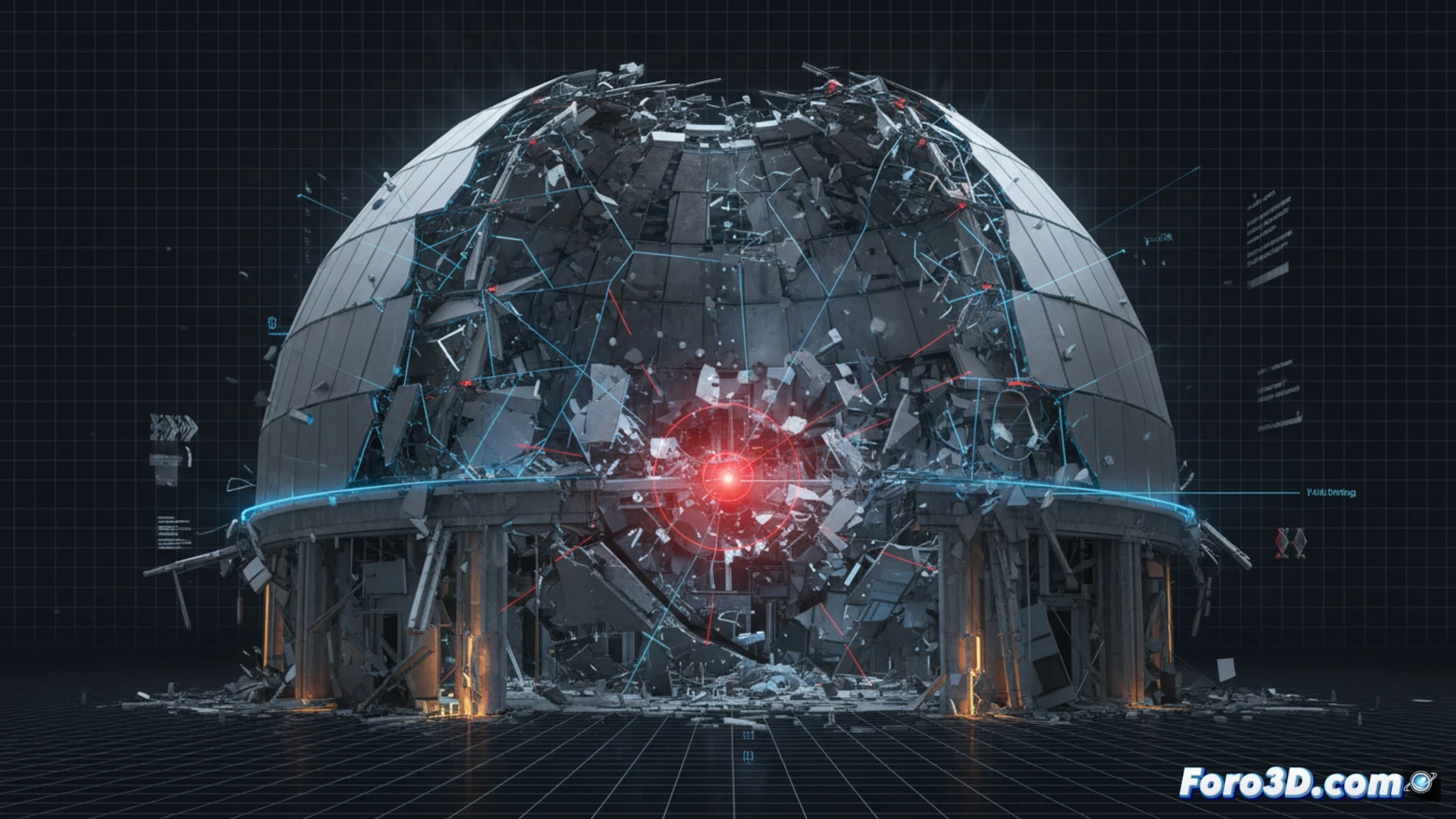
Collapse simulation: material fatigue and foundation 🏗️
The geometry of a planetarium, based on a geodesic or concrete dome, distributes loads in a specific way. For our analysis, we modeled the structure in finite element method (FEM) software. Field data indicates microcracks at the connection nodes. Parametric simulation reveals that the failure was not sudden, but progressive. By applying a cyclic load on the foundation, the model shows how fatigue of the reinforcing steel reduced the stiffness of the compression ring. The 3D visualization of the collapse process allows identifying the exact sequence: first the perimeter support failed, then the dome buckled inward, generating the cascading collapse.
Visual prevention: lessons for future structures 🔍
Forensic reconstruction not only seeks to assign blame, but also serves as an educational tool. By visualizing the collapse from angles impossible in reality, engineers can identify weak points in the design. This case demonstrates the need for seismic and fatigue monitoring in large-scale structures. 3D simulation thus becomes the best prevention manual, showing how a small calculation error in the foundation can cause the fall of an architectural symbol.
How is drone photogrammetry and LiDAR scanning being used to differentiate between pre-existing structural failures and progressive collapse in the 3D reconstruction of the planetarium dome collapse?
(PS: Simulating catastrophes is fun until the computer crashes and you are the catastrophe.)