The failure of an autonomous crane is not a simple mechanical incident; it is a catastrophe that combines software errors, material fatigue, and unforeseen dynamic loads. Analyzing the collapse sequence through 3D simulation allows identifying the exact points of structural stress, visualizing the redistribution of forces, and understanding how a small crack can trigger a total collapse. This case study is essential for improving safety protocols in automated industrial environments.
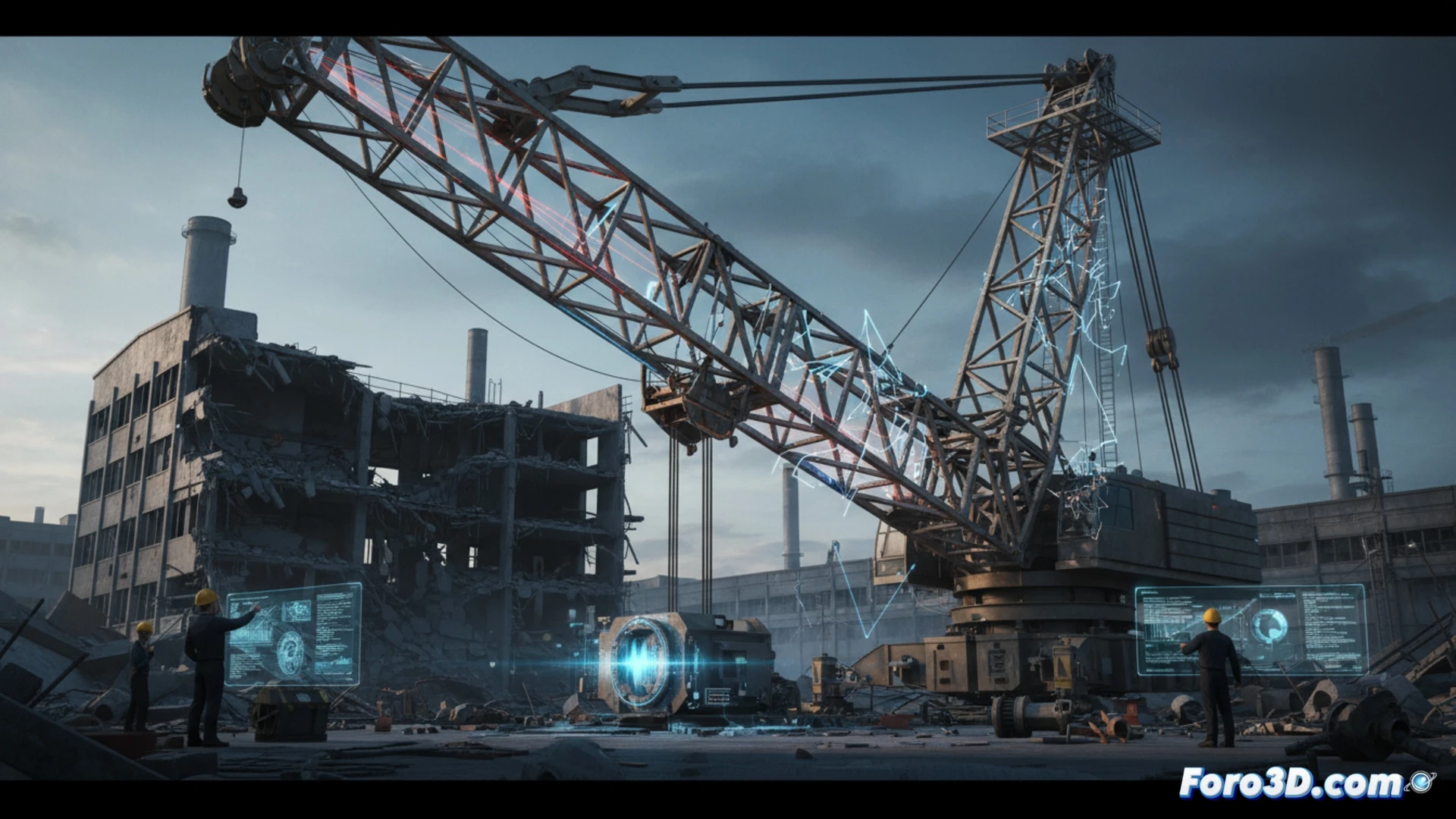
Modeling stresses and fatigue in the boom structure 🏗️
The 3D reconstruction begins with the digitization of the crane's CAD model, applying material properties such as high-strength steel and aluminum alloys. Using finite element analysis (FEA), the maximum working load and accumulated fatigue cycles are simulated. The critical point appears at the joint of the boom with the slewing mast, where shear stresses exceed the elastic limit after a failure in the tilt sensor. The 3D animation shows how progressive deformation causes lateral buckling, followed by the cascading collapse of the extendable segments. The visualization of heat maps on the geometry reveals risk zones not detected in traditional visual inspections.
Prevention through digital twins and emergency protocols 🛡️
The simulated catastrophe demonstrates that human supervision remains irreplaceable in the face of total autonomy. Implementing real-time digital twins allows predicting fatigue failures before they occur, adjusting load limits based on usage history. The lessons learned from this 3D reconstruction demand redundant emergency stop protocols and vibration sensors at nodal points. Only by integrating predictive simulation with preventive maintenance can a technical failure be prevented from turning into an industrial catastrophe.
If the 3D reconstruction of the catastrophe revealed that the autonomous crane ignored structural warning signals due to an error in the load prioritization algorithm, what safety protocols should be implemented in digital twins to prevent a machine from repeating that failure pattern?
(PS: Simulating catastrophes is fun until the computer crashes and you are the catastrophe.)