The collapse of a pool cleaning system in a recreational facility has brought the structural integrity of these devices into the spotlight. Although they appear to be simple mechanisms at first glance, their catastrophic failure can cause property damage and risks to users. In this article, we address the three-dimensional reconstruction of the incident, simulating the dynamic and static loads that led to the collapse, with the aim of extracting technical lessons for design and maintenance. 🏊
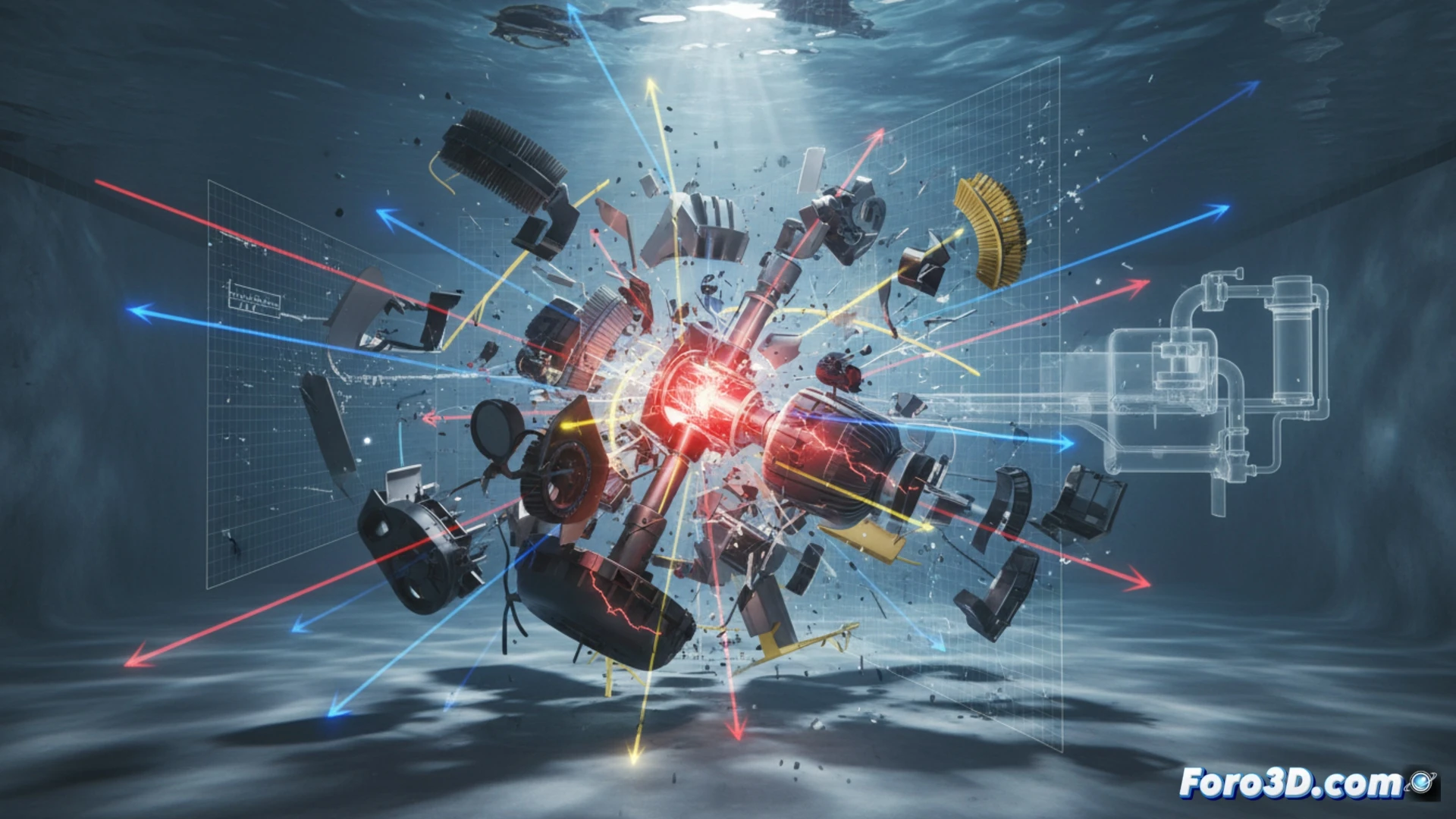
Stress modeling and fatigue failure in the support 🔧
Using a digital twin of the original structure, we have recreated the pre-collapse scenario. The 3D model includes the concrete base, metal anchors, and the pool cleaner arm. Finite element simulation revealed that the critical point is located at the joint between the arm and the wall support, where shear stresses accumulated exceeding the yield strength of the galvanized steel. Cyclic fatigue, caused by the constant movement of the mechanism, generated microcracks that progressed to complete fracture. The visualization of the process shows how the fall was not instantaneous, but followed a sequence of plastic deformation before total detachment.
Lessons for preventing similar catastrophes ⚠️
This case demonstrates that 3D simulation is not only useful for documenting an incident, but also for anticipating it. Implementing digital twins in the design of critical infrastructure allows weak points to be identified before they fail. Current regulations underestimate the effect of long-term vibrations on seemingly robust components. As a technical proposal, reinforcing joints with high-strength bolts and installing real-time deformation sensors, connected to an early warning system that can stop the equipment at signs of fatigue, is recommended.
How can the analysis of the 3D reconstruction of a pool cleaner collapse reveal hidden design flaws in the support structure that are not detectable through traditional visual inspections?
(PS: Simulating catastrophes is fun until the computer crashes and you are the catastrophe.)