The detachment of a roller coaster is not a simple mechanical failure; it is the culmination of invisible micro-cracks that propagate over thousands of operating cycles. In this technical article, we address the 3D reconstruction of the collapse sequence, simulating the dynamic stresses on the rails and supports. The objective is to identify the initial fracture point and validate how predictive modeling can anticipate catastrophes in amusement parks.
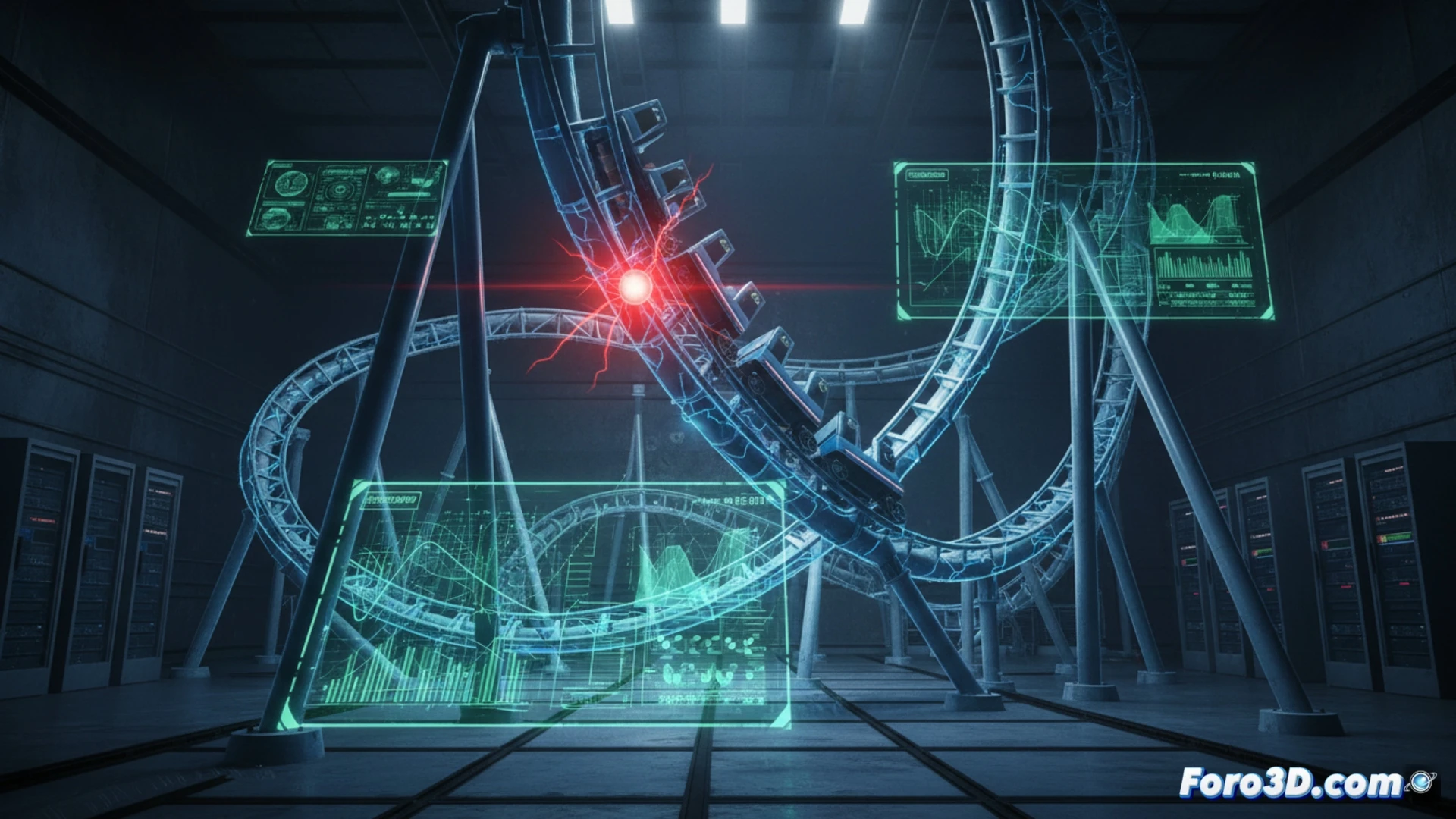
Structural fatigue simulation and car trajectories 🎢
To recreate the event, the metal structure is modeled with finite element meshes (FEM) that calculate the accumulated plastic deformation in welded joints. The simulation applies variable loads corresponding to the weight of the cars at 120 km/h, including centrifugal acceleration in tight curves. The results show that the failure initiates at a support in the braking section, where cyclic fatigue reduces the steel's strength to 40% of its original capacity. The 3D animation reveals the trajectory of the cars after the break, validating the impact zone and the response time available for emergency systems.
Lessons for the design of leisure infrastructure 🛠️
The digital reconstruction demonstrates that visual inspection protocols do not detect sub-surface cracks until it is too late. 3D modeling allows engineers to redesign anchor points, distributing loads more evenly and adding real-time deformation sensors. This analysis not only prevents tragedies but also redefines safety standards so that the thrill of speed does not compromise the structural integrity of the rides.
Is it possible to predict, through finite element simulation, the exact location of the first micro-crack that will trigger the catastrophic collapse of a roller coaster, even before it is visible in a visual inspection?
(PS: Simulating catastrophes is fun until the computer crashes and you are the catastrophe.)