The breakage of a fire truck ladder or the collapse of a roof in a fire station not only paralyzes emergency response but also exposes preexisting design flaws. 3D simulation allows forensic engineers to recreate the exact moment of fracture, analyzing material fatigue and load distribution under extreme heat and vibration conditions, providing critical data for prevention.
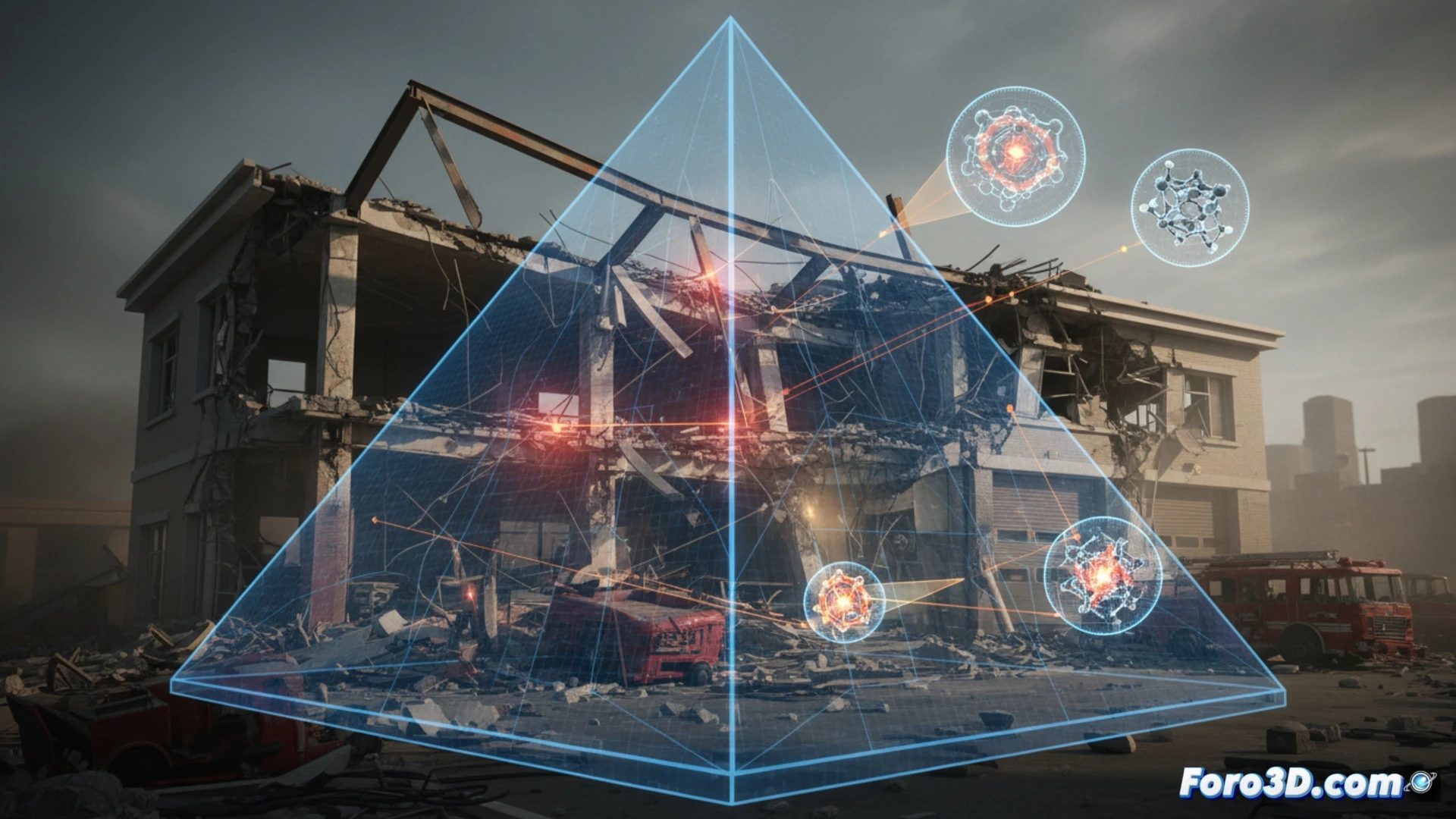
Parametric modeling of failures in firefighting infrastructure 🔥
Using finite element method (FEM) software integrated into 3D engines like Unreal Engine or Blender, analysts can subject digital models of fire stations to virtual stress tests. Impacts from heavy vehicles, explosions of foam tanks, or progressive collapses of load-bearing walls are simulated. The result is a digital twin that not only shows the breakage but also allows modifying variables (joist thickness, steel type, anchors) to identify the safest structural solution before building or repairing. This approach reduces the margin of human error in traditional visual inspection.
Virtual training for a collapse emergency 🎮
Once the breakage is modeled, the 3D environment becomes a virtual reality simulator for firefighters. Teams practice evacuation and rescue protocols on the exact replica of the incident, learning to identify secondary failure points and safe escape routes. This immersive preparation, based on real breakage data, transforms the catastrophe into a practical lesson that saves lives, preventing structural error from becoming a human tragedy.
How the 3D reconstruction of a structural breakage in a fire station can predict the exact point of failure in future emergency equipment and save lives before the incident occurs
(PS: Simulating catastrophes is fun until the computer melts down and you are the catastrophe.)