The Villa Submarina Fault represents one of the most complex catastrophic events for coastal engineering. The collapse was not instantaneous; it was a progression of geological stresses that fractured the seabed. Using 3D modeling, we have reconstructed the sinking process, analyzing ground deformation and structural impact. This technical article breaks down the simulation of the disaster and its application in preventing future incidents.
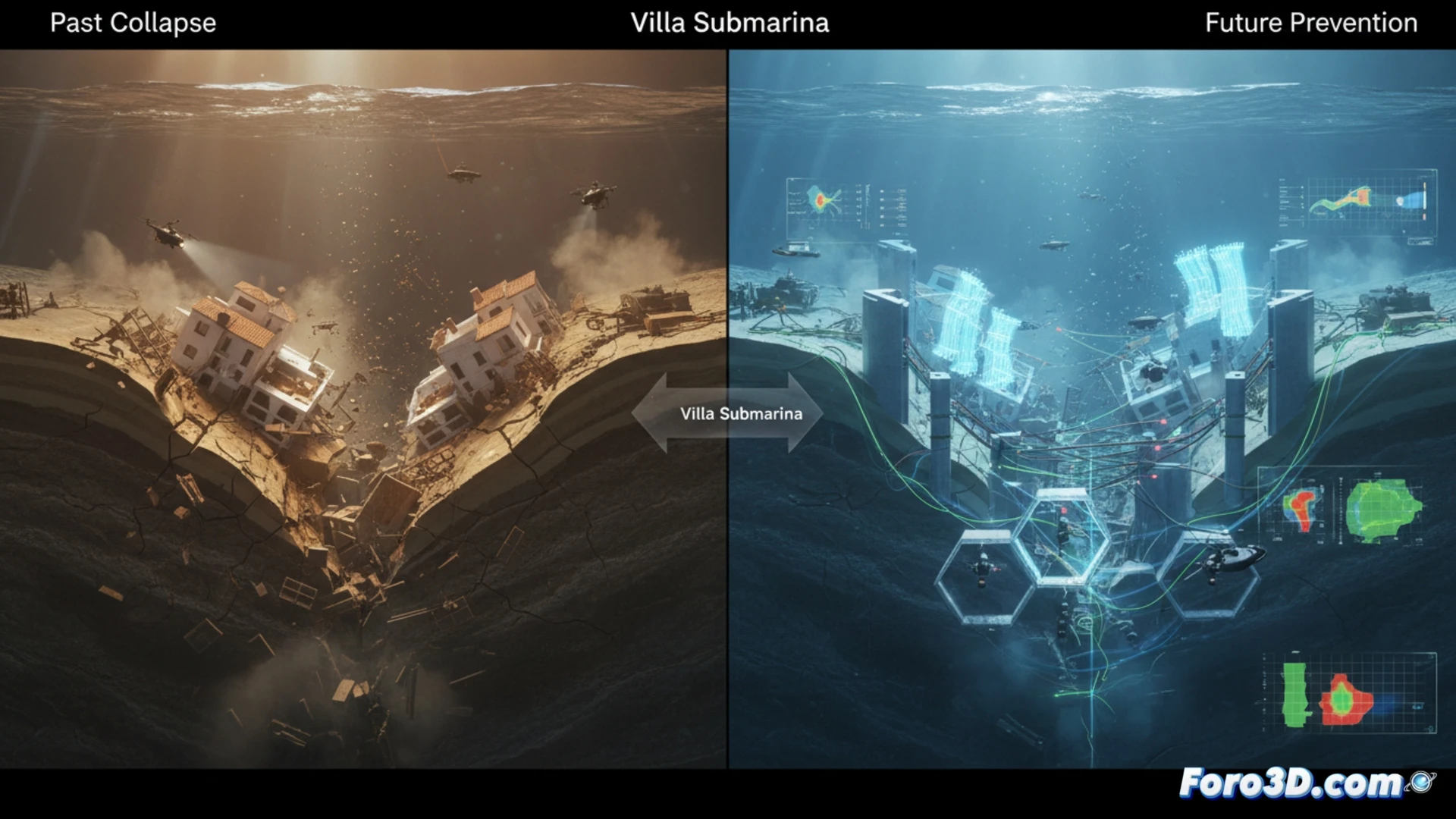
Geotechnical Simulation of the Sinking and Structural Stresses 🌊
The 3D model starts from a topographic survey prior to the collapse. Hydrostatic pressure data and sedimentary loads were applied to the villa's platform. The simulation revealed that a shear fault at the base of the underwater cliff was the trigger. Comparative visualizations show the previous state, with structures anchored in stable ground, versus the later state, where liquefied ground drags the foundations. The Von Mises stress analysis identified the critical points where reinforced concrete failed, generating a domino effect that sucked the villa into the ocean trench.
Lessons Learned: 3D Modeling as a Shield Against Disasters 🛡️
The virtual reconstruction not only documents the tragedy; it is a prevention tool. By recreating the Villa Submarina Fault, engineers can identify similar fracture patterns on other coasts. 3D modeling allows testing reinforcement solutions, such as deep piling or energy dissipation barriers, before investing in real construction. This case demonstrates that visualizing the disaster in a digital environment is the first step to preventing history from repeating itself in the physical world.
Which 3D reconstruction methodologies have been most effective in modeling the progression of the collapse in the Villa Submarina Fault, and how can these techniques be applied to the prevention of future coastal disasters?
(PS: Simulating catastrophes is fun until the computer crashes and you are the catastrophe.)